Web Development Agency in Ho Chi Minh City
Engineered to last.
Custom web solutions that combine design, functionality and performance: e-commerce stores, internal portals and web apps that drive results and reflect your brand. Built in Ho Chi Minh City by the same team that designs, optimises and maintains them.
THE SERVICE
What we build, and for whom
Saigon Digital is a web development agency based in Ho Chi Minh City, working since 2016. We build custom websites, e-commerce stores, internal portals and web applications, handling frontend, backend, integrations and cloud deployment. Two kinds of client hire us here: businesses operating in Vietnam who want a team they can meet, and international brands who want engineering to international standards at a Vietnamese cost base. We also design, optimise and host what we build, so nothing gets handed between agencies.
What is included
Web development services in Saigon.
Website and application development
Frontend, backend and the integration between them, built by one Ho Chi Minh City team with no hand-off gaps. E-commerce stores, internal portals, marketing sites and web apps.
Low-code development
Fast, cost-effective builds with Webflow and Mendix when speed to market matters more than bespoke plumbing.
Cloud development
Secure hosting and scalability via AWS, Google Cloud or Azure, infrastructure that grows with your audience.
Website security audits
SSL setup, vulnerability checks and performance optimisation, because a fast site that leaks data isn't a fast site for long.
Function development
Custom function build according to client's requirement
For custom software, platforms and marketplaces, see web apps and custom software.
The stack we build on
Tooling chosen per project rather than by dogma, but not chosen at random either. In practice most of what we ship sits in this territory:
If you already have a stack, we work in it rather than arguing for ours. The exception is when the existing choice is the reason the project is in trouble, and then we will say so with the numbers rather than the opinion.
OUR PROCESS
Discovery, build, deploy, one team throughout
Discovery and planning
Business objectives, target users and technical requirements, in-depth consultation, feasibility and architecture planning, a clear roadmap with milestones.
Development and integration
Your vision built with modern frameworks: frontend and backend development, API and CMS integration, responsive mobile-first code throughout.
Testing and deployment
Quality assurance and debugging, security and performance audits, then cloud deployment with scalability built in, a flawless launch, and support after it.
Who this works for
Everything is built here. You can sit in the room, and questions get answered the same working day rather than overnight.
Bilingual builds, local hosting decisions, and a team who knows how the market actually behaves rather than reading about it.
Same standards, considerably less money, and no time zone you have to pretend does not exist.
We audit first and tell you honestly whether it is worth saving.
Most often for education and international schools, e-commerce and retail, hospitality and F&B, and B2B services.
Why Saigon Digital
Local expertise, global standards, secure, scalable, shipped.
Based in Ho Chi Minh City, we pair local understanding with international web standards. Security and scalability come as standard: SSL certificates, secure payment gateways, infrastructure that grows with you, and strategic consultation is part of the service, with analytics integrated so every decision is backed by data. You're part of the process throughout: clear updates, measurable progress, transparent collaboration.
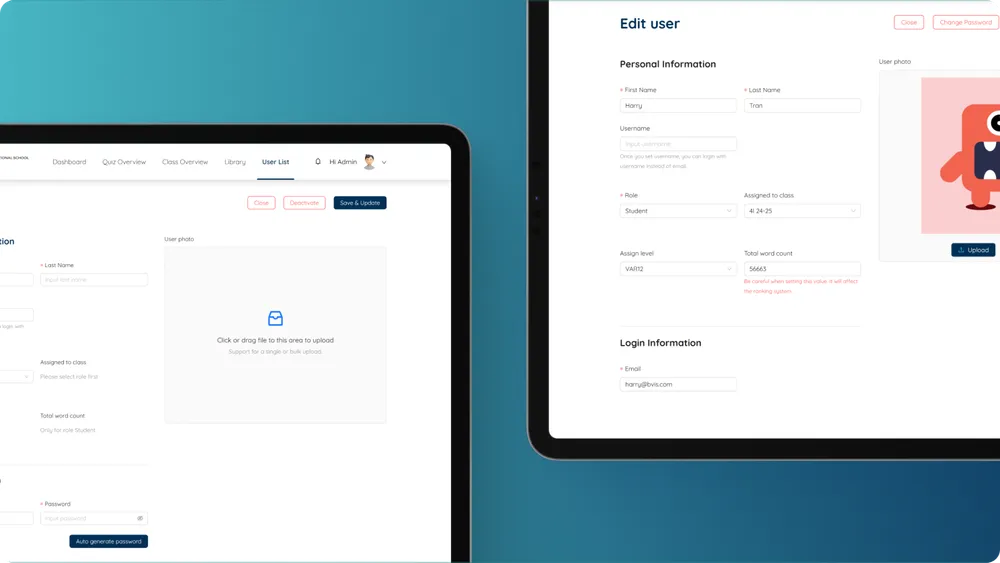
The evidence ships: a custom reading-assessment platform for BVIS, serving hundreds of students across an international school network, and conversion-focused builds for Saigon brands like Anh Chi Em and Saigon Baigur. For our full engineering capability, see web development, the full service.
Worth knowing what we are not. Several of the larger development firms in Ho Chi Minh City run two or three hundred engineers and sell capacity by the seat. We are smaller by choice, because the thing we are actually good at is design, engineering and search working as one team rather than three suppliers. If you need forty developers next month, we are the wrong call and we will say so.
Questions, answered straight
What makes Saigon Digital a top web development agency in Ho Chi Minh City?
We combine creativity, technical expertise and local insight, tailored web solutions that reflect your brand and meet the specific needs of businesses in Saigon and across Vietnam, built to international standards.
Do you offer web development services for businesses outside Saigon?
Yes. Our core team is based in Saigon (Ho Chi Minh City), and we collaborate with clients across Vietnam and internationally with the same quality of development and communication.
What technologies do your Saigon web developers use?
React, Next.js and Tailwind CSS on the front, NestJS and Node behind it, and a CMS or platform chosen per project: WordPress, HubSpot, Sanity, Shopify, Strapi or Prismic. We favour headless and Jamstack architecture where content and application need to stay separate, and React Native where a native app is genuinely required.
Can Saigon Digital handle website maintenance and support?
Absolutely. We offer full maintenance and post-launch support for clients in Saigon and beyond, updates, backups, security monitoring and performance optimisation.
How long does a website take to build?
A marketing site is typically a matter of weeks from kickoff, an e-commerce build longer, and a custom platform longer again. The variable that moves timelines most is not our capacity, it is how quickly content and approvals come back from your side.
Do you build bilingual or Vietnamese-language sites?
Yes, and properly rather than through a translation plugin. That means separate content structures, correct hreflang, and Vietnamese written natively rather than converted from English. Saigon Baigur was built bilingual from the start.
Will the site be built for SEO?
Yes, and by the people who do the SEO rather than by developers guessing at it. Crawlability, rendering, structured data and page speed are decided at the template stage, which is the only cheap moment to decide them. Retrofitting SEO onto a finished build is the most expensive way to do it.
Who owns the code and the site?
You do, from the first commit. Full repository access, documentation, and a hand-off another team could pick up. No lock-in and no exit fee. If you later move to a different agency, everything goes with you.
Can you take over a site someone else built?
Yes, and a good share of our work is exactly that. We audit it first and give you an honest read on its state, including telling you when a rebuild would cost less than continuing to patch it.
Let's build your next web project together
Schedule a free consultation with our Saigon-based team, we'll discuss your goals, propose the best solution and outline a clear development plan.