AI Search Optimization and GEO:
Be the Answer AI Gives
Buyers ask ChatGPT, Gemini and Perplexity before they ask you. Generative Engine Optimisation makes sure the answer they get is your brand.
Generative engine optimisation, or GEO, is the practice of making a brand the source that AI engines cite when someone asks a question in its category.
It shares most of its foundations with SEO, which is why we run them as one system rather than two invoices. Saigon Digital does this from Ho Chi Minh City, in English and Vietnamese.
What buyers hear before they meet you
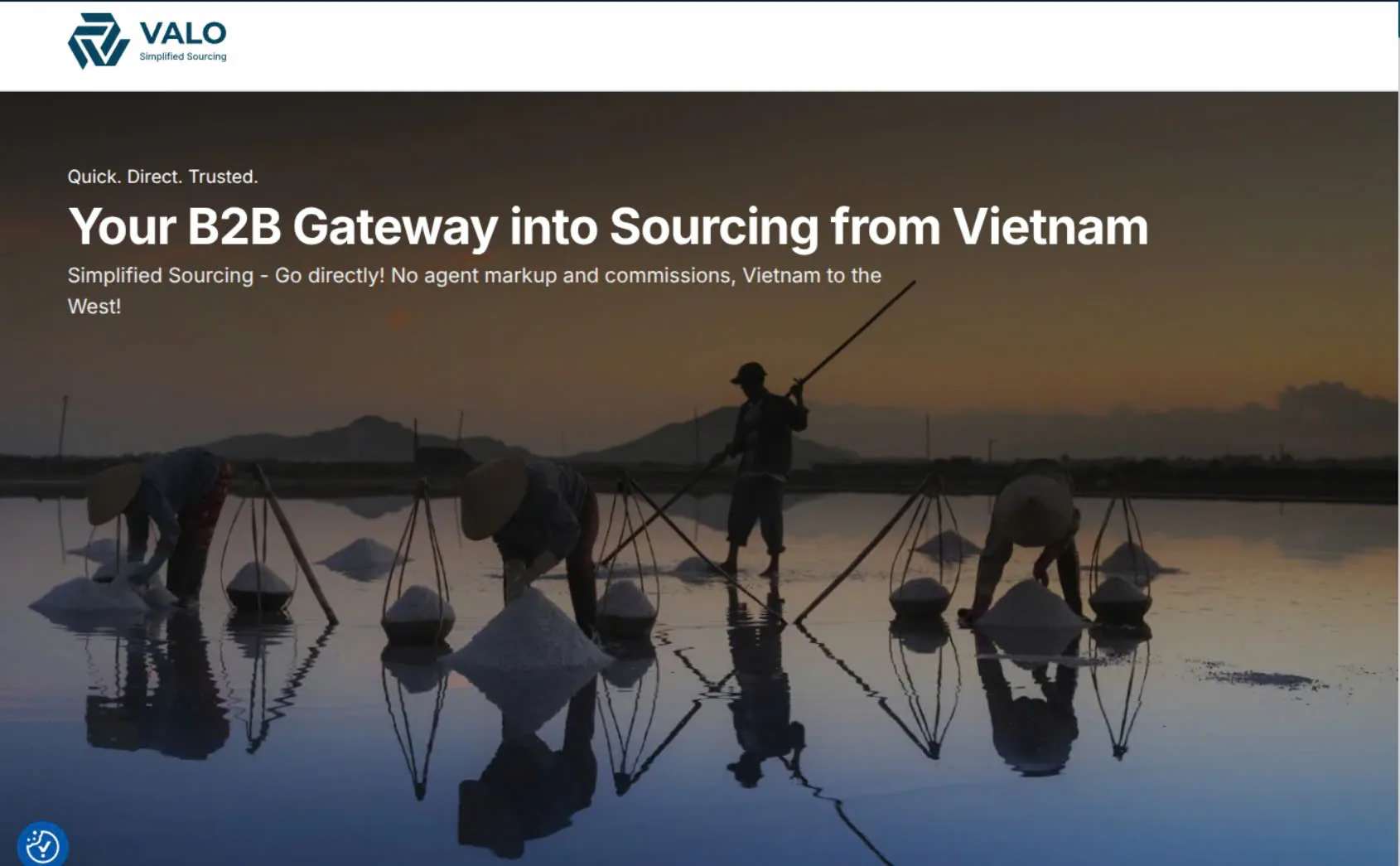
1. VALO Vietnam: B2B sourcing platform
What is included in our GEO service
One system with SEO: one team, one strategy.
FLAGSHIP ONBOARDING
The 90-Day GEO Kick Starter
Most people arriving at this page are not ready to commit to a year of something that did not exist two years ago. Fair enough. The Kick Starter exists so you do not have to.
We test a panel of the real questions your buyers ask the engines and record who gets named, so you have a baseline rather than an impression. Alongside that, the technical readability work: whether AI crawlers can actually read your pages, and what is stopping them if not.
Entity foundations and the first answer-shaped content, built against the questions that matter commercially rather than the ones with the most volume.
The second measurement pass, against the same panel of questions, so the change is comparable rather than anecdotal. Then an honest read on whether this is worth continuing in your category, including if the answer is no.
Tested monthly, reported honestly. Audit, shape, execute, track.
Audit
Test the real questions your buyers ask the engines. Record who gets named.
Shape
A citation-building roadmap: content, entities, technical readability.
Execute
Ship the signals. Make your site the easiest source to cite.
Track
Monthly visibility reporting across ChatGPT, Gemini, Perplexity and Google.
What we actually change
GEO is engineering, not a content genre.
Make the site readable to engines.
AI crawlers do not run your JavaScript the way a browser does. If the answer only exists after hydration, the engine cannot quote it. Crawlable-by-default rendering is the unglamorous precondition for everything else, and it is the first thing we check.
Write in answer shapes.
Engines quote passages, not pages. A claim, stated plainly, immediately supported by the evidence for it, is quotable. The same point buried in a paragraph of throat-clearing is not. This is the single biggest difference between content that gets cited and content that just ranks.
Build the entity, not just the pages.
An engine has to know what your company is before it will recommend you. Consistent structured data, a coherent picture across the sites and profiles that describe you, and third-party corroboration. This is why an about page and a team page earn their place on a commercial site.
Measure across engines, not rankings.
There is no position one in an AI answer. We track whether you are named, in what context, and against whom, across ChatGPT, Gemini, Perplexity and Google AI Overviews, then report the trend. Being cited by three engines and missing from the fourth is an actionable finding; an average position is not.
Who this works for
Your category gets researched before it gets bought.
Considered purchases, B2B, professional services, education, SaaS. If people ask an engine "who are the best X", you have a stake in the answer.
You rank well and traffic is falling anyway.
The answer is increasingly being given without the click. Ranking and being cited are now different things.
A competitor keeps getting named and you do not.
Usually an entity and answer-shape problem rather than an authority one, and usually fixable.
You are early in a category nobody has claimed yet.
This is the situation where the work pays back fastest, and it is temporary.
We work in English and Vietnamese, for clients headquartered in the US, UK, Australia, Canada and the EU as well as businesses operating inside Vietnam.
READ THIS BEFORE YOU HIRE ANYONE
The honest caveats
This field is two years old. Anyone certain is guessing.
- 01Nobody can guarantee a citation.
- 02Most of GEO is good SEO done properly.
- 03Anyone invoicing it as an entirely separate discipline is taking advantage of the newness.
- 04In Vietnamese, the search demand is negligible today.
If that sounds less certain than other pitches you have heard, that is the point.
Our working process
How we work
Five steps, in the same order, on every engagement.
Audit
Site, search visibility, AI citations and competitors. The findings are yours either way.
Strategy
A prioritised plan tied to outcomes: what happens in month one, and what it achieves by month six.
Build or optimise
The team that wrote the recommendation implements it. No handover gap.
Measure
One dashboard. Weekly written updates, monthly reports.
Iterate
Quarterly reviews. What worked gets more budget. What didn’t gets cut.
How engagements are shaped
Projects are quoted after the audit. If your budget can't move the needle, we'll say so.
Questions, answered straight
No fluff, as promised.
What is GEO?
Generative Engine Optimisation, the discipline of making your content, entities and authority signals optimised for AI engines, so you're cited and recommended in their answers.
How is GEO different from SEO?
SEO earns you rankings on a results page; GEO earns you citations inside the answer itself. They share foundations, which is why we run them as one system, one team, one strategy.
Can you actually measure AI visibility?
Yes, we test a panel of real buyer questions across ChatGPT, Gemini and Perplexity monthly, and report citations, mentions and recommendations as a trend.
How fast can we show up in AI answers?
Faster than classic SEO in many categories, the engines re-index quickly and most competitors aren't optimising for them yet. The window is open; it won't stay open.
What are GEO, AEO and LLMO, and are they different?
Largely the same thing under different names. GEO is generative engine optimisation, AEO is answer engine optimisation, LLMO is large language model optimisation. The terminology has not settled because the field is two years old. What matters is whether an engine can read you, quote you and identify you, and none of that changes depending on which acronym someone prefers.
Do backlinks still matter for AI visibility?
They matter, but not in the way they matter for rankings. What an engine needs is corroboration: consistent, credible third-party sources saying the same things about you. A link from a place that describes your business accurately is worth more than a stronger link that says nothing useful about who you are.
Should we block AI crawlers?
That is a commercial decision rather than a technical default. Blocking protects your content from training use and removes you from the answers your buyers are reading. Most clients allow the crawlers that drive citations and block the ones that only take. We will walk you through which is which.
Does this work in Vietnamese?
Yes, and the opportunity there is different rather than smaller. Very little Vietnamese content is currently structured well enough for an engine to cite confidently, which makes the gap easier to close than in English. As the caveats above say, the search demand for the terminology is negligible in Vietnamese today. The demand for being the answer is not.
What if it does not work in our category?
Then we will tell you, and the Kick Starter exists partly so we find out in ninety days rather than in year two. Some categories are not being asked about yet. Paying us to keep optimising for a question nobody is asking would be a waste of your money and a poor use of ours.

Enter the chat. Get cited.
The window for first-mover advantage is open. Ask us where you show up today, we'll show you, honestly.