
Stores built for the considered purchase.
Some things are bought in a minute. The ones we build for are researched for weeks, configured, compared, and bought once. We designed and built Seatcraft's new storefront, wrote the integrations the business actually needed, and ran SEO alongside the launch rather than after it. Revenue hit an all-time high within three months.
Within three months of the new Seatcraft store, with SEO run alongside the build
Google Ads rebuilt from the keel up, with cost per conversion cut by 94%
Up from a single purchase a month before the rebuild: the same store, sold properly
People spend three weeks choosing, then ten minutes buying. Most stores are built for the ten minutes.
A considered purchase does not behave like an impulse one. Someone spending thousands compares specifications, reads reviews, asks ChatGPT for a shortlist, configures a product three different ways and comes back four times before they buy. Every one of those visits is a chance to lose them, and none of them are the checkout.
So the work is wider than the storefront. It is making a deep, configurable range legible. It is the integrations that keep the operation from creaking as volume grows. It is being found while the research is still happening, on Google and inside the AI answers that increasingly do the shortlisting.
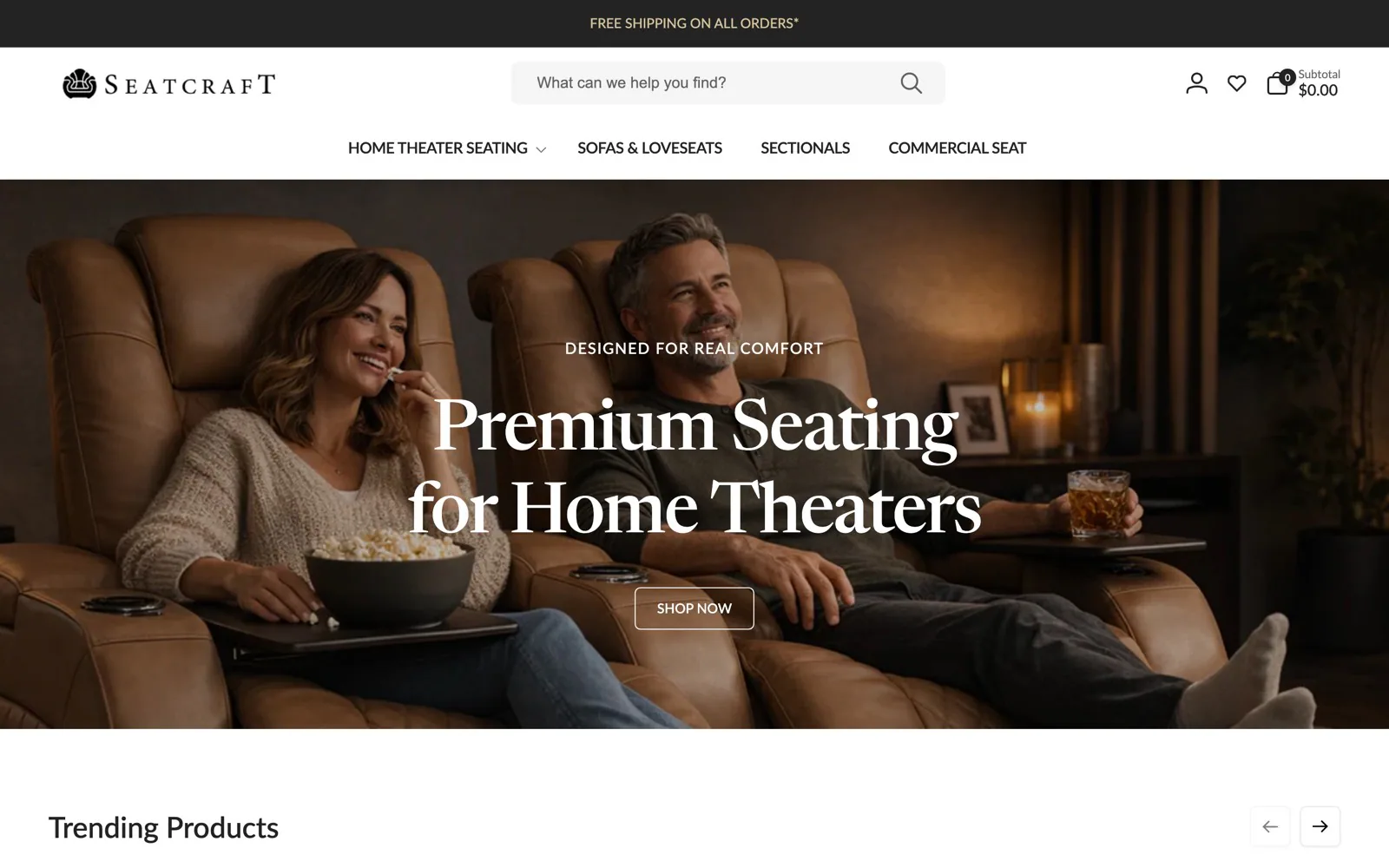
That is what we built for Seatcraft, who have sold premium home cinema seating in the United States since 1999: a custom Shopify storefront, custom integrations aimed at real operational problems, and SEO that shipped with the store instead of chasing it.

What ecommerce brands get
One team across the storefront, the operation and the growth.
A storefront built, not themed
We design and build from scratch rather than dressing a theme, because a premium range with real configuration needs a browsing experience that makes it legible. Shopify underneath, so the checkout stays robust and your team keeps the admin they know.
Integrations that fix real problems
The interesting work is rarely the storefront. It is the custom integrations around it, each aimed at an operational problem the business is actually carrying rather than at a feature list.
SEO that ships with the store
Run after launch, a replatform costs rankings and then spends months buying them back. Run alongside the build, the new store goes live already structured to rank. See SEO.
Paid media that pays back
Saigon Boat's Google Ads returned 350% on spend in four months, with purchases up from one a month to 43. Organic and paid run by one team, against the same number. See digital marketing.
Named in AI answers
Considered purchases start with a question to ChatGPT, Gemini or Perplexity. Seatcraft is cited by AI engines for home cinema seating. See AI visibility & GEO.
A partner through peak trading
Black Friday is not the week to discover your agency has moved on. Hosting, monitoring, merchandising changes, conversion work and SEO from the same named team, straight through the season that pays for the year.
How an ecommerce project runs. Revenue protected at every step.
Range, operation, rankings
How your catalogue actually needs to be shopped, where the operation is creaking, and what organic traffic you are carrying into the rebuild. Migration risk priced in on day one, because rankings are revenue.
Design, build, integrate
A storefront designed around the considered purchase, built custom on Shopify, with the integrations that make the workflow fit the business rather than the other way round.
Launch, then compound
Redirects mapped and SEO live from day one, then growth: category and product visibility, paid media against real return, citations in AI answers, and conversion work that never stops.
Proof, from a brand trading since 1999
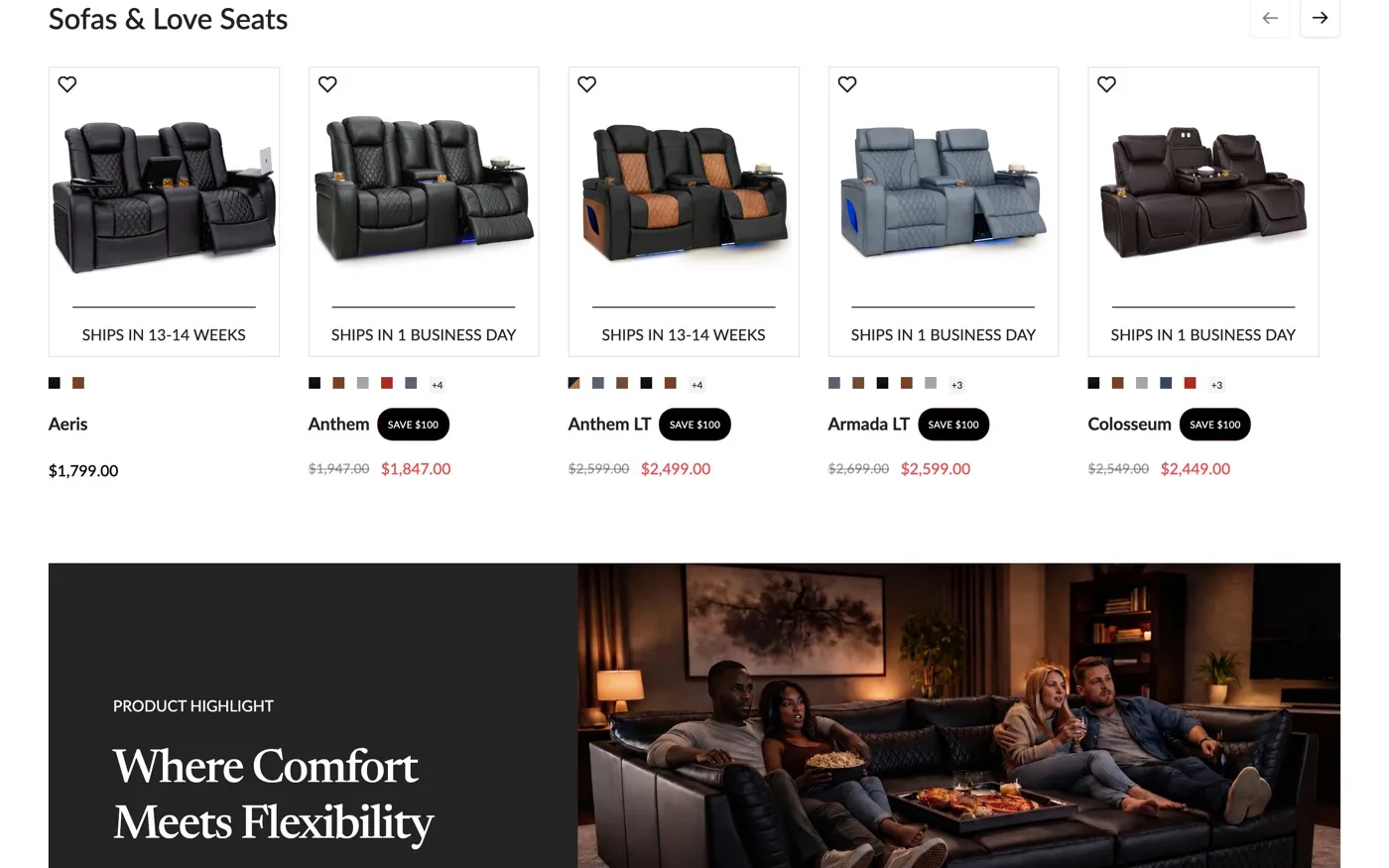
Seatcraft has built premium home cinema seating in the United States since 1999, with thousands of reviews behind them and a catalogue running from single recliners to full sectionals, configurable across leathers, fabrics and power options. The reputation was there. The storefront was not doing it justice and was not built to grow.
We designed and built the new store from scratch on Shopify, wrote custom integrations against the operational problems the business was carrying, and ran SEO alongside the launch. Within three months of launch, revenue was at an all-time high, and Seatcraft is now cited by AI engines for home cinema seating. The engagement is an ongoing growth one: the build is finished, the compounding is not.
And when the store is fine, but the selling isn't
Not every ecommerce problem is a build problem. Saigon Boat was selling one thing a month through Google Ads that were spending without returning. We rebuilt the account from the keel up: structure, targeting, creative and measurement, run against purchases rather than clicks.
What ecommerce work teaches you
Three things we would tell you before you brief anyone.
- Commerce is not a template job
- A considered purchase needs a considered store. People spending thousands compare, configure and come back. A theme with your logo on it cannot hold that, which is why we build rather than reskin.
- Launch and SEO belong together
- Run separately, a replatform costs you rankings and then spends months buying them back. Run together, the new store launches already structured to rank. All-time high revenue within three months is what that sequencing buys.
- The integrations are the real work
- Custom integrations, each aimed at a specific operational problem. A store that looks new is easy. A store that makes the business easier to run is the job.
- The shortlist is now written by machines
- Buyers ask an AI engine for the three best options before they open a single store. Being one of the three is engineered, through structured data, answer-shaped content and authority signals, not granted.
Questions we get asked
Related: Web design & development · SEO · Digital marketing · AI visibility & GEO
Do you build on Shopify, or something else?
Shopify for most stores, because the checkout is robust, the admin is one your team already knows, and it does not put us in the business of maintaining a payment stack. What we do differently is build the front end from scratch rather than dressing a theme. Where a headless build genuinely earns its cost we will say so, and where it does not we will tell you that too.
We already have a store. Is a replatform going to cost us rankings?
Only if SEO is treated as a phase that happens after launch. We run it alongside the build: URL mapping, redirects, structured data and technical SEO engineered in before anything goes live. Seatcraft launched a brand new storefront and hit all-time high revenue within three months rather than spending those months recovering.
Our products are configurable. Can the store handle that?
That is the case we build for. Seatcraft sells recliners and sectionals configurable across leathers, fabrics and power options, where the job is making a wide range legible instead of burying it under filters. Configuration is a merchandising problem before it is a technical one.
What kind of custom integrations do you build?
Whatever the operational problem actually is. For Seatcraft we wrote custom Shopify integrations aimed at specific problems the business was carrying, not at a feature list. When something in the workflow does not fit what Shopify does out of the box, we build the piece that makes it fit.
Can you run our paid media as well as the store?
Yes, and the two working together is the point. We rebuilt Saigon Boat's Google Ads from the keel up and it returned 350% on ad spend within four months, with purchases up from one a month to 43 and cost per conversion cut by 94%.
Does AI search matter for ecommerce?
For a considered purchase, more every quarter. People researching something they will spend thousands on now ask ChatGPT, Gemini and Perplexity for a shortlist before they open a store. Seatcraft is cited by AI engines for home cinema seating, which is a position you engineer for rather than one you are given.
What happens after launch?
The build is done and the compounding is not. Hosting, monitoring, merchandising changes, conversion work and SEO from the same named team, straight through peak trading.
Selling something
worth configuring?
Tell us where you are: a storefront that undersells the product, a replatform you cannot afford to fumble, or ad spend that is not coming back. You will get an honest read on what would move the number.
Prefer email? hello@saigon.digital