AI is changing how people discover brands. More customers now ask tools like ChatGPT for recommendations, explanations, and shortlists before they ever open a browser. That shift raises a simple, high-impact question for marketing leaders: how to appear in ChatGPT answers.
At Saigon Digital, we spend our days helping ambitious brands turn AI visibility into measurable growth. Search engines still matter, but AI assistants increasingly sit at the top of the discovery journey. The good news? The work you do to build authority, clarity, and trust online is the same work that helps AI systems recognise and reference your brand.
This guide explains, in practical terms, how to improve your chances of appearing in ChatGPT answers.

How ChatGPT Chooses What to Say
ChatGPT does not “browse the web” in the way a human does for every answer. It has been trained on a mixture of licensed data, data created by human trainers, and publicly available information. When it answers a question, it predicts a helpful response based on patterns it has learned.
That means three important things for brands:
- You cannot pay to be inserted into answers. There is no ad slot to buy.
- Visibility comes from strong signals across the web. Brands that are consistently mentioned, cited, and trusted are more likely to be reflected in AI outputs.
- Good SEO and good digital PR now do double duty. They help you rank in search and help AI systems “learn” that you exist and what you are known for.
So, if your goal is to understand how to appear in ChatGPT answers, think less about “gaming AI” and more about building a clear, authoritative digital footprint.
>>> Read more: 7 AI Visibility Tools to Track and Optimise Your Brand in 2026
Start With the Fundamentals: Be Easy to Understand and Easy to Trust
Before we talk tactics, get the basics right. AI systems, like AI search engines, reward clarity and credibility.
1. Be Explicit About What You Do
Clarity is the foundation of visibility, both for people and for AI systems. If your brand message is vague, generic, or overloaded with buzzwords, it becomes difficult for anyone to understand where you fit and why you matter. Therefore, the first step in learning how to appear in ChatGPT answers is to describe your business in simple, specific terms.

Start by pressure-testing your core message. Ask yourself: Could someone understand exactly what we do in five seconds? If the answer is no, your positioning needs work. Your homepage, service pages, and “About” page should clearly state:
- Who you help
- What problem you solve
- How you solve it
- What makes your approach different
For example, compare these two statements:
- “We deliver innovative digital solutions for modern businesses.”
- “We are an SEO and digital growth agency helping ambitious brands increase organic traffic and revenue through data-led strategies.”
The second version is not only clearer for readers, but also far more useful for search engines and AI models trying to categorise your expertise.
Next, structure your website around your actual services, not internal jargon. Each core service should have its own dedicated page with:
- A clear, descriptive headline (e.g. “Technical SEO Services for Scaling Websites”)
- A short explanation of who the service is for
- A plain-English breakdown of what you do
- Practical examples or use cases
This approach reduces ambiguity. Over time, it also helps AI systems associate your brand with specific topics and problems. In other words, instead of being “a digital agency”, you become “an SEO and AI-powered marketing agency focused on growth”, which is far more likely to surface in relevant answers.
Finally, keep your language consistent across your site and profiles. If your website says you specialise in “SEO and growth marketing” but your LinkedIn says “full-service digital transformation”, you dilute your own signals. Consistency makes your positioning stronger, more memorable, and easier for AI systems to interpret correctly.
2. Build Real Authority, Not Just Claims
Once your positioning is clear, the next step is proving it. Anyone can say they are an expert. Real authority comes from evidence, and that evidence is what makes your brand more likely to be referenced in AI-generated answers.

Start with your own assets. Your website should show, not just tell:
- Publish detailed case studies that explain the challenge, your approach, and the outcome
- Share real numbers where possible (e.g. traffic growth, conversion improvements, revenue impact)
- Explain why your strategy worked, not just that it worked
- Attribute content to real people in your team, with short bios and credentials
For example, instead of writing, “We helped a client improve their SEO,” write, “We helped a B2B SaaS brand increase organic leads by 62% in six months by fixing technical SEO issues and rebuilding their content structure.” This level of specificity builds trust and demonstrates genuine experience.
Next, extend that authority beyond your own website. AI systems learn from the wider web, so your reputation needs to exist in more than one place. Practical ways to do this include:
- Contributing expert commentary to industry publications
- Being quoted in articles about SEO, digital growth, or AI marketing
- Publishing thought leadership on reputable platforms
- Earning mentions from partners, clients, or industry bodies
Each credible mention reinforces the same message: your brand is associated with this topic, and your expertise is recognised by others.
Equally important is keeping your content accurate and up to date. Authority erodes quickly if your guides are outdated or your examples no longer reflect reality. Set a regular review cycle for your key pages and flagship articles to:
- Update statistics and references
- Refresh examples and screenshots
- Add new insights based on recent projects or market changes
Over time, this creates a body of work that shows consistent, lived experience, not just marketing claims. That combination of clarity, proof, and consistency is exactly what strengthens your digital footprint and improves your chances when people ask AI tools for trusted recommendations or explanations.
Align your SEO strategy with AI discovery
If you want to know how to appear in ChatGPT answers, start by tightening your SEO foundation. The overlap is bigger than many people think.
1. Create Content That Answers Real Questions
If you want to improve your chances of being referenced in AI-generated answers, your content needs to reflect how people actually search and ask for information. Increasingly, users are typing or speaking full questions into search engines and SEO AI tools, not just short keywords. Therefore, your content strategy should shift from simply targeting topics to genuinely answering questions.

Begin by identifying the real questions your customers ask at different stages of their journey. These usually fall into a few clear categories:
- “What is…?” questions (definitions and explanations)
- “How does…?” questions (process and how-to guides)
- “Which is better…?” questions (comparisons and evaluations)
- “How much does…?” questions (pricing and value)
- “How do I choose…?” questions (decision-making support)
Once you have these questions, build dedicated content that answers them directly and thoroughly. Start each article by addressing the question in plain English, then expand with context, examples, and practical advice. This structure mirrors how AI systems are trained to understand and generate helpful responses.
For example, instead of only publishing a generic “SEO Services” page, you could create supporting articles such as:
- “How long does SEO take to deliver results?”
- “What is technical SEO and why does it matter for growth?”
- “How do you choose the right SEO agency for your business?”
Not only do these pieces attract more qualified visitors, but they also clearly signal what your brand knows and what problems you solve. Over time, this builds a library of useful, question-led content that is far more likely to be reflected in AI-generated explanations and recommendations.
Just as importantly, avoid writing for algorithms alone. If your content genuinely helps a human reader understand a topic or make a decision, you are already aligning yourself with how AI systems evaluate and reproduce useful information.
2. Use Simple, Structured Writing
Even the best ideas lose impact if they are buried in dense or confusing writing. Clear structure does not just improve readability, it also makes your content easier for search engines and AI systems to interpret, summarise, and reuse.

Start with strong, descriptive headings that reflect what each section actually covers. Think of headings as signposts. They should help a reader (and an AI) quickly understand the flow of the article. For example, instead of a vague heading like “Our Approach”, use something more specific such as “How We Audit and Improve Technical SEO”.
Within each section, keep paragraphs focused on one main idea. Shorter paragraphs are easier to scan and easier to understand. Where appropriate, use:
- Bullet points to list steps, benefits, or criteria
- Numbered lists for processes or sequences
- Bold text to highlight key takeaways (without overdoing it)
For example, if you are explaining how a service works, a simple step-by-step list will almost always be clearer than a long block of text. This not only improves the user experience but also increases the chance that your content can be accurately summarised or referenced by AI tools.
Equally important is your language. Prefer plain English over jargon. Instead of writing, “We leverage cross-channel synergies to optimise performance,” say, “We connect your SEO, content, and paid media so they work better together.” The second version is clearer, more human, and far more useful in an AI-driven discovery environment.
In short, good structure and simple language are not “dumbing things down”. They are about making your expertise more accessible, more trustworthy, and more reusable across modern search and AI platforms.
3. Strengthen Your E-E-A-T Signals
E-E-A-T stands for Experience, Expertise, Authoritativeness, and Trustworthiness. While this concept is often discussed in the context of Google, the same principles matter when your content is used, quoted, or reflected by AI systems. The stronger these signals are, the more credible your brand appears in the wider digital ecosystem.

Start with Experience and Expertise. Show that your content is written by people who actually do the work:
- Add author names and bios to key articles
- Highlight relevant experience, roles, or credentials
- Reference real projects, challenges, and outcomes
- Share insights that clearly come from hands-on work, not just theory
Then build Authoritativeness by connecting your brand to your industry:
- Earn mentions and links from reputable websites
- Publish guest articles or contribute expert commentary
- Be consistent in how your brand and services are described across the web
- Create in-depth resources that others naturally reference
Finally, reinforce Trustworthiness through transparency and accuracy:
- Keep your content up to date
- Cite reliable sources where appropriate
- Make your business details easy to find (company info, contact details, team)
- Avoid exaggerated claims you cannot support with evidence
For example, a detailed, regularly updated guide written by a named specialist at your agency, supported by real case studies and external references, sends far stronger signals than a generic, anonymous blog post.
Over time, these signals compound. Your site becomes not just a collection of pages, but a credible knowledge base. That credibility is exactly what increases the likelihood of your brand being reflected when people ask AI tools for guidance, recommendations, or explanations in your area of expertise.
Build Your Brand Across The Web
Even the best website cannot do all the work on its own. If you want to strengthen your chances of appearing in AI-generated answers, your brand needs to exist clearly and consistently across the wider web. AI systems learn from patterns in public information, which means repeated, credible mentions of your brand in the right contexts play a crucial role in shaping how your expertise is understood.
1. Earn Mentions In Relevant Publications
Mentions on reputable websites act as third-party validation. They show that others recognise your expertise, not just that you claim it yourself. While links still matter for SEO, the wider value here is visibility, context, and credibility across the digital ecosystem that AI systems learn from.

Start by identifying publications, platforms, and communities that your audience already trusts. These might include:
- Industry news sites and blogs
- Marketing, technology, or business publications
- Niche forums or professional communities
- Podcasts, webinars, and online events with published show notes or articles
Next, focus on contributing genuinely useful insights rather than promotional messages. For example, you could:
- Provide expert commentary on SEO, AI, or digital growth trends
- Share data or case study insights from your own projects
- Write thought leadership articles on emerging challenges in your field
- Collaborate with partners or clients on joint content
When your brand is consistently mentioned in discussions about your core topics, such as SEO strategy, high-performance websites, or AI-powered marketing, those associations become stronger and more durable over time. This is exactly the kind of signal that increases the likelihood of your brand being reflected in AI-generated explanations and recommendations.
Importantly, quality matters more than quantity. A handful of mentions on respected, relevant platforms will do far more for your authority than dozens of low-quality placements that add no real value to readers.
2. Be Consistent Everywhere
Consistency is one of the most overlooked elements of digital visibility, yet it plays a critical role in how both people and AI systems understand your brand. If your messaging changes from platform to platform, you weaken your own signals and create unnecessary confusion.

Start with your core brand facts:
- Your company name and how it is written
- Your primary services and specialisms
- Your positioning statement or short description
- Your tone of voice and key messages
Make sure these are aligned across your website, LinkedIn, business profiles, directories, partner sites, and any platforms where you publish content. For example, if you describe yourself as “an SEO and AI-powered marketing agency focused on growth” on your website, that same idea should appear on your social profiles and company listings.
This does not mean every profile has to be identical. Instead, it means the core message should always match. Over time, this repetition helps reinforce a clear, stable picture of what your brand stands for and what you are known for.
From an AI discovery perspective, consistency makes it easier to connect the dots. When the same brand is repeatedly associated with the same topics, services, and expertise across multiple trusted sources, those associations become much stronger and more reliable.
Optimise For The Kinds of Questions People Ask AI
To stay visible, your content needs to reflect not just what people are searching for, but how they are asking. In other words, you should optimise for intent and conversation, not just keywords.

The first step is to understand the patterns in how people talk to AI tools. These prompts are often more detailed, more specific, and more focused on problem-solving than traditional search queries. Common formats include:
- “What is the best way to…?”
- “How do I choose a…?”
- “Which company should I use for…?”
- “What does an agency like X do?”
- “Is it worth investing in…?”
Once you recognise these patterns, you can start mapping them directly to your content strategy. Instead of writing only broad topic pages, create articles and guides that clearly respond to these kinds of questions.
For example, if you offer SEO services, you might publish content such as:
- “How do I choose the right SEO agency for a growing business?”
- “What is the best SEO strategy for a competitive industry?”
- “Is SEO still worth investing in for B2B companies?”
Each of these titles mirrors a real, conversational question. More importantly, each article should begin by answering that question directly, before expanding into deeper explanation, examples, and practical advice. This makes your content more useful for readers and more aligned with how AI systems are trained to generate helpful, question-based responses.
Over time, this approach builds a clear link between your brand and the specific problems your audience is trying to solve.
Use Data and Structure Where It Makes Sense
Great content and strong branding set the foundation, but structure and data help turn that foundation into something scalable and easier to understand across the digital ecosystem.
While AI systems do not rely on your website’s code in the same way search engines do, clear structure and well-organised information still play an important supporting role in how your content is interpreted, distributed, and reused.
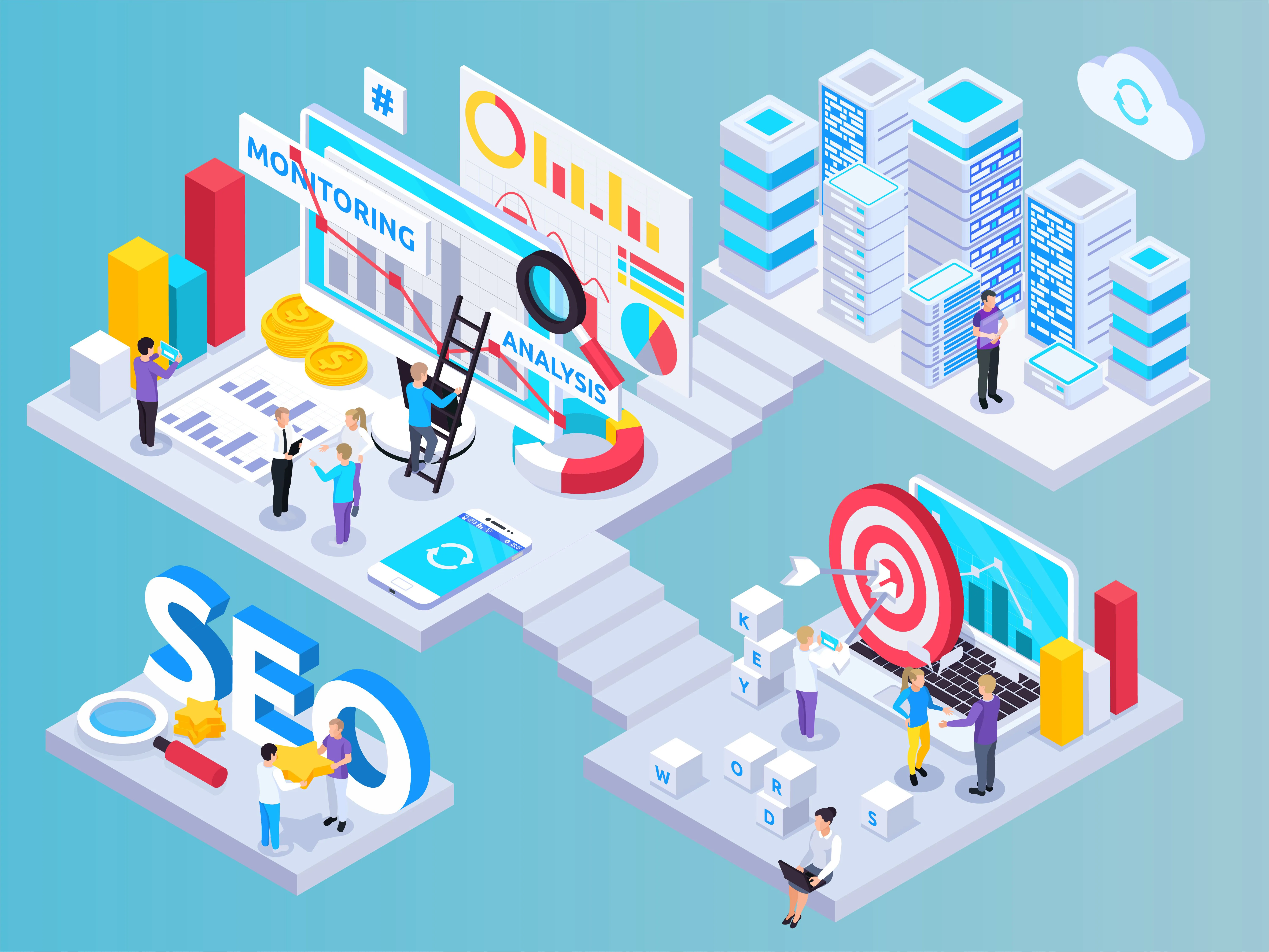
1. Implement Structured Data (Schema)
Structured data, often referred to as schema markup, helps search engines understand what your content actually represents, not just what the words say.
For example, it can clarify whether a page is about your organisation, a service, a blog article, an FAQ, or a case study. While this does not guarantee visibility in AI-generated answers, it strengthens the overall clarity and distribution of your content across the web.
Start with the basics that are most relevant for most brands:
- Organisation schema to define who you are
- Article or BlogPosting schema for thought leadership and guides
- Service or Product schema for your core offerings
- FAQ schema where you provide clear, question-and-answer content
The key here is accuracy and restraint. Only mark up content that genuinely fits the schema type, and make sure the information matches what is visible on the page. For instance, if you use FAQ schema, the questions and answers should actually appear in the content and be helpful to users, not just added for technical reasons.
Over time, this kind of clean, honest structure makes it easier for search engines and content platforms to interpret and present your information correctly. In turn, that increases the chances of your content being widely surfaced, referenced, and learned from, indirectly supporting your visibility in AI-driven discovery.
2. Keep Key Pages Evergreen And Updated
Even the best-structured content loses value if it becomes outdated. Search behaviour changes, industries evolve, and examples that were relevant two years ago may no longer reflect reality. Keeping your most important pages fresh is therefore a critical part of maintaining long-term visibility and credibility.

Start by identifying your “cornerstone” content. This usually includes:
- Core service pages
- Flagship guides and explainers
- High-performing blog posts
- Key case studies or resources
Set a regular review cycle, every six to twelve months is a good benchmark and use it to:
- Update statistics, facts, and references
- Refresh examples to reflect recent projects or market changes
- Improve clarity where sections feel outdated or unclear
- Add new insights based on what you have learned since the page was first published
This process does more than protect your search rankings. It signals that your brand is active, accurate, and engaged with its field. For AI systems that learn from large amounts of public information, up-to-date, well-maintained content is far more likely to reflect current best practice and trustworthy expertise.
In short, structure gives your content a strong framework, and regular updates keep that framework relevant. Together, they ensure your knowledge remains useful, credible, and visible in a fast-changing digital landscape.
The Bigger Picture: Visibility, Not Vanity
Learning how to appear in ChatGPT answers is not about chasing the next shiny object. It is about doing what strong brands have always done:
- Communicate clearly
- Prove expertise
- Earn trust
- Show up consistently where your audience looks for answers
At Saigon Digital, we help brands design, build, and scale digital experiences that do exactly that, combining strategy, creativity, data, and now AI-powered marketing into one growth engine.
Get in touch with us today!
Want to be the brand AI engines recommend?
We make businesses visible on Google and inside AI answers, measured in leads, not vanity metrics.