Search has changed dramatically over the past few years. Traditional keyword-based results are no longer enough for users who expect fast, accurate and context-aware answers. In 2026, the AI search engine is more than just an emerging concept, it is steadily becoming the standard.
At Saigon Digital, we work at the intersection of SEO, user experience and AI-powered marketing. We see first-hand how search behaviour is shifting and how businesses must adapt to stay visible. In this article, we break down the five best AI search engines you should know in 2026, what makes each one different, and how brands can use them strategically.
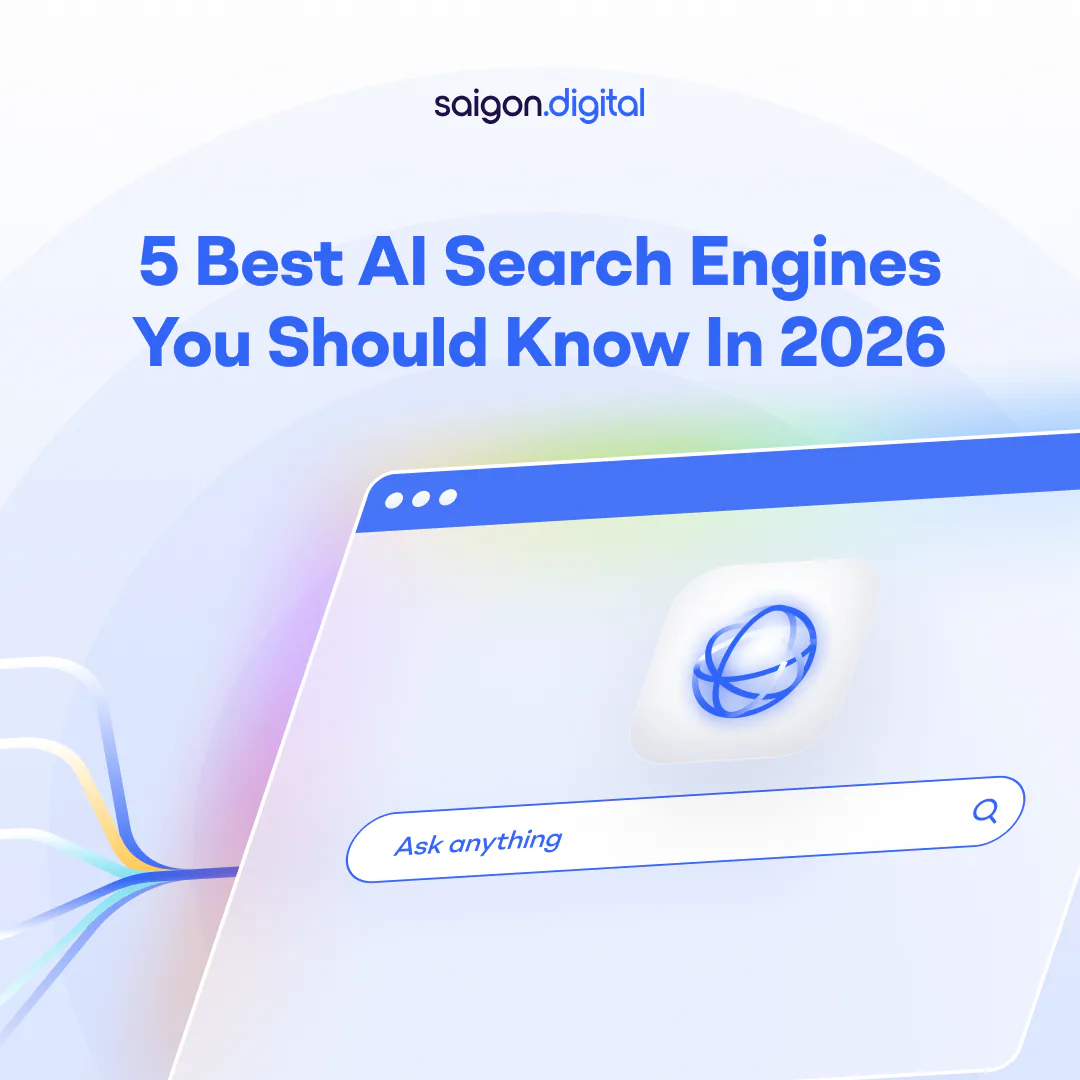
What Is an AI Search Engine?
An AI search engine uses artificial intelligence, including natural language processing and machine learning, to understand search intent, context and nuance behind a query. Rather than simply matching keywords, it aims to deliver direct, relevant answers.
For example, instead of searching “best CRM software small business” and clicking through ten links, an AI search engine may summarise the best options, explain why they are suitable, and cite sources, all in one response.
This shift has major implications for SEO, content strategy and digital visibility.
1. Google Search (AI Overviews)
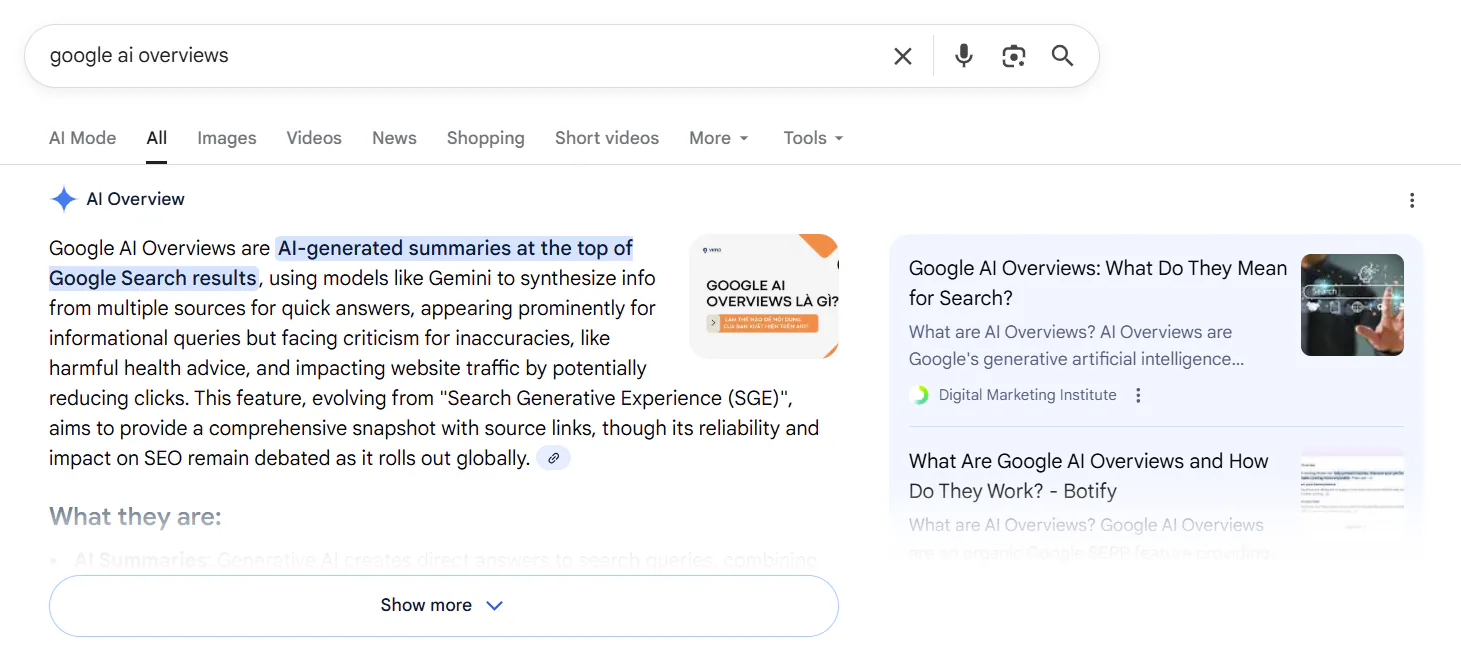
Google continues to lead the evolution of the AI search engine in 2026. With AI Overviews now deeply embedded into standard search results, Google has shifted from simply ranking pages to actively interpreting, summarising and presenting information based on user intent.
As a result, search visibility today depends less on ranking alone and more on how well your content supports Google’s AI understanding.
Why It Stands Out
Google’s AI Overviews stand out because they combine generative AI with the most comprehensive search index in the world. Instead of displaying only a list of links, Google now provides synthesised answers at the top of the results page, drawing insights from multiple trusted sources.
More importantly, Google’s AI is designed to understand context, relationships and intent, not just keywords. This allows it to respond effectively to complex, layered or conversational queries.
Key reasons Google remains the dominant AI search engine include:
- Unmatched access to real-time and historical data
- Advanced natural language understanding
- Integration with Google products such as Maps, Shopping and YouTube
- Strong emphasis on content credibility and experience
From an SEO perspective, Google’s AI Overviews reinforce one clear message: content must be genuinely useful, well-structured and authoritative to earn visibility.
Practical Example
To understand how this works in practice, consider a user searching:
“How can an ecommerce website improve conversion rates?”
Instead of forcing the user to open multiple links, Google’s AI Overview may present a concise summary covering:
- UX improvements such as clearer navigation and trust signals
- Technical factors like page speed and mobile performance
- CRO techniques including A/B testing and product page optimisation
This summary is then supported by links to trusted sources for users who want deeper insights.
For content creators and businesses, this means:
- Your content may be surfaced even if users do not click through
- Clear explanations and logical structure increase your chances of being referenced
- Pages that directly answer questions perform better than generic blog posts
At Saigon Digital, we approach content creation with this exact behaviour in mind, structuring information so Google’s AI can confidently interpret and surface it.
What This Means for Businesses
As Google’s AI search engine becomes more proactive, businesses must rethink how they approach SEO and content strategy. Simply ranking for keywords is no longer enough. Instead, brands need to position themselves as reliable sources that Google’s AI can trust.
To improve visibility within AI Overviews, businesses should focus on:
- Creating content that answers specific user questions clearly
- Demonstrating real expertise through depth and accuracy
- Using structured data to help Google understand context
- Maintaining strong technical SEO foundations
In addition, consistency across your digital presence matters more than ever. Google’s AI evaluates signals such as:
- Content quality and freshness
- Brand authority and topical relevance
- User engagement and experience
Ultimately, Google AI Overviews reward brands that prioritise users over algorithms. When your content is helpful, accessible and strategically structured, visibility follows naturally.
2. Microsoft Bing with Copilot
Microsoft Bing has quietly transformed into one of the most capable AI search engines in 2026. With Copilot fully integrated into the search experience, Bing now delivers conversational, context-aware responses while still grounding answers in traditional search results. This balance makes it particularly valuable for research, planning and professional decision-making.
Rather than competing directly with Google’s approach, Bing positions itself as a practical assistant, guiding users through complex topics step by step.
Why It Stands Out
What sets Bing apart is how Copilot enhances search through interactive, multi-turn conversations. Users can ask a question, refine it, request clarification or dive deeper without restarting the search process.
In addition, Bing benefits from Microsoft’s strong presence in enterprise and productivity tools, which shapes how users engage with search.
Key strengths of Bing as an AI search engine include:
- Conversational search that supports follow-up questions
- Strong performance for B2B, technical and professional topics
- Integration with Microsoft 365, Edge and LinkedIn data
- Clear balance between AI-generated answers and source links
Because of this, Bing often excels at queries that require structured thinking, comparison or strategic evaluation.
Practical Example
Imagine a digital marketer searching:
“What are the most effective B2B SEO strategies for 2026?”
With Copilot, Bing may:
- Provide a summarised overview of key trends
- Break strategies into sections such as content, technical SEO and authority building
- Suggest follow-up questions like “How does AI impact B2B keyword research?”
The user can then continue the conversation, refining their research without leaving the search interface.
For businesses, this means:
- Content that supports deeper exploration performs better
- Long-form, educational resources gain more visibility
- Pages that explain “why” and “how” are favoured over surface-level content
This aligns closely with how decision-makers research solutions today.
What This Means for Businesses
Bing with Copilot presents a strong opportunity for brands, particularly those operating in B2B, SaaS and professional services. As Copilot draws from high-quality web content, businesses that invest in clarity and authority are more likely to be referenced.
To perform well in this AI search engine, businesses should:
- Publish in-depth, well-organised content
- Use clear headings and logical content flow
- Focus on topics where expertise and insight matter
- Maintain strong on-page SEO fundamentals
Additionally, Bing places noticeable value on:
- Clear authorship and credibility
- Accurate, up-to-date information
- Content that supports analysis and decision-making
At Saigon Digital, we see Bing as an underutilised channel with significant potential. For brands willing to move beyond basic optimisation and focus on meaningful content, Bing with Copilot can become a valuable driver of qualified traffic.
3. Perplexity AI
Perplexity AI has established itself as a trusted, research-focused AI search engine in 2026. Rather than trying to replace traditional search outright, it enhances it by prioritising clarity, accuracy and transparency. As a result, it has become a preferred tool for users who need reliable information quickly, without unnecessary noise.
For businesses, Perplexity represents a shift towards search environments where credibility and substance matter more than brand size or domain age.
Why It Stands Out
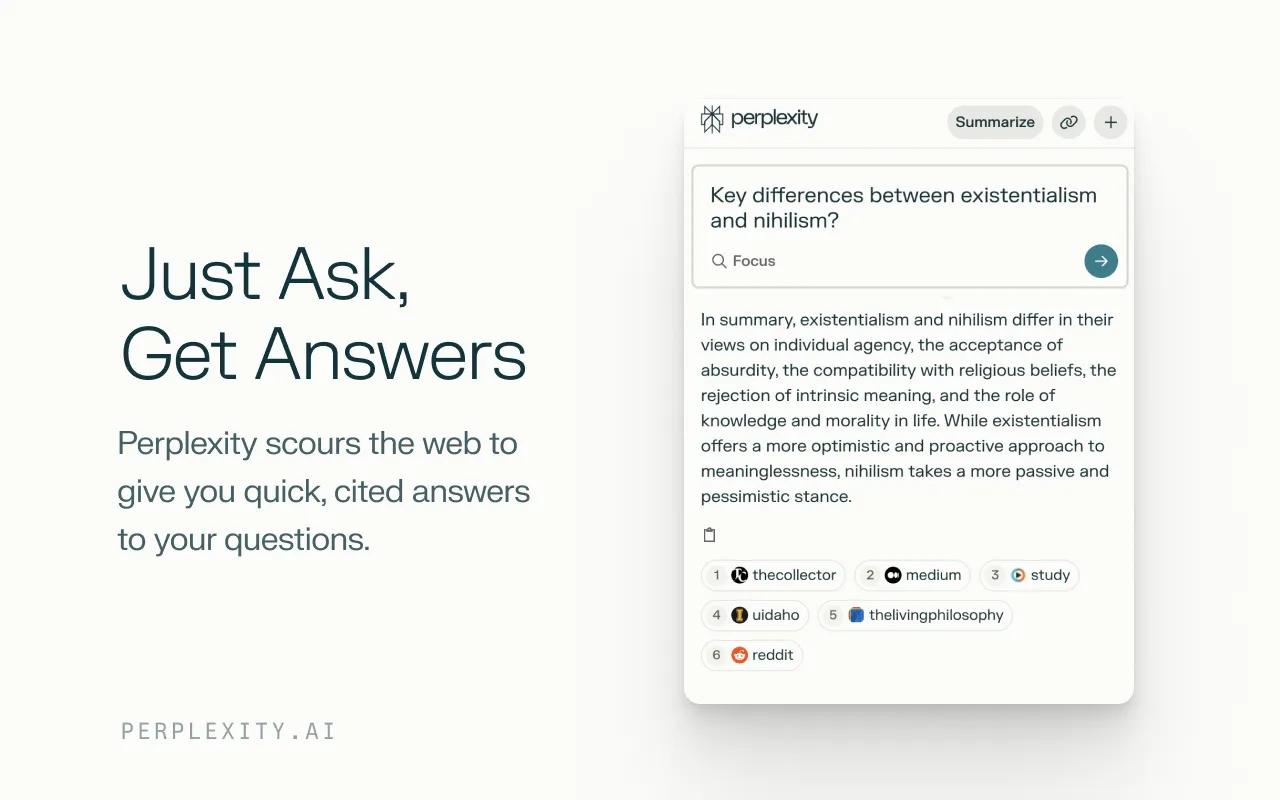
What truly differentiates Perplexity AI is its commitment to verifiable answers. Every response is supported by clear source citations, allowing users to check facts and explore original materials with ease.
This approach builds trust and encourages more informed decision-making, especially for complex or sensitive topics.
Key reasons Perplexity stands out as an AI search engine include:
- Transparent citations for every answer
- Concise, well-structured responses
- Strong performance for research and factual queries
- Minimal distractions and no aggressive advertising
Because of this focus, Perplexity appeals strongly to professionals, analysts, students and decision-makers who value accuracy over volume.
Practical Example
Consider a user researching:
“What are the UK’s AI regulations in 2026?”
Perplexity AI may respond with:
- A clear summary of current legislation
- Key regulatory bodies involved
- Recent updates or proposed changes
Each point is supported by links to government publications, reputable news outlets or legal analyses.
For content publishers and businesses, this behaviour highlights an important insight:
- Content that is well-researched and clearly written is more likely to be cited
- Authoritative sources outperform opinion-based or vague content
- Updates and factual accuracy directly influence visibility
In short, Perplexity rewards depth and reliability.
What This Means for Businesses
Perplexity AI raises the bar for content quality. To gain visibility within this AI search engine, businesses must treat content as a strategic asset rather than a traffic tactic.
Effective approaches include:
- Publishing expert-led, fact-driven content
- Referencing reputable sources where appropriate
- Keeping pages updated as information changes
- Structuring content for clarity and scannability
Perplexity also favours:
- Neutral, informative tone
- Clear explanations over marketing language
- Evidence-backed insights
At Saigon Digital, we see platforms like Perplexity as a strong signal of where search is heading. As AI search engines become more selective, brands that invest in trust, expertise and long-term value will stand out naturally.
4. ChatGPT Search
ChatGPT Search has evolved into one of the most influential AI search engines in 2026, particularly for users seeking guidance, problem-solving and strategic thinking. Rather than focusing purely on information retrieval, it helps users understand what to do next by combining live web data with advanced conversational intelligence.
As a result, ChatGPT Search is increasingly used not just to find answers, but to shape decisions.
Why It Stands Out
What sets ChatGPT Search apart is its ability to interpret complex intent and maintain context throughout a conversation. Users are not limited to a single query; instead, they can refine their thinking through dialogue.
This creates a more natural search experience, closer to consulting an expert than using a traditional search engine.
Key strengths of ChatGPT Search as an AI search engine include:
- Human-like conversational responses
- Strong contextual and multi-step reasoning
- Ability to synthesise information across multiple sources
- Effective handling of open-ended and strategic questions
Because of this, ChatGPT Search excels where clarity, explanation and structured thinking are required.
Practical Example
Consider a business owner asking:
“What digital strategy should a mid-sized retailer focus on in 2026?”
ChatGPT Search may respond by:
- Identifying key priorities such as SEO, CRO and automation
- Explaining why each area matters in the current landscape
- Suggesting practical next steps and tools
The user can then ask follow-up questions like “Which channels should I prioritise first?” or “How do I measure success?”, all within the same flow.
For businesses, this highlights a crucial shift:
- Users are influenced during the research phase, not just at the point of purchase
- Content that explains processes and decisions performs better
- Thought leadership and expertise are increasingly visible
ChatGPT Search rewards brands that help users think, not just click.
What This Means for Businesses
To appear meaningfully within ChatGPT Search responses, businesses must move beyond keyword-driven content and focus on genuine usefulness.
Effective strategies include:
- Creating content that answers “how” and “why” questions
- Publishing clear frameworks, guides and explanations
- Maintaining a consistent and authoritative brand voice
- Ensuring information is accurate and up to date
ChatGPT Search also values:
- Logical structure and clarity
- Neutral, informative tone over sales-led messaging
- Content that reflects real-world experience
At Saigon Digital, we see ChatGPT Search as a natural extension of user-centric marketing. When content is designed to educate, guide and empower, AI search engines recognise its value and so do users.
5. Brave Search with AI Summaries
Brave Search has carved out a clear position in the AI search engine landscape by putting privacy, transparency and independence at the centre of the user experience. In 2026, its AI-powered summaries enhance search without compromising user data, making it increasingly popular among privacy-conscious users and forward-thinking businesses.
Rather than relying on third-party tracking or behavioural profiling, Brave builds trust through simplicity and neutrality.
Why It Stands Out
Brave Search stands out because it combines AI-driven summaries with an independent search index and a strong commitment to user privacy. This means results are not shaped by personal data, past behaviour or invasive tracking.
As a result, Brave offers a more objective search experience, which many users now actively seek.
Key strengths of Brave as an AI search engine include:
- Privacy-first approach with no user tracking
- AI-generated summaries based on multiple neutral sources
- Independent index, not reliant on Google or Bing
- Clean, uncluttered search experience
This approach appeals to users who value transparency and want control over how their data is used.

Practical Example
A user searching:
“Best technical SEO tools for growing websites”
may receive an AI summary that:
- Lists commonly recommended tools
- Explains their core use cases
- Highlights strengths without personal bias
Because Brave does not personalise results, the summary reflects a broader consensus rather than tailored recommendations.
For businesses, this reinforces an important principle:
- Content must stand on its own merit
- Clear explanations outperform promotional language
- Neutral, informative writing gains more trust
Brave rewards clarity, not persuasion.
What This Means for Businesses
Brave Search with AI Summaries presents a growing opportunity for brands that value ethical, user-first digital practices. As privacy becomes a stronger differentiator, visibility on Brave can support both reach and brand reputation.
To perform well within this AI search engine, businesses should focus on:
- Publishing transparent, fact-based content
- Avoiding exaggerated or overly sales-driven messaging
- Strengthening technical SEO and site performance
- Ensuring accessibility and usability
Brave also places importance on:
- Honest comparisons and balanced insights
- Clear structure and readability
- Consistent quality across all content
At Saigon Digital, we see platforms like Brave as a signal of where digital growth is heading. Brands that invest in trust, performance and user respect today are better positioned to lead tomorrow.
How Businesses Should Prepare for AI Search in 2026
As AI search engines continue to reshape how users discover information, businesses must adapt with intention rather than reaction. Preparing for AI-driven search in 2026 requires a shift in mindset, from chasing rankings to genuinely supporting user needs at every stage of the journey.
Below, we break down the key focus areas and explain how businesses can act on each one effectively.
1. Focus on User Intent, Not Just Keywords
While keywords still matter, AI search engines now prioritise intent, the reason behind a search, over exact phrasing. This means businesses must understand what users are truly trying to achieve when they ask a question.
For example, someone searching “AI search engine for ecommerce” may be:
- Researching solutions
- Comparing tools
- Looking for implementation advice
Instead of creating separate, keyword-heavy pages, businesses should:
- Map content to informational, commercial and decision-making intent
- Answer follow-up questions within the same page
- Use natural language that reflects how people actually speak
By doing so, content becomes more useful to users and easier for AI search engines to interpret.
2. Prioritise Content Quality and Clarity
AI search engines favour content that is easy to understand, logically structured and genuinely helpful. Clear writing allows AI systems to extract meaning, summarise insights and present information accurately.
To improve clarity and quality, businesses should:
- Use descriptive headings and short paragraphs
- Explain concepts step by step
- Avoid jargon unless it is clearly defined
For instance, rather than stating “optimise for AI visibility”, explain what that means in practice and how to do it. When content reads well for humans, it performs better in AI search environments.
3. Build Topical Authority and Trust
In 2026, AI search engines assess whether a brand consistently demonstrates expertise within a topic area. One-off articles are far less effective than a well-connected content ecosystem.
To build authority:
- Create clusters of related content around core topics
- Link supporting articles back to comprehensive guides
- Keep information accurate and updated
Trust signals also matter. These include:
- Clear authorship and credentials
- Real-world experience and examples
- Consistent messaging across platforms
At Saigon Digital, we focus on helping brands earn trust by delivering depth, not just breadth.

4. Strengthen Technical SEO and Structured Data
Even the best content will struggle if AI search engines cannot properly interpret it. Technical SEO and structured data provide the framework AI systems rely on to understand context and relationships.
Key actions include:
- Ensuring fast load times and mobile performance
- Using schema markup for articles, FAQs and organisations
- Maintaining clean site architecture and internal linking
For example, adding FAQ schema helps AI search engines identify direct answers, increasing the likelihood of being referenced in summaries or conversational results.
Strong technical foundations support both user experience and AI visibility.
5. Think Beyond Clicks and Measure Real Impact
Finally, businesses must rethink how they measure success. AI search engines often deliver answers without a click, which means visibility does not always translate into traditional traffic.
Instead, businesses should track:
- Brand mentions and visibility in AI-generated responses
- Engagement quality when users do visit
- Lead quality and conversion outcomes
This shift requires aligning SEO with broader business goals rather than vanity metrics. When content influences decisions, even without a click, it still delivers value.
Take the Next Step Towards AI-Driven Search Success
AI search is the present. The best-performing brands in 2026 will be those that understand how AI search engines interpret content and serve users.
By staying informed and adapting early, businesses can turn this shift into a competitive advantage.
Saigon Digital is here to help If you are ready to future-proof your visibility and explore how AI-driven search can support real business growth.
Contact us today and see how we help you reach full AI visibility!
Want to be the brand AI engines recommend?
We make businesses visible on Google and inside AI answers, measured in leads, not vanity metrics.