Search visibility is no longer just about ranking on Google. In 2026, brands are being discovered and recommended by AI systems every day, from generative search experiences to AI assistants, recommendation engines, and conversational interfaces.
For ambitious brands, this shift brings both opportunity and complexity. The challenge is no longer “Are we ranking?” but “How visible, trusted, and referenced is our brand across AI-driven ecosystems?”
That’s where AI visibility tools come in.
At Saigon Digital, we help brands stay ahead by combining technical SEO, data, and AI-powered marketing. In this guide, we explore seven AI visibility tools that can help you track, understand, and optimise how your brand appears across AI platforms in 2026, with practical examples you can apply straight away.
What Are AI Visibility Tools?
AI visibility tools measure how your brand is interpreted, surfaced, and referenced by artificial intelligence systems. Unlike traditional SEO tools, they focus on:
- Brand mentions in AI-generated answers
- Authority signals used by large language models
- Sentiment and accuracy of AI responses
- Presence across AI search, assistants, and discovery tools
Put simply, they help you understand what AI “knows” about your brand and how to influence it.
1. Profound – AI Search Visibility Intelligence
Best for
Tracking brand presence, authority, and competitiveness in AI search engines.
Profound is purpose-built for understanding how brands appear in generative AI environments. Rather than focusing on rankings or clicks, it measures whether your brand is mentioned, cited, or implied in AI-generated answers. This makes it especially valuable for businesses that rely on brand authority, expertise, and trust to drive growth.
For SEO agencies like Saigon Digital, Profound supports a more strategic view of visibility, one that reflects how real users increasingly discover brands through AI-assisted journeys rather than traditional search results alone.
How It Helps in Practice
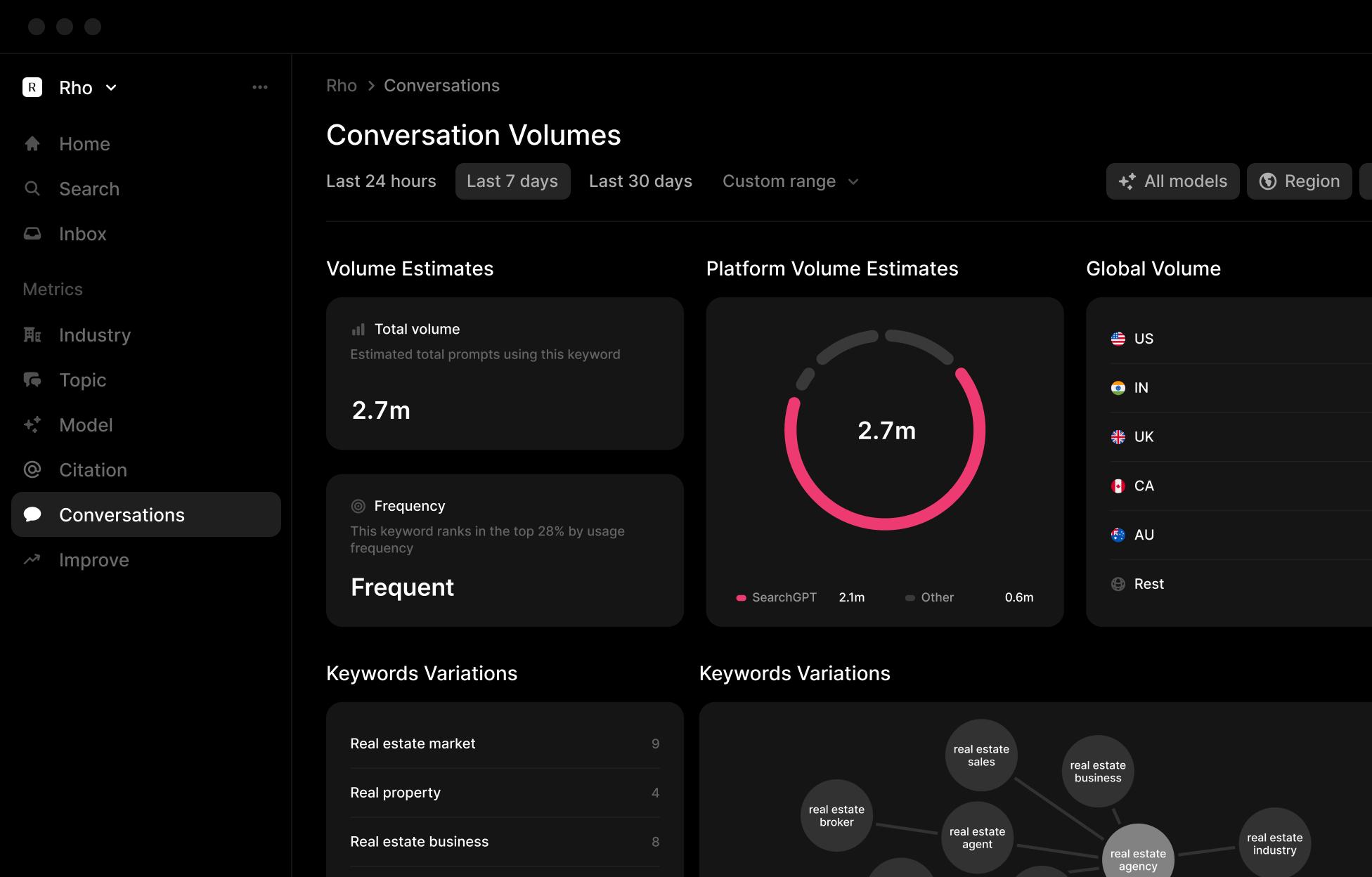
Profound analyses AI-generated responses to real search prompts across multiple platforms, such as generative search engines and AI assistants. It then identifies which brands are referenced, how prominently they appear, and the sources AI models rely on to construct those answers.
For example, if a user asks an AI-powered search tool “Which digital agencies specialise in AI-powered marketing?”, Profound can show:
- Whether your brand is mentioned at all
- How frequently competitors are referenced instead
- Which websites, publications, or content formats AI systems draw from
As a result, you gain visibility into why certain brands are surfaced and what signals AI models trust most in your industry.
Workflow Implementation
To integrate Profound into your workflow effectively, start by identifying a set of priority prompts that reflect your commercial and strategic goals. These might include service-based queries, category comparisons, or “best of” questions relevant to your market.
From there:
- Track AI responses to these prompts on a regular basis (weekly or monthly).
- Compare your brand’s presence against key competitors.
- Review the sources cited by AI models for each response.
This process allows teams to move from guesswork to evidence-led optimisation. Content, PR, and SEO teams can then collaborate using shared insights rather than working in silos.
Actionable Insights
Profound excels at highlighting visibility gaps. If competitors consistently appear in AI answers while your brand does not, the tool helps uncover the reason. Often, the issue is not volume of content, but clarity, authority, or relevance.
Common actions informed by Profound data include:
- Publishing expert-led thought leadership that mirrors the language AI systems already trust
- Strengthening topical clusters around high-value services
- Improving entity clarity on About pages, service pages, and schema
By aligning content with AI-recognised sources and formats, brands can steadily improve how often and how accurately they are referenced.
Practical Example
A B2B brand may discover that AI models consistently cite industry publications rather than brand blogs when answering strategic questions. Instead of producing more generic content, the smarter response would be to:
- Contribute expert commentary to those publications
- Secure citations and backlinks from trusted industry sources
- Reference proprietary data or insights AI models can reuse
Over time, this shifts AI perception from observer to authority.
2. Brandwatch with AI Insights – Brand Perception at Scale
Best for
Understanding brand sentiment, narratives, and perception that influence AI-driven discovery
Brandwatch with AI Insights is particularly valuable for brands that want to understand how they are talked about, not just where they appear. As AI systems increasingly learn from large volumes of public discourse, brand perception across social platforms, forums, blogs, and news sites plays a growing role in shaping AI-generated responses.
For growth-focused brands, Brandwatch provides the context needed to manage reputation, reinforce positioning, and influence the narratives AI models absorb over time.
How It Helps in Practice
Brandwatch uses AI to analyse vast amounts of online conversation in real time. It goes beyond surface-level mentions by identifying sentiment, emerging themes, and shifts in how a brand is described across different channels.
For example, if discussions around your brand increasingly mention “automation” or “AI solutions” alongside your name, Brandwatch highlights this trend early. Conversely, if outdated services or misconceptions persist in public conversation, the platform makes these visible before they become embedded in AI responses.
This insight is especially important as SEO AI tools often reflect prevailing narratives rather than official brand messaging.
Workflow Implementation
To embed Brandwatch into your workflow, begin by setting up monitored topics around:
- Brand name and variations
- Core services and expertise
- Competitor mentions
- Industry keywords linked to your positioning
Next, schedule regular reviews of sentiment and topic clusters. These reviews work best when shared across marketing, PR, and content teams, ensuring everyone responds to the same insights.
From there, align output with findings:
- Address misconceptions through blog content or FAQs
- Reinforce positive narratives via case studies and thought leadership
- Respond quickly to emerging issues before they scale
This turns brand monitoring into a proactive optimisation process rather than a reactive one.
Actionable Insights
Brandwatch excels at uncovering narrative gaps. These occur when the way your brand wants to be known does not match how it is discussed publicly.
Typical actions informed by Brandwatch data include:
- Adjusting messaging across owned channels to reinforce priority themes
- Creating content that answers recurring questions or concerns
- Feeding insights into digital PR campaigns to influence wider discourse
By shaping conversation at scale, brands indirectly influence how AI systems describe and recommend them.
Practical Example
Consider a digital agency positioning itself as an AI-powered growth partner. Brandwatch may reveal that online discussions focus heavily on web design but rarely mention automation or AI.
Armed with this insight, the agency can:
- Publish expert commentary on AI-driven marketing trends
- Promote AI-led case studies through PR and social channels
- Collaborate with industry publications to reposition perception
Over time, this realigns public discourse, which in turn shapes AI-generated summaries and recommendations.
3. SEMrush AI Toolkit – From Keywords to AI Mentions
Best for
Connecting traditional SEO performance with AI-driven visibility and discovery
SEMrush’s AI Toolkit is ideal for brands that already invest in SEO and want to evolve their approach for an AI-first search landscape. Rather than replacing keyword strategy, it helps teams understand how existing SEO assets contribute to visibility within AI-assisted search results and generative answers.
For businesses navigating the transition from rankings to references, SEMrush provides a practical bridge between established SEO metrics and emerging AI visibility signals.
How It Helps in Practice
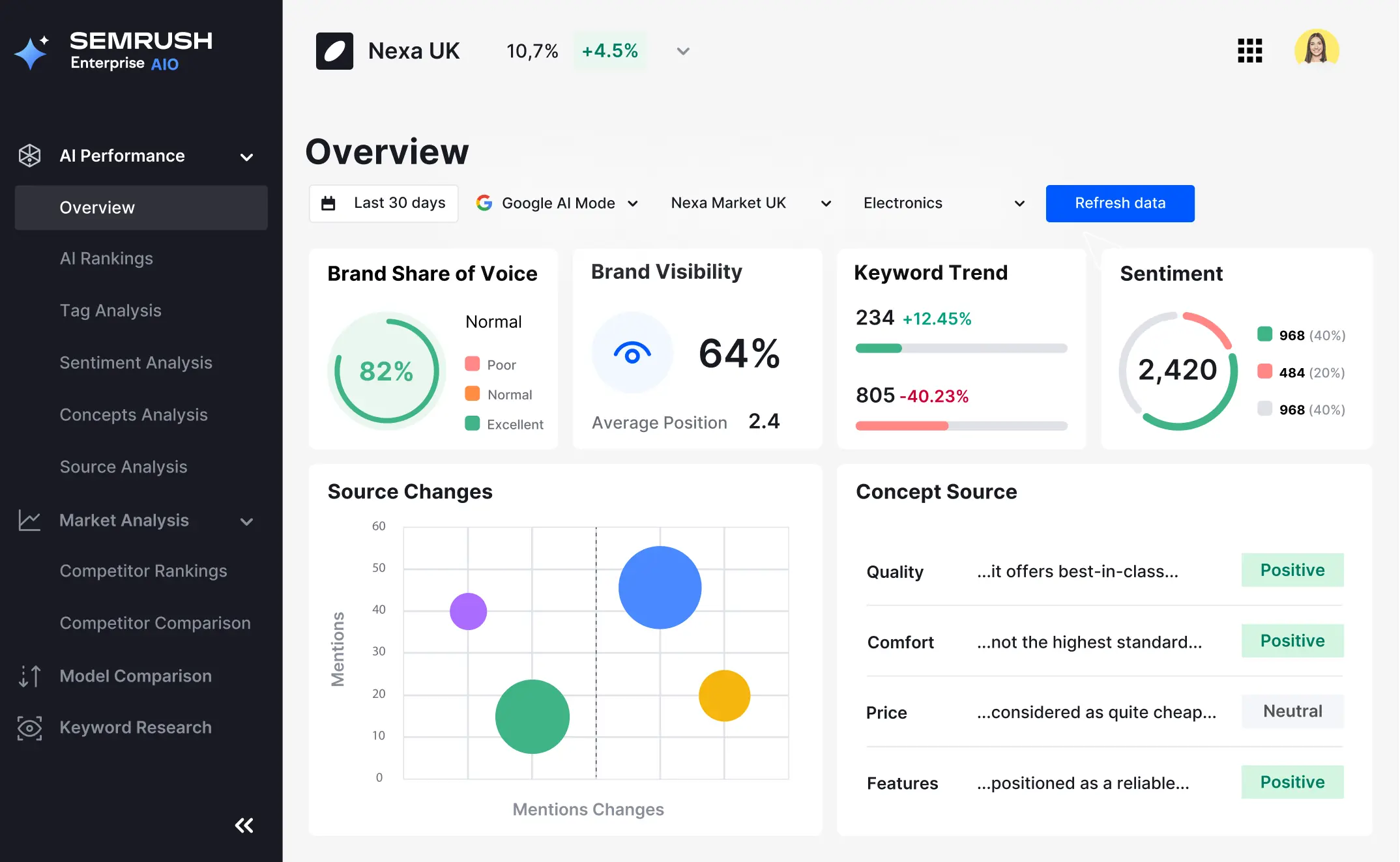
SEMrush analyses which pages, topics, and formats are most likely to be surfaced or summarised by AI-powered search features. It evaluates content structure, topical depth, and authority signals to determine how well pages align with AI preferences.
For example, two pages may rank similarly for a keyword, yet only one is consistently used by AI systems. SEMrush helps explain why. Common differentiators include:
- Clear topical focus rather than broad coverage
- Strong internal linking within a subject area
- Structured content such as FAQs, lists, and definitions
This allows teams to move beyond optimisation for search engines alone and begin optimising for AI interpretation.
Workflow Implementation
To integrate SEMrush into an AI visibility workflow, start by auditing your highest-performing content. Identify pages that:
- Rank well but receive declining clicks
- Generate impressions without clear engagement
- Cover high-intent or strategic topics
Next, analyse these pages using SEMrush’s AI-focused insights. Look for opportunities to improve clarity, structure, and depth rather than adding volume.
From there, prioritise updates that:
- Clarify expertise and intent in headings
- Add concise explanations and summaries
- Strengthen internal links between related content
This ensures content remains valuable both to users and to AI systems generating answers.
Actionable Insights
SEMrush often reveals that content quality and structure outweigh frequency. Pages that explain concepts clearly, reference trusted sources, and answer real questions are more likely to be selected by AI models.
Typical actions informed by SEMrush data include:
- Rewriting introductions to clarify intent within the first few lines
- Adding question-led subheadings aligned with user prompts
- Consolidating overlapping content into stronger topical hubs
These refinements improve the likelihood of being cited, even when users never click through.
Practical Example
A brand may notice that a service page ranks on page one but is never referenced in AI summaries. SEMrush analysis might reveal:
- Vague headings
- Lack of supporting content
- Weak internal links
By restructuring the page with clearer sections, FAQs, and supporting articles, the brand improves both search performance and AI visibility without creating new content from scratch.
4. Scrunch AI – How AI Models Understand Your Brand
Best for
Identifying and correcting how AI systems interpret, describe, and position your brand
Scrunch AI is designed to answer a critical question for modern brands: What do AI models actually think we do? Unlike tools that focus on visibility alone, Scrunch examines the accuracy and consistency of brand representation inside AI-generated outputs.
As AI assistants increasingly act as intermediaries between brands and customers, ensuring that these systems describe your business correctly becomes essential for trust and conversion.
How It Helps in Practice
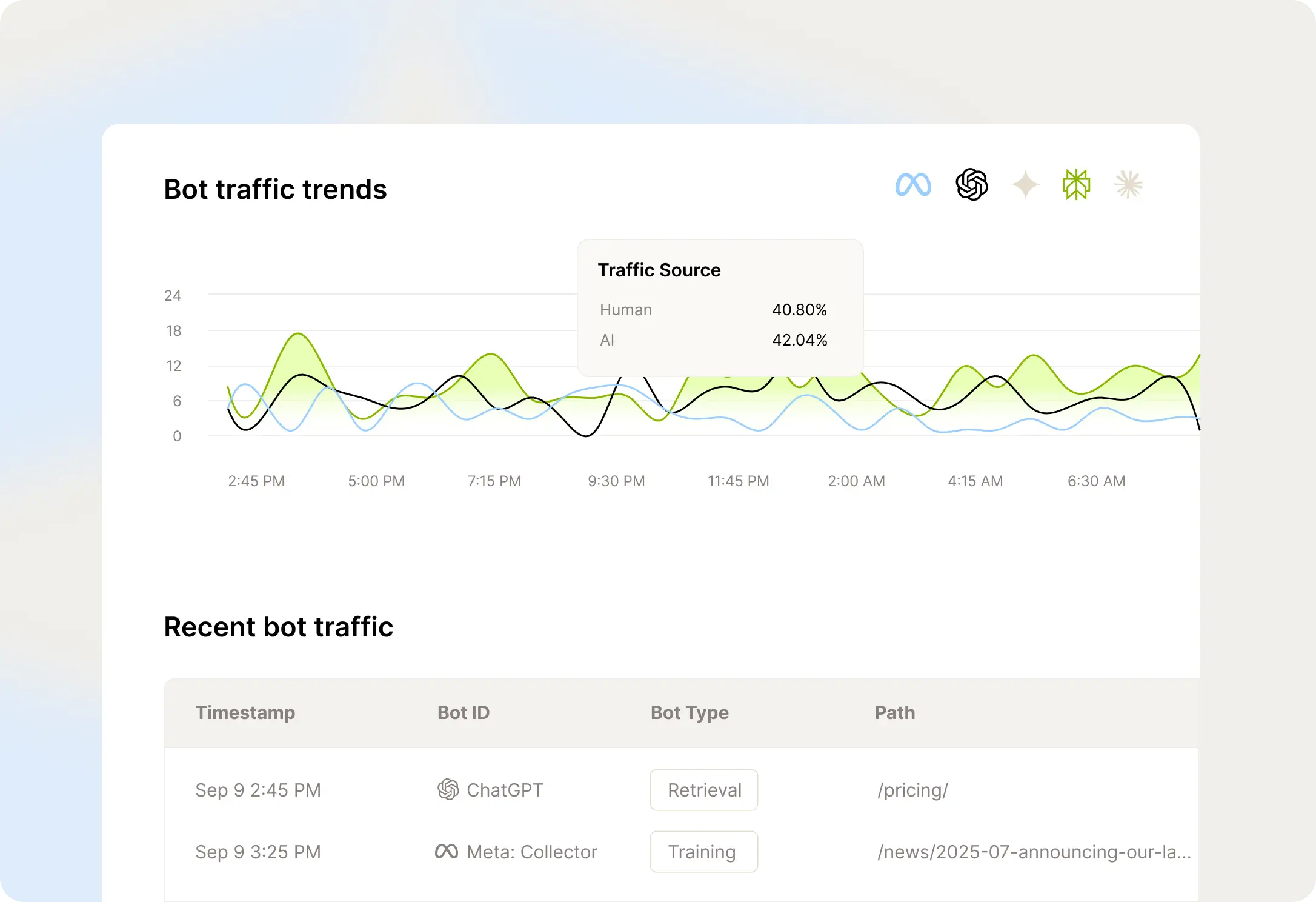
Scrunch AI audits responses generated by large language models when prompted with brand-related or category-specific queries. It then compares those outputs against your intended positioning, services, and expertise.
For example, if an AI assistant describes your brand as a “general marketing agency” when you specialise in AI-powered growth and technical SEO, Scrunch highlights that misalignment. It also identifies which elements of your digital footprint are influencing that interpretation.
This provides clarity on whether AI models are drawing from outdated pages, third-party summaries, or unclear messaging.
Workflow Implementation
To implement Scrunch AI effectively, begin by defining your core brand attributes. These typically include:
- Primary services
- Target industries
- Geographic focus
- Differentiators and expertise
Next, use Scrunch to test a range of prompts such as:
- “What does [brand name] specialise in?”
- “Who should use [brand name]?”
- “How does [brand name] compare to competitors?”
Review the results regularly and flag inaccuracies or omissions. These insights should then feed directly into content updates, brand guidelines, and digital PR efforts.
Actionable Insights
Scrunch often reveals that ambiguity is the enemy of AI understanding. When brand messaging is vague or inconsistent, AI systems fill the gaps with assumptions.
Actions typically informed by Scrunch insights include:
- Refining About and service pages with clearer positioning
- Updating meta descriptions and schema to reinforce key facts
- Aligning third-party profiles, directories, and citations
By tightening these signals, brands reduce the risk of misrepresentation at scale.
Practical Example
A technology consultancy may find that AI tools repeatedly describe it as a software vendor rather than a strategic partner. Scrunch may reveal that this misconception stems from old product-focused content still indexed online.
The solution would be to:
- Update or remove outdated pages
- Publish clearer service-led content
- Reinforce positioning through expert commentary and case studies
Over time, AI outputs shift to reflect the corrected narrative.
5. Otterly.AI – Monitoring AI Answer Engines
Best for
Tracking brand visibility and competitive presence in AI-generated answers
Otterly.AI is built to monitor how brands appear within AI answer engines rather than traditional search results. As users increasingly rely on conversational interfaces to ask questions and compare options, Otterly provides visibility into whether your brand is part of those conversations.
For brands focused on discovery and consideration, this makes Otterly an essential tool for understanding AI-driven influence.
How It Helps in Practice
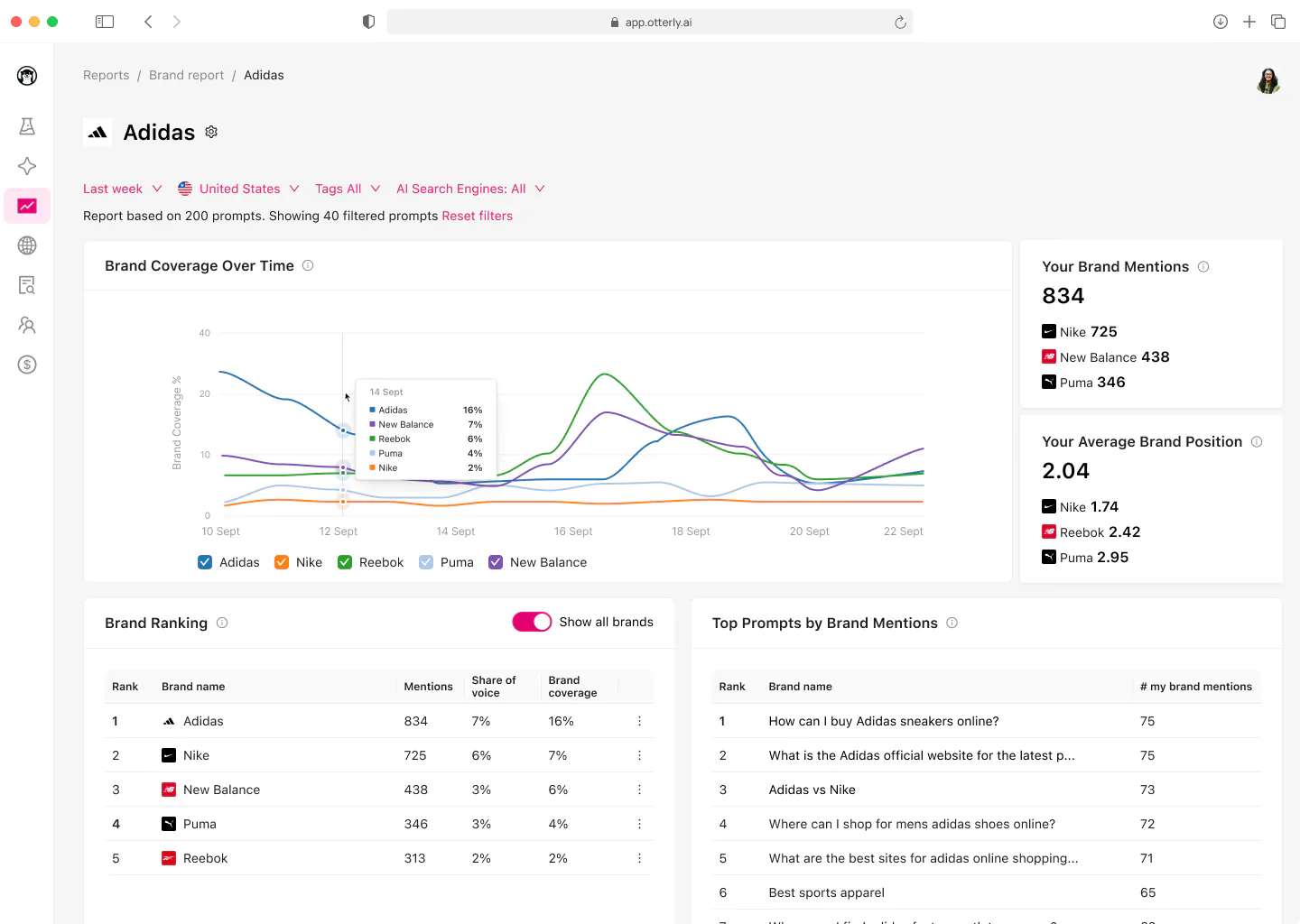
Otterly.AI tracks AI responses to a defined set of prompts across various AI platforms. Instead of measuring rankings, it shows which brands are mentioned, how often, and in what context.
For example, when a user asks “What is the best SEO agency for enterprise businesses?”, Otterly records:
- Which agencies are mentioned
- Whether mentions are positive, neutral, or comparative
- How consistently the same brands appear over time
This highlights patterns in AI behaviour that traditional analytics tools cannot capture.
Workflow Implementation
To integrate Otterly into your workflow, begin by identifying high-intent prompts that mirror real customer questions. These often include:
- “Best”, “top”, or “recommended” queries
- Comparison-based questions
- Problem-solving prompts relevant to your services
Track these prompts consistently and review results on a scheduled basis. Sharing reports across marketing, SEO, and leadership teams ensures alignment on visibility priorities.
From there, connect insights to action:
- Update content to better answer tracked questions
- Add expert perspectives that AI can reference
- Strengthen authority signals around priority topics
Actionable Insights
Otterly often reveals that answer relevance matters more than keyword optimisation. Brands that clearly explain solutions, benefits, and use cases are more likely to be included in AI-generated responses.
Common actions based on Otterly insights include:
- Creating question-led content that mirrors natural language prompts
- Adding concise summaries and definitions within pages
- Improving clarity around who your services are for
These changes increase the likelihood that AI systems select your brand as part of an answer.
Practical Example
A B2B consultancy may track prompts related to digital transformation but find that competitors appear more frequently. Otterly might show that competitor content focuses heavily on outcomes and real-world examples.
In response, the consultancy could:
- Publish clearer case studies
- Add outcome-driven messaging to service pages
- Include expert commentary answering common transformation challenges
Over time, visibility within AI answers improves without chasing rankings.
6. InLinks – Entity SEO for AI Understanding
Best for
Strengthening entity recognition, topical authority, and semantic clarity for AI systems
InLinks is particularly effective for brands that want AI systems to clearly understand who they are, what they do, and how their expertise connects across topics. Rather than focusing solely on keywords, InLinks is built around entities: people, brands, services, and concepts that AI models rely on to interpret meaning.
As AI-driven search increasingly prioritises understanding over matching, entity SEO has become a foundational element of visibility.
How It Helps in Practice
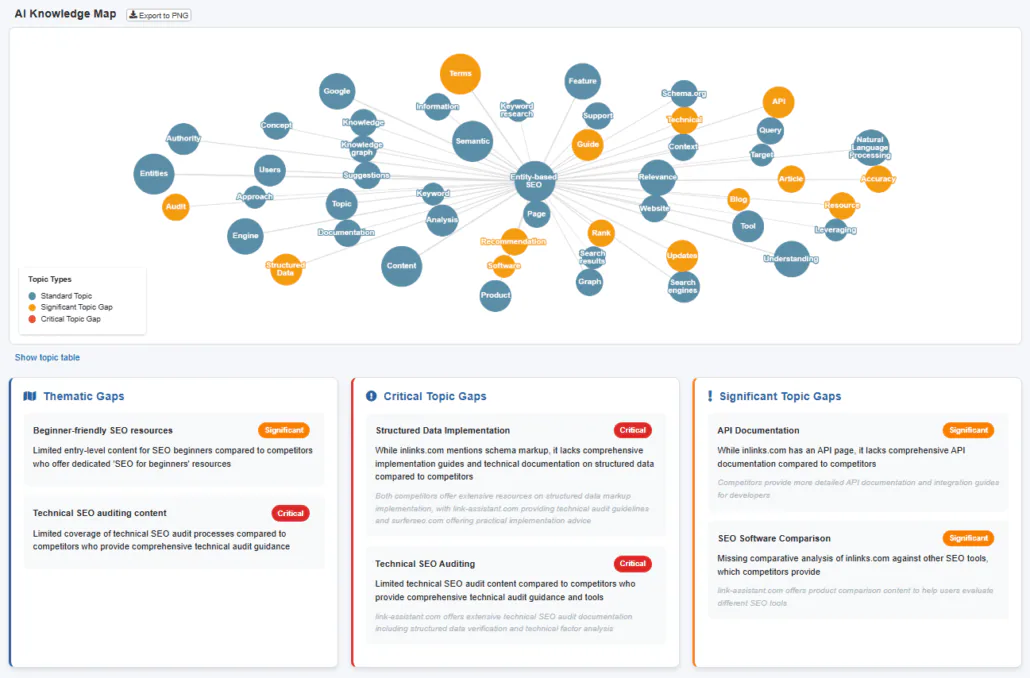
InLinks analyses your content and identifies how well it communicates entity relationships. It highlights whether key concepts are clearly defined, consistently referenced, and logically connected across your site.
For example, if your brand offers “AI-powered SEO” but your content treats AI, SEO, and automation as separate ideas, InLinks will flag this fragmentation. It then recommends internal links and topic associations that reinforce your expertise as a unified concept.
This helps AI systems interpret your site as an authoritative source rather than a collection of disconnected pages.
Workflow Implementation
To integrate InLinks into your workflow, start by mapping your core topics and services. These should align closely with your strategic priorities and commercial offerings.
Next:
- Use InLinks to audit existing content for entity clarity and topic coverage.
- Implement recommended internal links that connect related concepts.
- Update content to define key terms clearly and consistently.
This process works best when applied incrementally. Instead of creating new content, focus first on strengthening what already exists.
Actionable Insights
InLinks frequently reveals that internal linking is a semantic signal, not just a navigation aid. Well-connected content helps AI models understand which topics you specialise in and how deep your expertise runs.
Actions typically informed by InLinks insights include:
- Consolidating overlapping articles into clearer topic hubs
- Adding contextual links between service pages and supporting content
- Improving definitions and explanations of core services
These steps enhance both user experience and AI comprehension.
Practical Example
A digital agency may have separate articles on SEO, content marketing, and AI tools, but little connection between them. InLinks might identify this gap and recommend linking them into a cohesive “AI-powered marketing” topic cluster.
By doing so, the agency strengthens its authority around a strategic theme, making it easier for AI systems to understand and reference that expertise.
7. Google Search Console (AI-Driven Insights)
Best for
Validating real-world performance data influenced by AI-powered search features
Google Search Console remains a critical tool in 2026, even as search becomes increasingly AI-driven. While it is not designed exclusively for AI visibility, it provides the most reliable first-party data on how Google surfaces your content, including impressions and interactions shaped by generative search experiences.
For brands, Search Console acts as a grounding point, ensuring AI visibility strategies are informed by actual performance rather than assumptions.
How It Helps in Practice
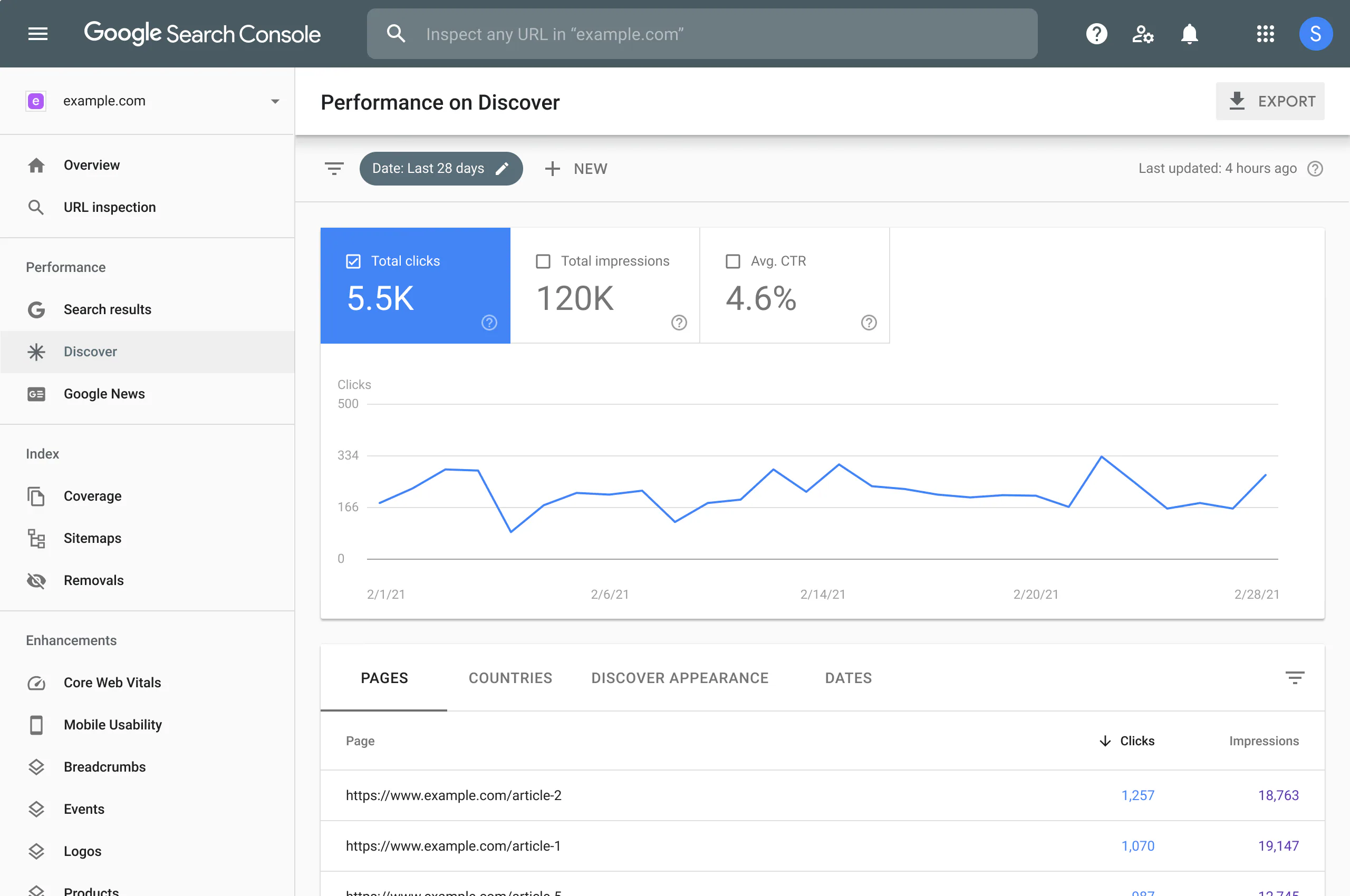
As Google integrates AI summaries and generative features into search results, traditional click patterns are changing. Search Console helps identify these shifts by showing how often content appears, even when users do not click through.
For example, a page may experience:
- Stable or rising impressions
- Declining clicks
- Increased visibility for broader or conversational queries
This often indicates that content is being referenced or summarised by AI features, even if traffic does not increase directly.
Workflow Implementation
To use Search Console effectively in an AI-led workflow, begin by monitoring query and page-level performance trends over time rather than focusing solely on rankings.
Key steps include:
- Reviewing impressions for high-value pages and topics.
- Identifying queries that trigger AI-style results or summaries.
- Mapping impression growth against content updates and structural changes.
Sharing these insights across SEO, content, and leadership teams helps shift the conversation from traffic volume to visibility and authority.
Actionable Insights
Search Console often reveals that visibility without clicks still has value. Being referenced by AI summaries can build brand familiarity, trust, and recall even when users do not visit your site immediately.
Actions commonly informed by Search Console data include:
- Improving clarity and accuracy of content that gains impressions
- Updating pages with concise summaries or definitions
- Strengthening brand mentions and expertise signals
These optimisations increase the likelihood that AI systems continue to surface your content.
Practical Example
A service page may show increasing impressions for long-tail, conversational queries while click-through rates decline. Rather than viewing this as a loss, it signals that Google’s AI is using the content to answer questions directly.
By refining that page with clearer explanations and stronger positioning, the brand improves how it is represented at the point of discovery.
How to Use AI Visibility Tools Together
No single platform can capture the full picture of how AI systems interpret and surface your brand. Instead, the most effective approach is to combine tools that monitor visibility, analyse perception, support optimisation, and validate results. When used together, these tools create a joined-up strategy rather than isolated insights.
1. Monitoring -Profound, Otterly.AI
Monitoring tools form the foundation of any AI visibility strategy. They help you understand where and how often your brand appears within AI-generated answers and search experiences.
Start by tracking a defined set of high-value prompts, such as service comparisons, “best of” queries, and problem-led questions relevant to your audience. Profound and Otterly.AI then show whether your brand is present, how prominently it appears, and which competitors dominate those answers.
To implement this effectively:
- Review tracked prompts on a regular cadence, such as monthly
- Look for patterns rather than one-off mentions
- Prioritise prompts that align with commercial intent
This stage highlights visibility gaps early, allowing teams to respond strategically rather than reactively.

2. Understanding Perception - Brandwatch, Scrunch AI
Once visibility is established, the next step is understanding how your brand is perceived and described by AI systems. Brandwatch and Scrunch AI provide this layer of insight by analysing sentiment, narratives, and accuracy.
Brandwatch focuses on broader public discourse, while Scrunch examines AI-generated descriptions directly. Together, they reveal whether your brand positioning is clear, consistent, and aligned with strategic goals.
In practice, this means:
- Identifying recurring themes or misconceptions
- Spotting outdated or inaccurate brand descriptions
- Comparing intended messaging with AI outputs
These insights inform decisions across content, PR, and brand strategy, ensuring AI systems learn the right signals over time.
3. Optimisation - SEMrush, InLinks
With visibility and perception understood, optimisation tools help close the gap between where you are and where you want to be. SEMrush and InLinks focus on improving clarity, authority, and structure so AI systems can interpret and trust your content.
SEMrush identifies which pages are most likely to be referenced by AI, while InLinks strengthens semantic relationships across your site. Used together, they guide teams to refine existing content rather than create more for the sake of it.
Key optimisation actions include:
- Improving page structure and clarity
- Strengthening internal linking around core topics
- Consolidating content into stronger topical hubs
This stage ensures your content is both discoverable and understandable in AI-driven environments.
4. Validation - Google Search Console
Finally, validation ensures your efforts translate into real-world visibility. Google Search Console provides first-party data that confirms whether AI-focused optimisations are increasing impressions and exposure.
Rather than focusing solely on clicks, use Search Console to:
- Track impression growth for priority pages
- Identify queries influenced by AI summaries
- Measure visibility trends over time
This step grounds your strategy in reality, helping teams refine what works and adjust what does not.
AI Visibility Is the New Competitive Advantage
In 2026, brands that win are not just searchable, they are understood by AI.
Investing in the right AI visibility tools allows you to:
- Control your narrative
- Strengthen authority
- Stay discoverable in AI-driven journeys
If you’re ready to future-proof your digital presence, Saigon Digital can help you design and scale an AI-ready visibility strategy, built on data, clarity, and measurable growth.
Get in touch with us today!
Want to be the brand AI engines recommend?
We make businesses visible on Google and inside AI answers, measured in leads, not vanity metrics.