In today’s competitive digital environment, SEO AI tools are starting to become essential in everyday workflow. As search engines and generative AI platforms continue to evolve rapidly, professionals and agencies must adopt tools that not only improve efficiency but also help achieve real growth in visibility, engagement and organic traffic.
In this comprehensive guide, we’ll walk through the most impactful SEO AI tools of 2026, explain what they do, and show you how they can fit into your SEO workflow with practical examples.
What Are SEO AI Tools and Why They Matter in 2026
SEO AI tools refers to software and platforms that leverage artificial intelligence, machine learning and large language models to automate tasks, generate insights, and enhance decision-making in search engine optimisation. Rather than replacing human strategy, they act as force multipliers, helping you:
- Uncover keywords and topics faster than manual research
- Optimise content for both search engines and AI-powered results
- Track ranking performance and competitor behaviour with predictive analytics
- Automate repetitive tasks like SEO audits, tagging and brief generation
By 2026, the SEO landscape has shifted decisively. Search engines are becoming “AI search ecosystems”, where content must satisfy traditional ranking algorithms and perform well in generative responses on platforms such as ChatGPT, Gemini, or Perplexity. This makes SEO AI tools essential for modern optimisation workflows.
Top SEO AI Tools in 2026 (What They Do and Who They’re For)
Below we explore the leading SEO AI tools shaping strategies this year. We group them by core use case, so you can match your business needs to the best option.
1. Semrush One, The All-in-One SEO AI Platform
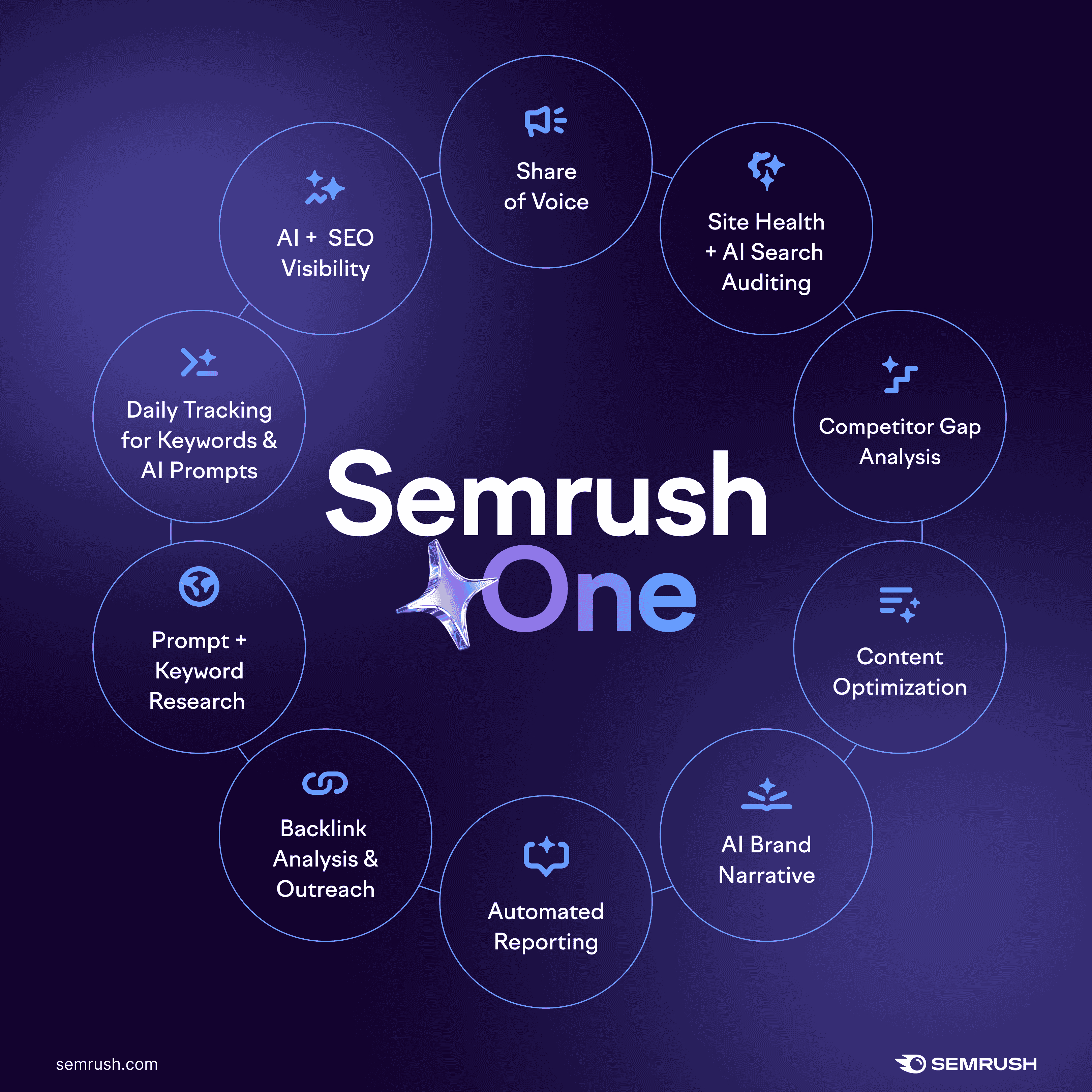
Semrush One has firmly positioned itself as one of the most comprehensive SEO AI tools in 2026. It combines advanced artificial intelligence with robust SEO datasets, enabling businesses and agencies to plan, execute and refine SEO strategies from a single platform. Importantly, Semrush does not aim to replace strategic thinking; instead, it supports informed decision-making at every stage of the SEO lifecycle.
What It Does
At its core, Semrush One functions as a centralised SEO intelligence hub. It uses AI to analyse large volumes of search, competitor and behavioural data, then translates that information into practical recommendations.
More specifically, the platform helps users:
- Identify keyword opportunities across informational, commercial and transactional intent
- Audit websites for technical SEO issues and prioritise fixes based on impact
- Analyse competitor strategies, including content gaps and backlink profiles
- Optimise content for both traditional search engines and AI-generated search results
Because Semrush integrates these capabilities into one interface, it reduces the need to switch between multiple tools. As a result, teams can maintain consistency in their data and decision-making while saving valuable time.
Key Strengths
One of Semrush One’s strongest advantages lies in how its AI features enhance existing SEO workflows rather than overcomplicating them. Each recommendation is backed by data, making it easier to trust and act upon.
Key strengths include:
- AI-Powered Keyword Research: Semrush groups keywords by topic and intent automatically. This allows you to move beyond single-keyword targeting and instead build content clusters that align with how users search in reality.
- Intelligent Site Audits: Rather than listing hundreds of technical issues, the AI highlights problems by severity and potential ranking impact. This prioritisation helps teams focus on changes that matter most.
- AI Content Guidance: The platform analyses top-ranking pages and suggests improvements to structure, topical depth and readability. Importantly, these suggestions are framed as guidance, not rigid rules.
- Visibility Tracking in AI Search: In 2026, Semrush tracks not only SERP rankings but also visibility across AI-powered search responses. This is increasingly valuable as generative search continues to influence user behaviour.
Together, these strengths make Semrush One particularly effective for organisations that require both strategic oversight and operational efficiency.
How You Might Use It
To understand how Semrush One fits into a real-world workflow, consider the example of launching a new service page.
First, you might begin with keyword research. By entering a broad topic, Semrush’s AI clusters related keywords by intent. This allows you to identify:
- Primary keywords to target on the main page
- Supporting keywords for FAQs and sub-sections
- Content opportunities competitors have already capitalised on
Next, you would move into content planning. Using the AI Content Template, Semrush analyses the top-ranking pages and suggests an outline that includes recommended headings, related terms and readability benchmarks. At this stage, your content team can apply brand voice and expertise while staying aligned with SEO best practices.
Once the page is live, Semrush supports ongoing optimisation. You can:
- Monitor ranking changes and traffic trends
- Receive alerts if competitors update or outperform your content
- Identify new internal linking opportunities across your site
Finally, the site audit tool ensures that technical issues, such as crawlability, page speed or structured data errors, do not undermine your content’s performance.
This end-to-end workflow demonstrates how Semrush One supports SEO not as a one-off task, but as a continuous, measurable process.
Best For
Semrush One is particularly well suited to:
- SEO agencies managing multiple clients and campaigns
- In-house marketing teams working across large or complex websites
- Businesses seeking a single, reliable source of SEO intelligence
- Organisations that value data-driven decisions supported by AI insights
For teams that require scalability, transparency and long-term SEO growth, Semrush One offers a strong balance between automation and strategic control.
2. Surfer SEO, AI-Driven Content Optimisation
While many SEO AI tools focus on broad visibility and performance metrics, Surfer SEO takes a more specialised approach by concentrating on content quality and on-page optimisation. In 2026, as search engines and AI-powered results increasingly reward relevance, clarity and topical depth, Surfer SEO has become an essential tool for creating content that genuinely performs.
Rather than relying on assumptions, Surfer uses data-driven analysis of top-ranking pages to guide content creation, helping teams align with what search engines and users are already responding to.
What It Does
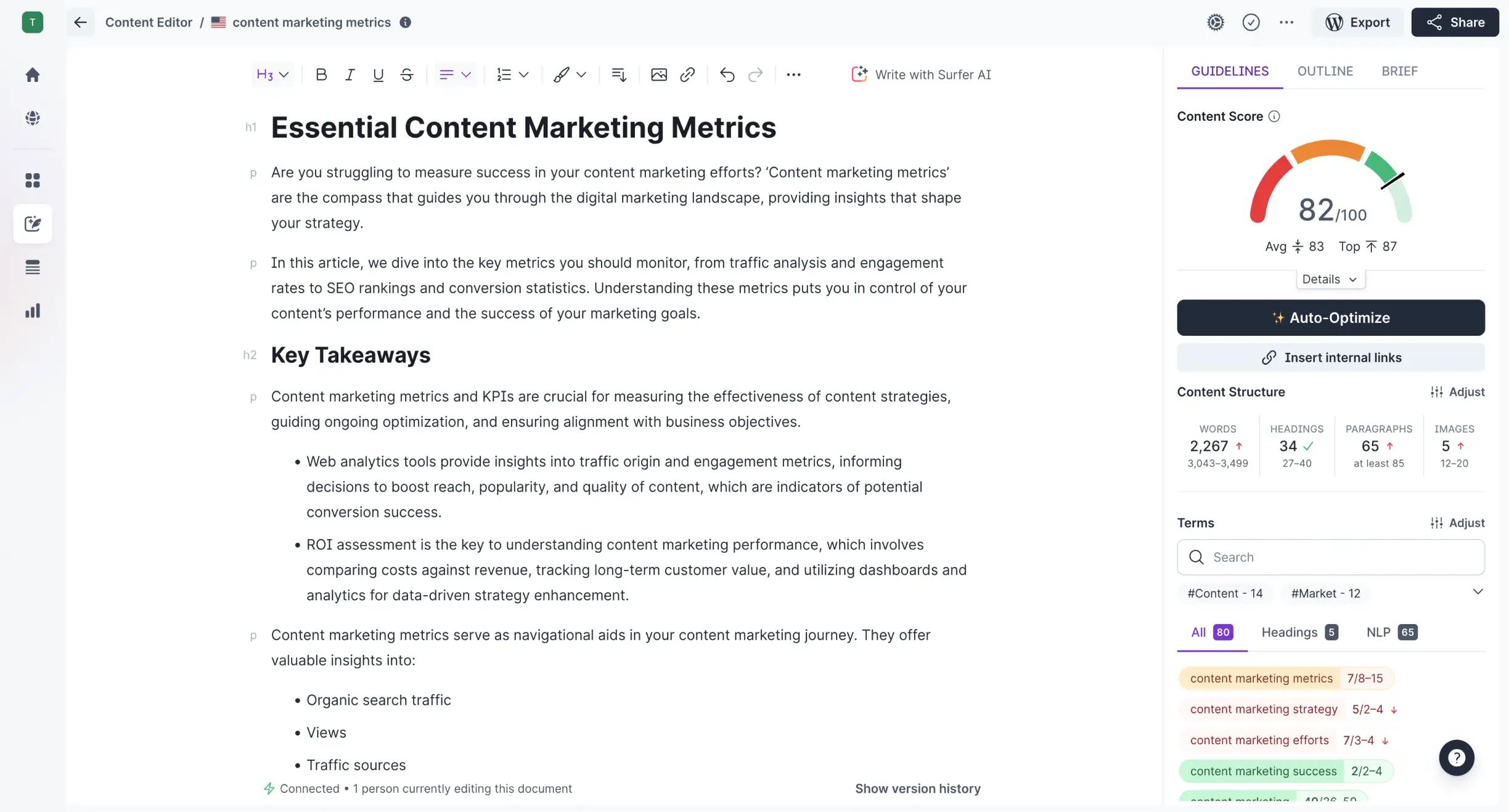
Surfer SEO analyses the structure, language patterns and topical coverage of high-performing pages for a given keyword. Using this data, it provides real-time recommendations that guide writers and SEO professionals as they create or optimise content.
In practical terms, Surfer SEO helps you:
- Understand which subtopics and entities should be included in your content
- Balance keyword usage naturally without over-optimisation
- Improve content structure, such as headings, paragraph length and formatting
- Ensure topical completeness, which is increasingly important for AI-driven search
Because these insights are generated dynamically, Surfer allows you to optimise content while writing, rather than retrofitting SEO after publication.
Key Strengths
Surfer SEO’s value lies in its clarity and usability. Its interface is intentionally focused, making it easy for both SEO specialists and writers to collaborate effectively.
Key strengths include:
- Real-Time Content Scoring: As you write, Surfer provides a live score that reflects how well your content aligns with top-ranking competitors. This immediate feedback helps guide improvements without disrupting the creative flow.
- Semantic and NLP Analysis: Rather than focusing solely on exact-match keywords, Surfer recommends related terms and phrases that enhance contextual relevance. This supports natural language optimisation, which is vital for AI search systems.
- SERP-Based Recommendations: All suggestions are grounded in live SERP data, ensuring your content reflects current ranking trends rather than outdated assumptions.
- Content Auditing Capabilities: Existing pages can be audited to identify missing sections, weak coverage or structural issues, allowing for targeted optimisation rather than full rewrites.
Together, these features make Surfer SEO particularly effective for producing high-quality, search-aligned content at scale.
How You Might Use It
Consider a scenario where you are updating an existing blog post that has plateaued in performance.
You would start by running the page through Surfer’s Content Audit. The tool compares your content against top-ranking pages and highlights gaps, such as missing subtopics or insufficient depth in certain sections.
Next, during the optimisation process, Surfer’s Content Editor guides you step by step:
- It suggests additional headings to improve topical coverage
- It recommends relevant phrases and terms to strengthen semantic relevance
- It highlights opportunities to improve readability and structure
For new content, Surfer integrates seamlessly into editorial workflows. Writers can draft directly within the platform or use it alongside tools like Google Docs. As a result, SEO requirements are met during creation, not added later.
Finally, once content is published, Surfer’s insights can be revisited periodically to ensure pages remain competitive as search results evolve.
Best For
Surfer SEO is particularly well suited to:
- Content teams focused on high-quality blog and landing page production
- SEO specialists managing on-page optimisation at scale
- Agencies collaborating closely with writers and editors
- Businesses aiming to improve rankings through better content rather than higher volume
For organisations that value clarity, relevance and long-term content performance, Surfer SEO is a practical and effective addition to the modern SEO toolkit.
3. SE Ranking, Predictive and Automated SEO Intelligence
As SEO strategies become more data-intensive, the ability to prioritise actions efficiently is increasingly important. SE Ranking addresses this challenge by combining automation with predictive insights, making it one of the most practical SEO AI tools in 2026 for teams that want clarity without unnecessary complexity.
Rather than overwhelming users with raw data, SE Ranking focuses on turning insights into structured, actionable recommendations that support both planning and execution.
What It Does
SE Ranking provides a suite of AI-assisted tools designed to streamline SEO operations and support strategic decision-making. Its core strength lies in simplifying large datasets into clear direction.
In practice, SE Ranking enables you to:
- Track keyword rankings across locations, devices and search engines
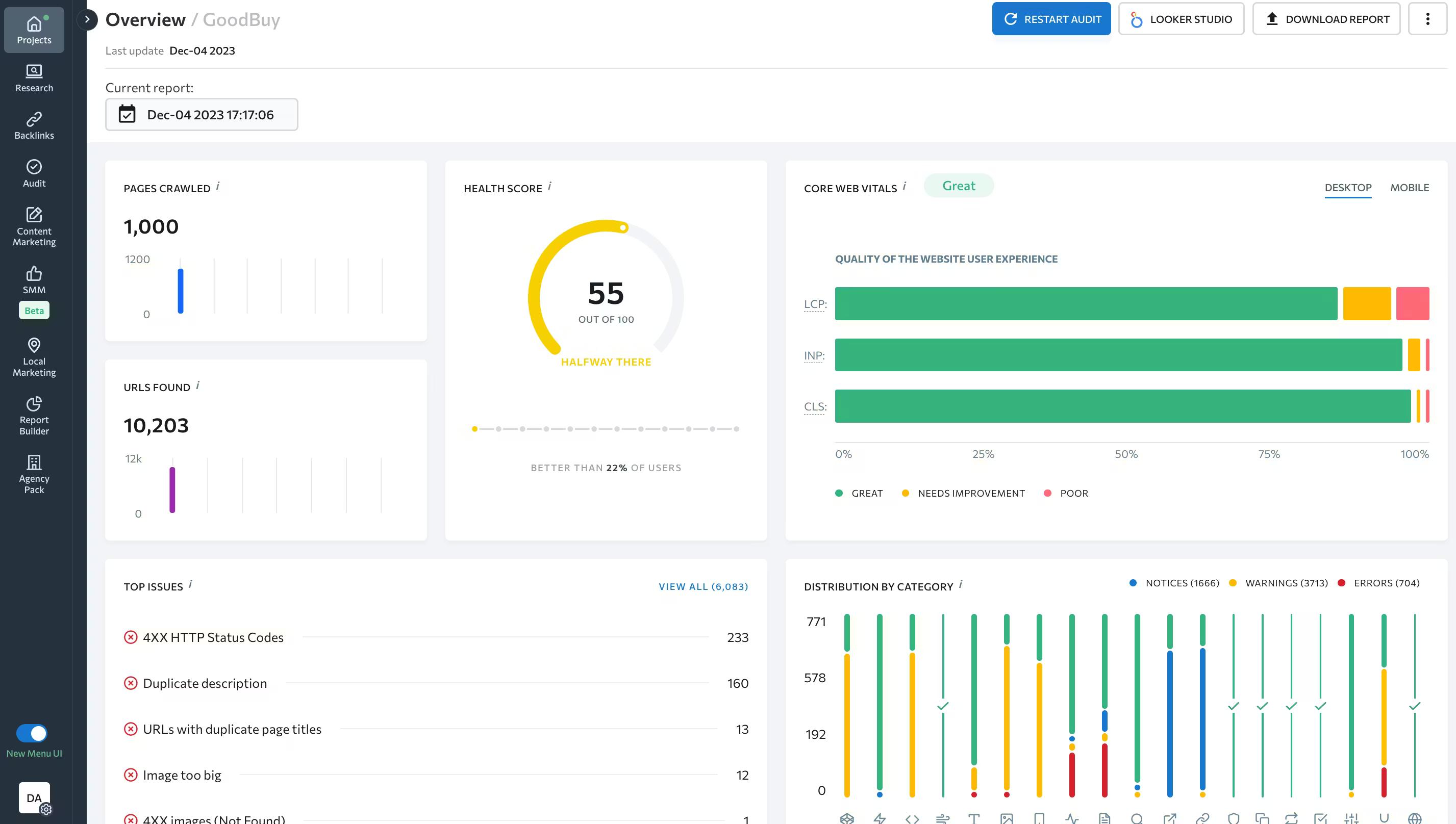
- Identify technical SEO issues and receive prioritised recommendations
- Group and cluster keywords automatically based on intent
- Forecast traffic and ranking potential using predictive analytics
By combining automation with human-readable insights, SE Ranking helps teams move from analysis to action more quickly and confidently.
Key Strengths
SE Ranking stands out because of how effectively it balances depth and accessibility. Its AI features are designed to assist, not intimidate, making it suitable for both experienced SEO professionals and growing teams.
Key strengths include:
- AI-Powered Keyword Grouping: SE Ranking automatically organises keywords into meaningful clusters. This supports topic-based SEO strategies and helps teams structure content more logically.
- Predictive Analytics and Forecasting: The platform estimates potential traffic growth and ranking improvements based on proposed changes, helping you prioritise initiatives with the highest expected return.
- Automated SEO Briefs: For content teams, SE Ranking generates SEO briefs that outline target keywords, search intent, suggested structure and optimisation tips, reducing manual preparation time.
- Clear, Client-Friendly Reporting: Reports are easy to understand and customise, making them especially useful for agencies communicating progress to stakeholders.
Collectively, these features make SE Ranking a strong operational tool for consistent, repeatable SEO execution.
How You Might Use It
Imagine you are managing SEO for several service pages across different locations.
You would begin by using SE Ranking’s keyword research and clustering to group location-based and service-based queries automatically. This allows you to quickly identify which pages should target which keyword groups, avoiding overlap and cannibalisation.
Next, SE Ranking’s SEO audit highlights technical issues across your site. Rather than addressing everything at once, the platform prioritises tasks by impact, allowing your team to tackle high-value fixes first.
When planning new content, you can generate automated SEO briefs for writers. These briefs clearly outline:
- Primary and secondary keywords
- Search intent and content goals
- Structural recommendations
Finally, SE Ranking’s predictive analytics help you assess whether planned changes are likely to deliver meaningful results. This ensures time and budget are invested where they matter most.
Best For
SE Ranking is particularly well suited to:
- Small to mid-sized businesses scaling their SEO efforts
- Agencies managing multiple projects with limited resources
- SEO teams seeking clarity and automation without steep learning curves
- Organisations that value structured workflows and reliable forecasting
For teams looking to streamline execution while maintaining strategic oversight, SE Ranking offers a practical and cost-effective solution within the broader SEO AI ecosystem.
4. Ahrefs, AI-Enhanced Authority and Backlink Growth
In an SEO landscape increasingly influenced by AI, authority and trust remain fundamental ranking signals. Ahrefs continues to be one of the most respected SEO AI tools in 2026, particularly for its depth of backlink data and its ability to surface meaningful insights through AI-enhanced analysis.
Rather than focusing on surface-level metrics, Ahrefs helps teams understand why competitors outperform them and, more importantly, how to close that gap through informed authority-building strategies.
What It Does
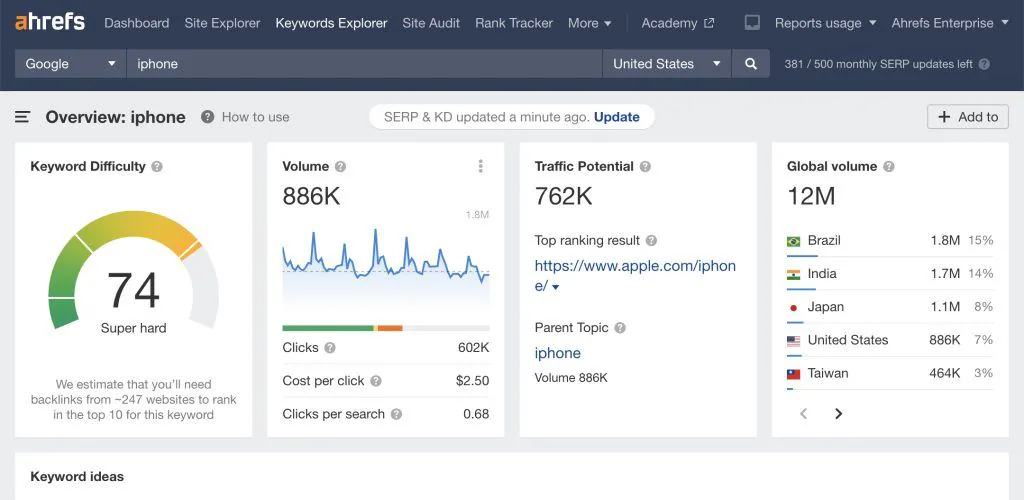
Ahrefs specialises in analysing the competitive landscape of search, with a strong emphasis on backlinks, content performance and keyword competitiveness. Its AI-driven enhancements now make these insights faster to interpret and easier to act upon.
In practical terms, Ahrefs allows you to:
- Analyse backlink profiles at scale and assess link quality
- Identify content that attracts links and engagement
- Discover keyword opportunities based on realistic ranking potential
- Monitor competitors’ SEO and authority-building strategies
By combining deep datasets with intelligent filtering, Ahrefs enables teams to make confident decisions without being overwhelmed by data.
Key Strengths
Ahrefs’ long-standing reputation is built on accuracy and depth, and its AI integrations further strengthen its position as a strategic SEO platform.
Key strengths include:
- AI-Assisted Backlink Evaluation: Rather than simply counting links, Ahrefs uses AI signals to help assess link relevance, authority and potential impact on rankings.
- Content Performance Insights: The platform identifies which pages earn the most links and traffic, helping you understand what resonates within your niche.
- Keyword Difficulty and Opportunity Analysis: AI-enhanced keyword scoring provides a clearer picture of ranking feasibility, allowing teams to focus on achievable growth.
- Competitor Gap Analysis: Ahrefs highlights keywords and links your competitors have secured that you have not, making opportunity identification more systematic.
Together, these capabilities support a strategic, evidence-based approach to authority building.
How You Might Use It
Consider a situation where your website struggles to rank despite strong on-page optimisation.
You would begin by analysing your backlink profile in Ahrefs to identify gaps in authority compared to top-ranking competitors. The AI-enhanced overview highlights not just quantity, but also relevance and link velocity trends.
Next, you could use the Content Explorer to identify competitor articles that attract consistent backlinks. From there, your team can create improved, more comprehensive resources that naturally earn links.
For proactive outreach, Ahrefs helps you:
- Identify domains linking to multiple competitors but not to you
- Prioritise outreach targets based on authority and topical relevance
- Track newly acquired and lost backlinks over time
By integrating these insights into your outreach and content strategy, link building becomes more focused, efficient and sustainable.
Best For
Ahrefs is particularly well suited to:
- SEO professionals focused on authority and backlink growth
- Content marketers creating link-worthy resources
- Agencies conducting in-depth competitor analysis
- Businesses operating in competitive search environments
For teams that view SEO as a long-term investment in credibility and trust, Ahrefs remains an essential tool within a modern SEO AI toolkit.
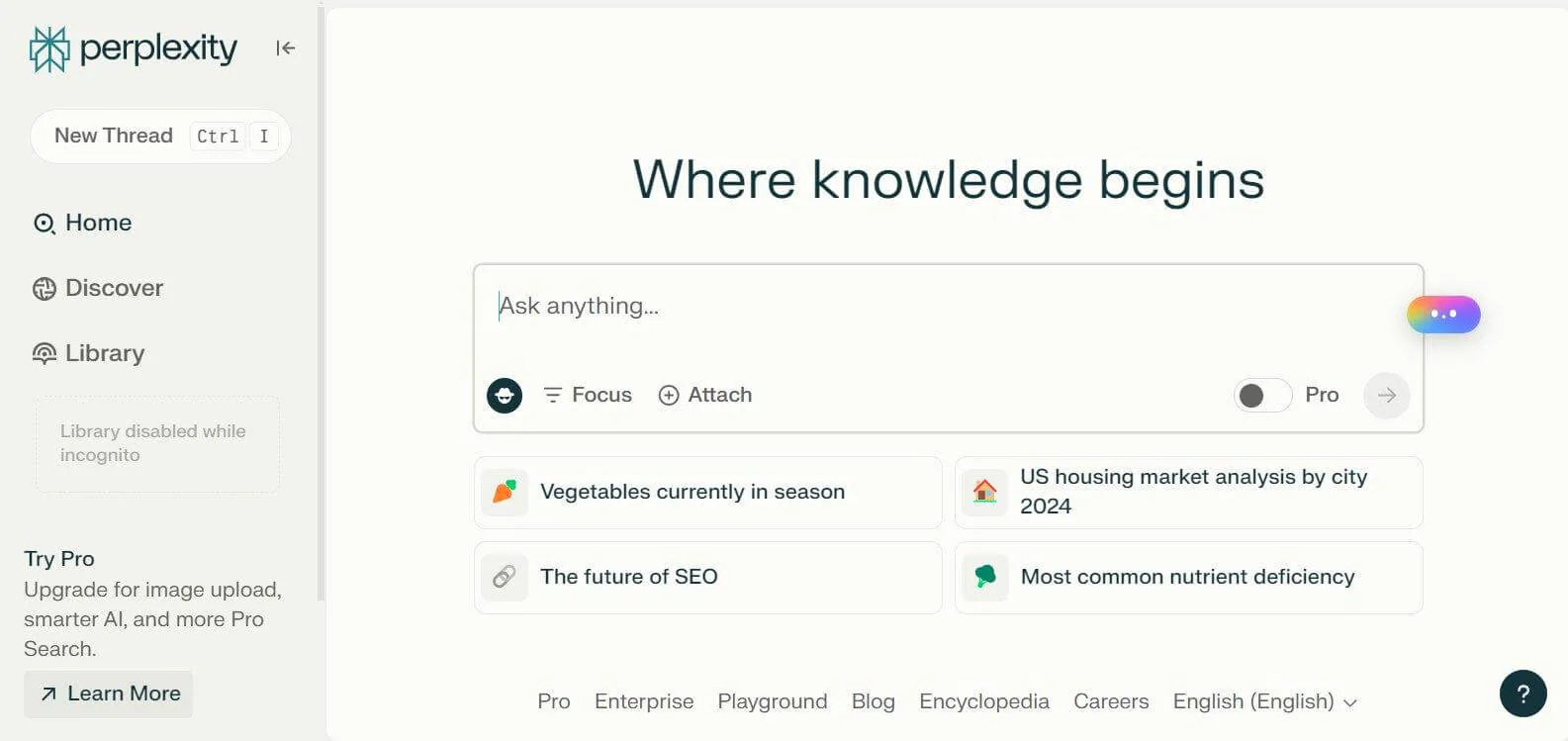
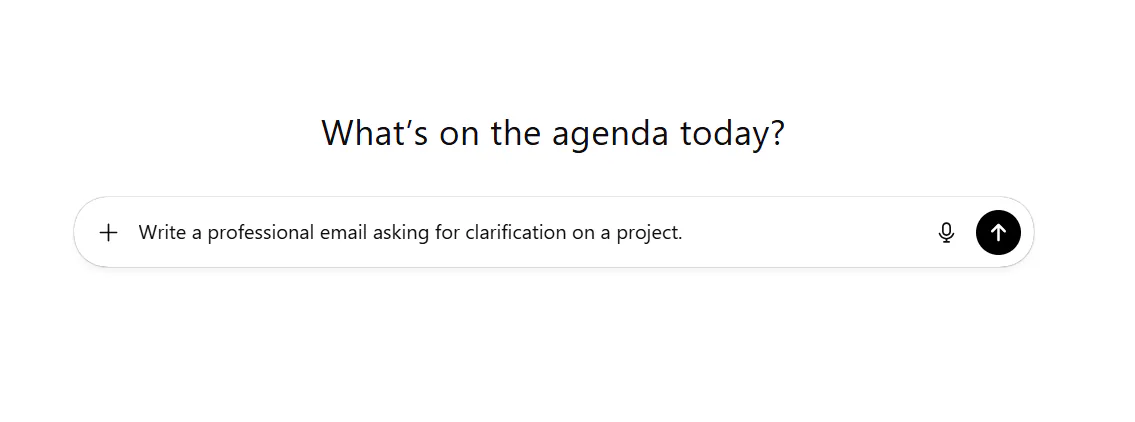
5. ChatGPT & Perplexity Pro, Flexible Research and Creative Support
While traditional platforms dominate structured SEO analysis, tools like ChatGPT and Perplexity Pro have become valuable complementary SEO AI tools in 2026. Rather than replacing dedicated SEO software, these platforms support research, ideation and content development by accelerating how teams gather and interpret information.
Used correctly, they help bridge the gap between strategy and execution, enabling faster decision-making while still relying on human expertise for refinement and quality control.
What They Do
ChatGPT and Perplexity Pro function as AI-powered research and content assistants. They process natural language queries and synthesise information quickly, making them especially useful during early planning and creative stages.
In an SEO context, these tools can help you:
- Explore topic ideas and keyword themes
- Understand user intent behind search queries
- Summarise competitor content and identify gaps
- Draft outlines, FAQs and meta descriptions
Perplexity Pro adds further value by citing sources and surfacing up-to-date information, which is particularly helpful when validating assumptions or researching emerging topics.
Key Strengths
The strength of these tools lies in flexibility and speed. They adapt to a wide range of tasks and integrate easily into existing workflows.
Key strengths include:
- Rapid Ideation and Brainstorming: Both tools generate ideas quickly, helping teams overcome blank-page challenges during content planning.
- Conversational Research: Users can refine queries naturally, allowing deeper exploration of complex topics without rigid filters.
- Content Draft Support: AI-generated drafts provide a starting point that can be refined by SEO specialists and editors to meet quality and brand standards.
- Source-Aware Research (Perplexity Pro): By referencing external sources, Perplexity supports credibility and fact-checking during research.
Together, these strengths make ChatGPT and Perplexity Pro valuable accelerators rather than standalone SEO solutions.
How You Might Use Them
Imagine you are planning a new content cluster around a complex service offering.
You might begin by asking ChatGPT to generate a list of common user questions related to the topic. This helps uncover informational intent that may not appear immediately in keyword tools.
Next, Perplexity Pro can be used to research current trends, industry terminology and authoritative perspectives. Its source-based responses help validate which subtopics are most relevant and timely.
During content creation, these tools can assist with:
- Drafting introductory sections and FAQs
- Creating variations of meta titles and descriptions
- Rewriting technical explanations into clearer language
Importantly, outputs should always be reviewed and refined. When combined with platforms like Semrush or Surfer SEO, these tools enhance efficiency while maintaining SEO accuracy and editorial quality.
Best For
ChatGPT and Perplexity Pro are particularly well suited to:
- SEO professionals in research and planning phases
- Content strategists and writers seeking ideation support
- Agencies aiming to accelerate workflows without sacrificing quality
- Teams exploring new topics or emerging search trends
When used thoughtfully, these tools empower teams to move faster and think more creatively, while still anchoring decisions in data-driven SEO practices.
Choosing the Right SEO AI Tools for Your Strategy
Selecting the right SEO AI tools is not about adopting every available platform, but about building a focused toolkit that aligns with your business goals, team structure and available resources. By considering the factors below, organisations can make informed decisions that deliver long-term value rather than short-term convenience.
1. Align Tools with Your SEO Goals
First and foremost, your choice of SEO AI tools should directly support your primary objectives. Different tools excel at different stages of the SEO journey, so clarity around goals is essential.
For example:
- If your focus is content quality and on-page optimisation, tools like Surfer SEO are ideal for improving relevance, structure and topical depth.
- If your goal is visibility tracking and competitive analysis, all-in-one platforms such as Semrush or SE Ranking provide broader oversight.
- If authority growth is a priority, backlink-focused tools like Ahrefs should play a central role.
By mapping each tool to a specific outcome, you avoid overlapping functionality and ensure every platform contributes meaningfully to your strategy.
2. Consider Team Size and Workflow Requirements
Equally important is understanding how your team operates. The best SEO AI tools are those that integrate smoothly into existing workflows rather than adding complexity.
For larger teams or agencies, comprehensive platforms work well because they:
- Centralise data across projects and clients
- Support collaboration between SEO specialists, content teams and account managers
- Provide scalable reporting and performance tracking
On the other hand, smaller teams or solo practitioners may benefit from more focused tools that are quicker to adopt and easier to manage. In these cases, combining a content tool with a research assistant can deliver strong results without unnecessary overhead.
3. Balance Budget with Impact
Budget considerations should be approached strategically rather than restrictively. While premium SEO AI tools offer advanced capabilities, not every function is essential at every stage of growth.
A practical approach is to:
- Invest in one core platform that covers your most critical needs
- Supplement it with lower-cost or free tools for research and ideation
- Regularly review tool usage to ensure continued value
For example, pairing a paid platform like Semrush with free or low-cost AI research tools can deliver robust insights without inflating costs. Over time, as your SEO maturity increases, additional tools can be introduced selectively.
4. Prioritise Usability and Clarity
Even the most powerful SEO AI tools are ineffective if teams struggle to use them. Therefore, usability should be a key decision factor.
Look for tools that:
- Present insights in clear, actionable language
- Offer guided recommendations rather than raw data dumps
- Provide documentation, training or onboarding support
Tools such as SE Ranking excel in this area by simplifying complex SEO concepts, making them accessible to both specialists and non-technical stakeholders. This clarity supports better decision-making across teams.
5. Plan for Integration and Long-Term Growth
Finally, think beyond immediate needs and consider how your SEO AI tools will support long-term growth. Ideally, tools should integrate with each other and adapt as your strategy evolves.
When evaluating tools, consider:
- Compatibility with content management systems and analytics platforms
- Flexibility to support new markets, languages or services
- Ability to evolve alongside AI-driven search changes
By planning ahead, you ensure that your SEO toolkit remains relevant and scalable, rather than needing frequent replacement.
How Saigon Digital Supports Businesses with AI Workflow Automation
While SEO AI tools play a critical role in improving search visibility and content performance, their true impact is maximised when they are integrated into efficient, intelligent business processes. This is where Saigon Digital’s AI Workflow Automation Services come into play.
As a forward-thinking SEO agency, Saigon Digital helps ambitious brands move beyond isolated tools by designing AI-powered workflows that streamline operations, reduce manual effort and support sustainable growth. Our approach is not about deploying generic automation; instead, we build bespoke AI systems that align directly with your business goals.
Our AI Workflow Automation Process
To ensure long-term success, we follow a structured and transparent implementation process. Each phase builds on the last, ensuring that AI solutions are reliable, scalable and continuously improving.
1. Discovery & Strategy
We begin by identifying automation opportunities through AI workflow mapping. This phase focuses on understanding current processes, pain points and performance gaps.
2. Design & Development
Next, we design and build custom AI process automation systems tailored to your workflows. This may include integrations with CRM systems, email platforms, analytics tools or internal databases.
3. Testing & Optimisation
Before deployment, we rigorously test each workflow to validate speed, accuracy and data reliability. Adjustments are made to ensure smooth real-world performance.
4. Reporting & Refinement
Finally, we monitor performance continuously and refine workflows through retraining and optimisation, ensuring ongoing improvement as your business evolves.
Example Use Case: The SD AI Enquiry Checker
A practical example of our AI workflow automation in action is the SD AI Enquiry Checker, a system designed to transform how businesses handle inbound enquiries.
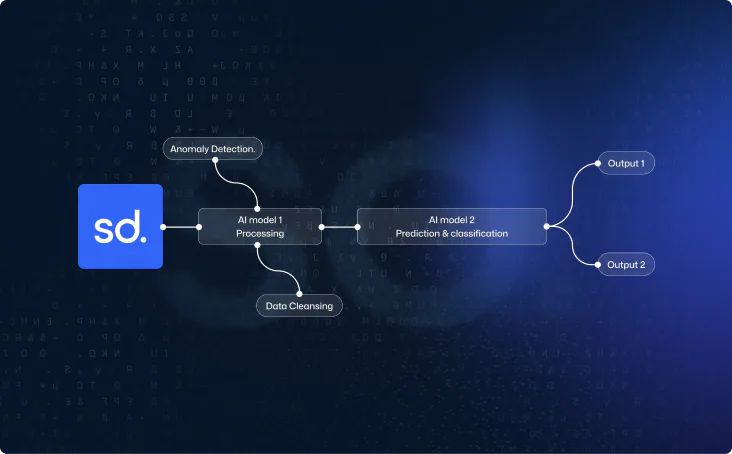
This solution automatically:
- Reads incoming emails
- Extracts and validates key information
- Identifies missing or incomplete data
- Responds automatically when clarification is required
Only complete, verified enquiries are passed to your team, significantly reducing manual handling and inefficiencies.
The results speak for themselves:
- 80% faster response times
- Zero-defect data handling
- Seamless scalability without increasing headcount
This use case highlights how AI automation can deliver immediate operational gains while supporting long-term growth.
Our AI Workflow Automation Services
Saigon Digital provides a comprehensive range of AI automation solutions, including:
1. AI Workflow Automation
Automate repetitive business processes such as:
- Data entry and validation
- Email and document processing
- Task routing and internal handovers
2. AI-Powered Internal Systems
Embed AI decision-making directly into operations:
- Auto-generate quotes, reports and responses
- Structure unorganised data intelligently
- Improve coordination with AI workflow management tools
3. Custom AI Agents
Develop specialised AI agents tailored to your needs:
- Enquiry-handling agents
- CRM data assistants
- Internal reporting or support bots
Connecting SEO AI Tools with Operational Excellence
Ultimately, SEO success does not exist in isolation. When SEO AI tools are supported by intelligent internal systems and automated workflows, businesses are better positioned to scale efficiently and respond faster to opportunities.
At Saigon Digital, we bring these elements together, combining SEO expertise with AI workflow automation to solve digital challenges through bespoke, future-ready solutions.
If you’d like, I can also help you seamlessly connect this section to the article’s conclusion or adapt it for a dedicated services landing page.
Take the Next Step with SEO AI Tools
The right SEO AI tools in 2026 do more than automate repetitive tasks, they augment your strategy, uncover hidden opportunities and help you stay ahead in a landscape driven increasingly by generative AI and user intent.
At Saigon Digital, we help ambitious brands move beyond surface-level adoption. By combining advanced SEO expertise with AI-driven automation and bespoke digital solutions, we enable organisations to scale smarter, operate more efficiently and achieve sustainable organic growth.
Get in touch with our team to explore how AI-powered SEO and workflow automation can support your growth in 2026 and beyond.
Want to be the brand AI engines recommend?
We make businesses visible on Google and inside AI answers, measured in leads, not vanity metrics.