
As content demands continue to grow, brands face a familiar challenge: how to create original content at scale without losing clarity or intent. In 2026, AI paraphrasing tools have become a practical solution, not as shortcuts, but as productivity enablers when used strategically.
At Saigon Digital, we work at the intersection of SEO, content, and AI-powered marketing. We see first-hand how the best AI paraphrasing tools can support content teams, marketers, and businesses when used thoughtfully.
This guide explores the most effective free and paid AI paraphrasing tools in 2026, how they work, and how to use them responsibly to drive real business value.
What Are AI Paraphrasing Tools?
AI paraphrasing tools rewrite text while preserving the original meaning. Unlike simple synonym replacers, modern tools understand context, sentence structure, and intent. This makes them useful for:
- Refreshing existing blog content
- Improving clarity and readability
- Avoiding duplication in SEO content
- Adapting tone for different audiences
- Supporting non-native English writers
For example, a paragraph written for a technical whitepaper can be paraphrased into simpler language for a blog or landing page, without rewriting from scratch.
Why You Need AI Paraphrasing Tools for SEO in 2026
Search engines in 2026 prioritise helpful, original, and user-focused content. AI paraphrasing tools do not replace strategy or expertise, but they can support SEO when used correctly.
Used well, they help teams:
- Update outdated content efficiently
- Repurpose high-performing pages
- Improve content readability and engagement
- Maintain consistency across large websites
Used poorly, they risk producing generic or over-optimised copy. The difference lies in choosing the right tool and applying human oversight.
Best AI Paraphrasing Tools in 2026 (Paid)
Paid tools offer higher accuracy, more control over tone, and better integration with content workflows. These are the best AI paraphrasing tools for professional use in 2026.
1. QuillBot Premium
Best For
QuillBot Premium is ideal for SEO writers, in-house content teams, and anyone producing frequent written content who needs more control over how text is rephrased. It is particularly effective when rewriting sections of long-form articles, blog posts, or content updates that must maintain clarity and relevance.
Key Strengths
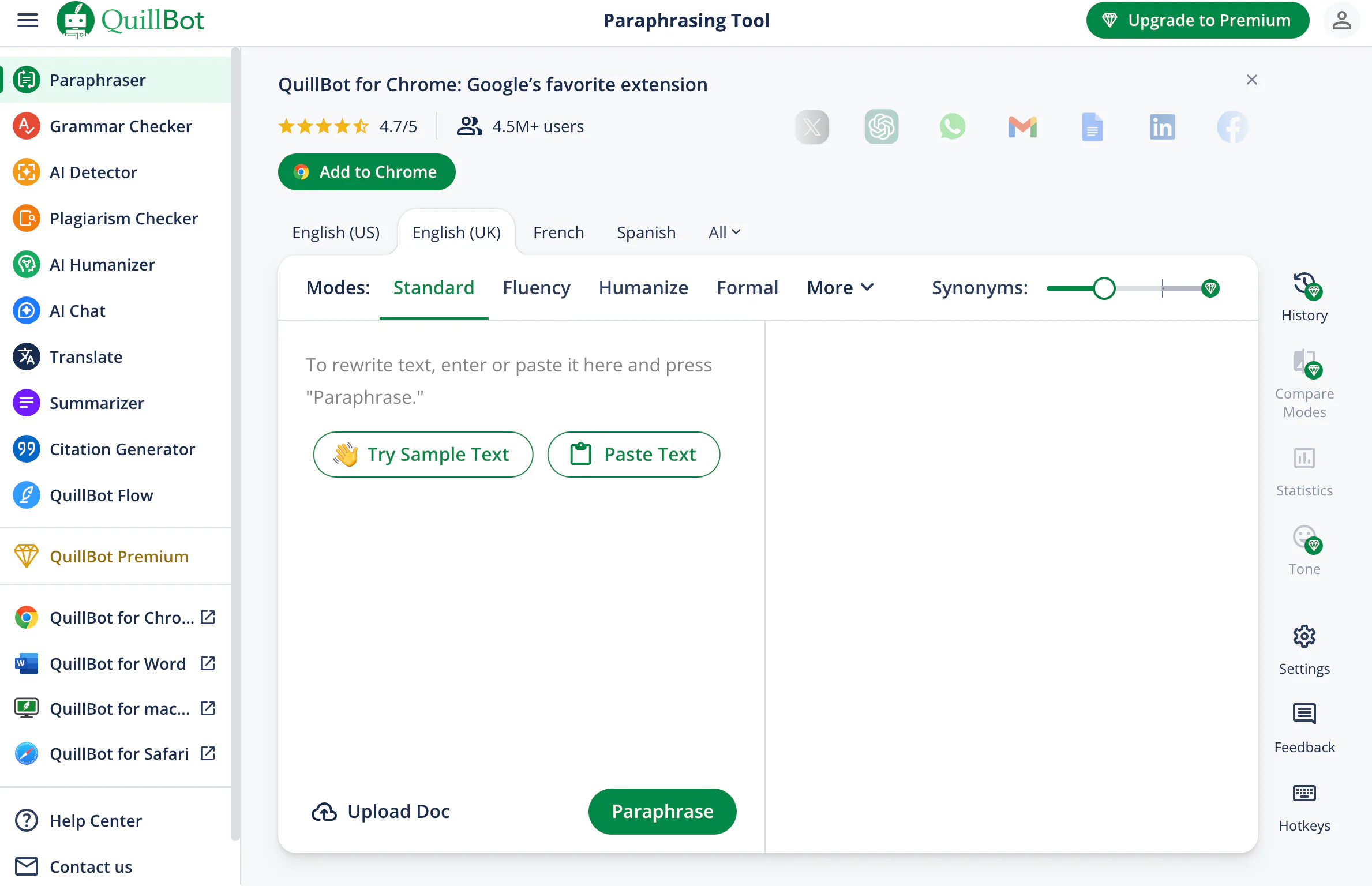
QuillBot’s paraphrasing strength lies in its blend of versatility and user control. It offers several paraphrasing modes, such as Standard, Fluency, Formal, and Creative. Each mode adjusts how conservative or expressive the rewrite should be. For example:
- Standard Mode: Keeps meaning tight and structure close to the original.
- Fluency Mode: Focuses on readability and grammatical smoothness.
- Creative Mode: Offers more inventive phrasing, ideal for brainstorming or alternative styling.
In addition, QuillBot’s synonym slider lets you control how aggressively the text is rewritten, preventing unnecessary word swaps that can distort meaning.
How to Use It Effectively
Use QuillBot when you need controlled paraphrasing rather than dramatic rewrites. Start by selecting a paraphrasing mode that matches your content goal (e.g., Fluency for readability or Formal for professional tone). Then:
1. Paste the section you want to rewrite.
2. Adjust the synonym slider conservatively to retain core meaning.
3. Compare the paraphrased text with your original to ensure intent is preserved.
4. Polish the result manually to maintain brand voice and SEO keywords.
Example Use
An SEO specialist updating a series of product pages can run outdated paragraphs through QuillBot in Standard mode to keep the message clear, then manually tighten keyword placement to support rankings without compromising readability.
2. Wordtune Business
Best For
Wordtune Business excels for teams where tone and user experience matter most, such as UX writers, copywriters, product teams, and email marketers. It is less about large content volumes and more about how the content feels to the reader.
Key Strengths
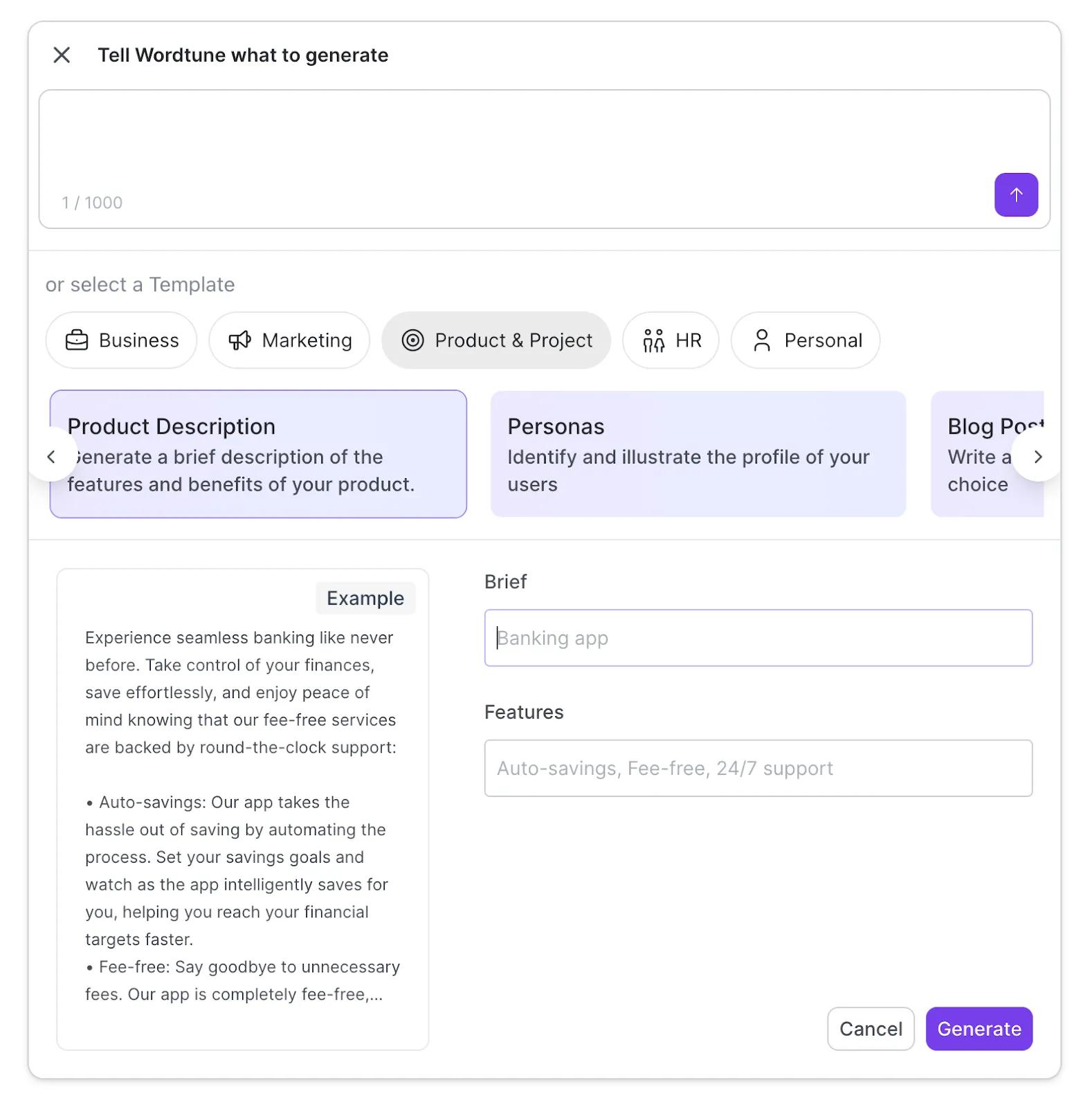
Wordtune’s strength is in its tone-based rewriting and sentence-by-sentence control. Instead of bulk rewriting, it allows you to refine individual sentences for formality, casualness, brevity, or clarity. This makes it particularly useful for:
- Interface copy
- CTAs and headlines
- Customer communications
- Brand messaging
Because it focuses on sentence-level nuance, Wordtune helps content feel more human and aligned with audience expectations.
How to Use It Effectively
Approach Wordtune as a refinement tool rather than a mass paraphraser:
1. Write your original text in your own voice.
2. Run each sentence through Wordtune’s rewrite suggestions.
3. Select or tweak suggestions based on your desired tone.
4. Ensure the final content remains coherent and flows naturally.
Adjusting tone here can be especially powerful. For instance, switching a formal product description to a more conversational version for social posts.
Example Use
A UX lead refining in-app messages can use Wordtune to ensure prompts are encouraging and clear. For example, changing “Please enter your details” to “Let’s get your details so we can get started!” improves engagement without shifting meaning.
3. Jasper AI
Best For
Jasper AI is best for organisations and content teams that need both paraphrasing and content generation within a unified platform. It supports high-volume content workflows where brand voice consistency and long-form rewriting are priorities.
Key Strengths
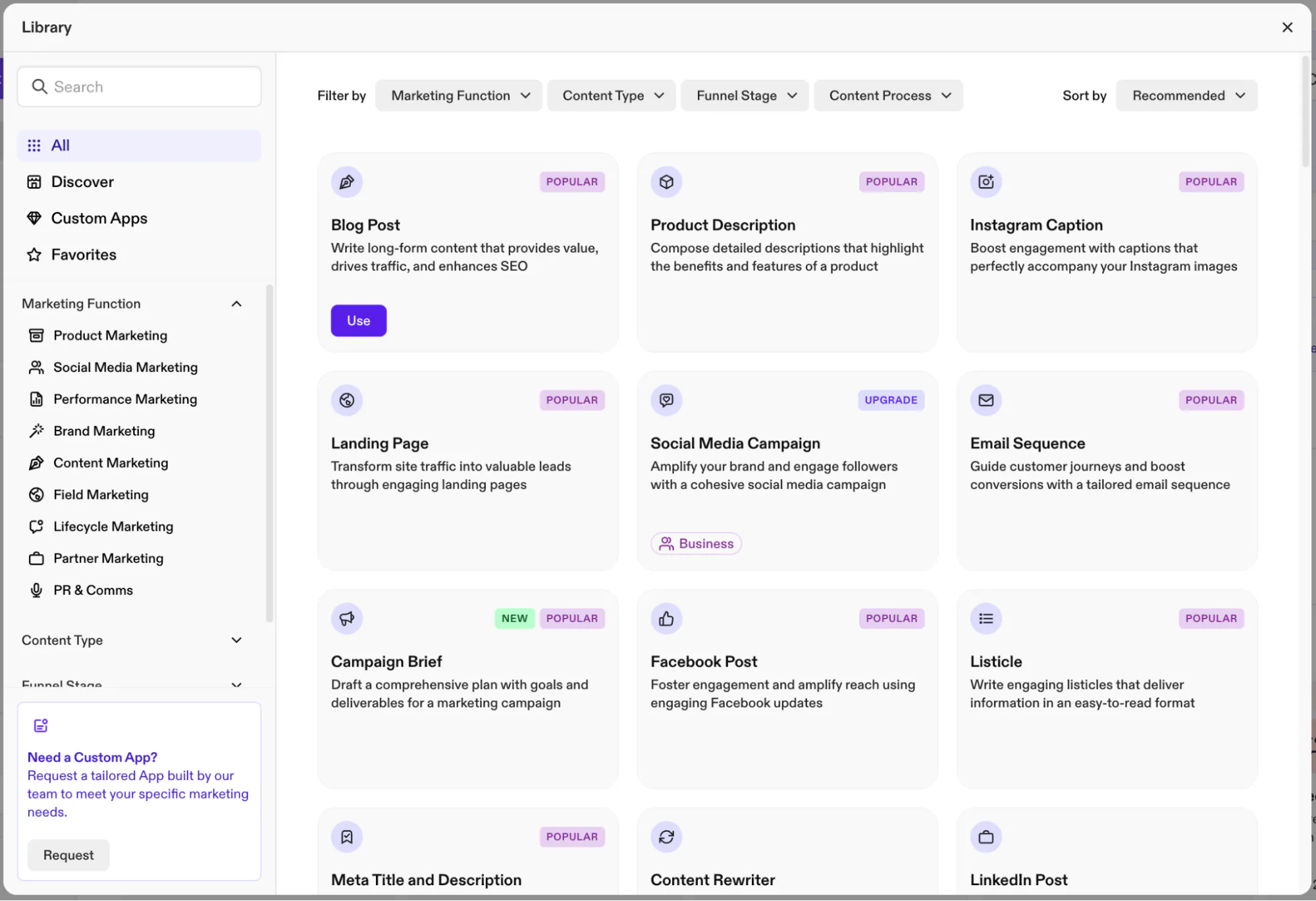
Jasper’s key advantage is its brand voice training, which allows teams to embed tone, style, and audience preferences into its model. This capability means paraphrased content feels consistent across multiple pieces and contributors. Additionally, Jasper’s long-form editor enables larger context rewrites, ideal for blogs, guides, and comprehensive content updates.
How to Use It Effectively
Make the most of Jasper by:
1. Creating a brand profile with tone and terminology guidelines.
2. Providing clear prompts that describe rewriting goals, such as “Rewrite for clarity with a professional tone.”
3. Using long-form editing to paraphrase sections while keeping key headings, keyword focus, and structure intact.
4. Reviewing AI suggestions and making final adjustments to match SEO strategy.
The clearer your prompt, the better the output, so avoid generic instructions and give Jasper context about your audience and purpose.
Example Use
A content strategist refreshing a cornerstone article can have Jasper paraphrase entire sections to align with updated search intent and brand tone, then manually retain high-value examples or case studies.
4. Grammarly Premium (Rewrite Features)
Best For
Grammarly Premium is most effective for professionals and corporate teams where clarity, tone accuracy, and error-free communication matter more than creative rephrasing. It is especially well suited for business reports, proposals, executive communications, and client deliverables.
Key Strengths
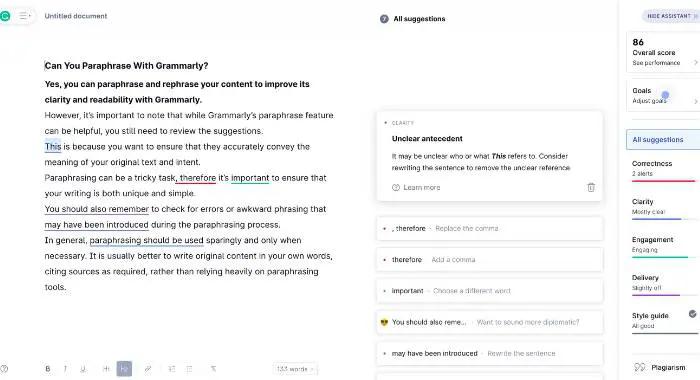
While Grammarly is widely known for grammar checking, its rewrite suggestions are increasingly sophisticated. The platform understands context and detects tone, helping refine sentences to be more precise, professional, and appropriate for specific audiences.
Grammarly also provides:
- Tone indicators, so you can adjust formality
- Readability scores
- Contextual guidance for phrasing
These features are particularly important in professional writing where nuance and clarity are essential.
How to Use It Effectively
Use Grammarly during the final stages of editing:
1. Paste your paraphrased text into Grammarly.
2. Review suggested rewrites to enhance clarity and tone.
3. Accept or modify suggestions contextually, don’t apply them blindly.
4. Cross-check for consistency and voice after edits.
Think of Grammarly as a quality assurance layer that helps refine meaning while preserving professionalism.
Example Use
A corporate communications manager preparing a client-facing strategy report can use Grammarly to make language more concise and formal, ensuring the content reads confidently without ambiguity.
Best AI Paraphrasing Tools in 2026 (Free)
Free AI paraphrasing tools remain a valuable starting point for individuals and small teams who need quick rewrites without a financial commitment.
While they don’t offer the same depth of control or customization as paid solutions, they can be highly effective when used thoughtfully and with clear expectations.
1. QuillBot Free
Best For
QuillBot Free is best for casual paraphrasing tasks, idea generation, and short rewrites. It’s particularly useful when you need a fresh way to express a sentence or paragraph and don’t require advanced tone control or high-volume edits.
Key Strengths
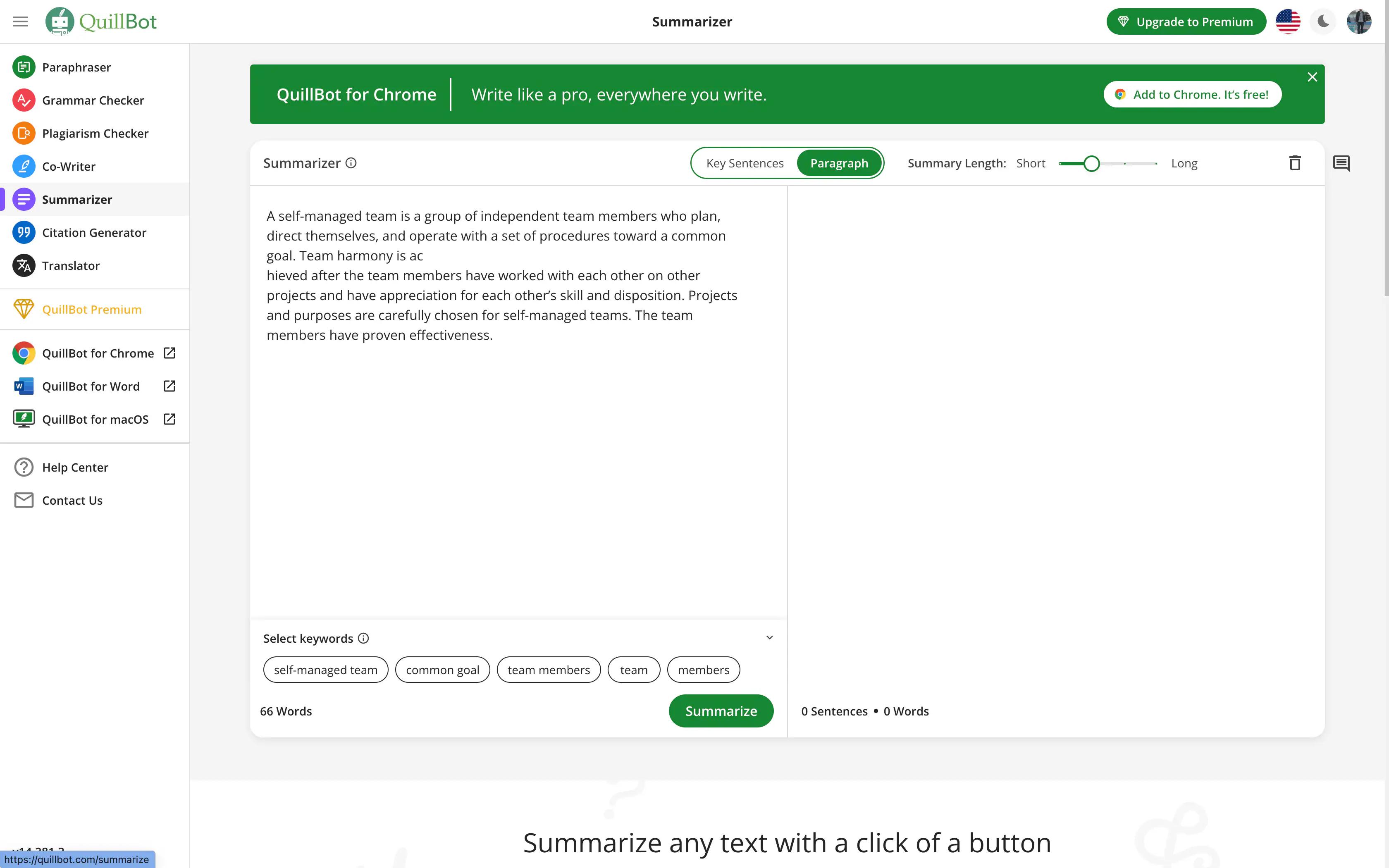
Even in its free version, QuillBot benefits from the same underlying language model as the premium tool, which gives it an advantage over simpler solutions. It automatically restructures sentences and suggests alternative phrasing, helping you break out of repetitive or awkward wording.
Key strengths include:
- Natural-sounding rewrites for short text
- Easy-to-use interface
- No login required for basic use
Because it operates within limited word counts and fewer modes, it’s not designed for full-length articles, but it’s ideal for quick, on-the-fly revisions.
How to Use It Effectively
When using QuillBot Free:
1. Paste a paragraph or sentence into the tool.
2. Choose your preferred paraphrasing mode (typically the default for free users).
3. Review the output and decide which phraseology feels clearest.
4. Manually edit as needed for tone and accuracy.
As a general approach, use this tool to generate alternatives that you then refine manually. This ensures the content remains accurate and aligns with your intended voice.
Example Use
Imagine you’ve written a short product description that feels repetitive. Pasting it into QuillBot Free might offer two to three alternative ways to express the same idea. By selecting the best option and polishing it, you can improve clarity with minimal effort.
2. Paraphraser.io
Best For
Paraphraser.io is best for users who want a very simple, no-frills paraphrasing experience. It’s useful for quick rewrites early in the drafting process or when you want to experiment with different ways of expressing an idea.
Key Strengths
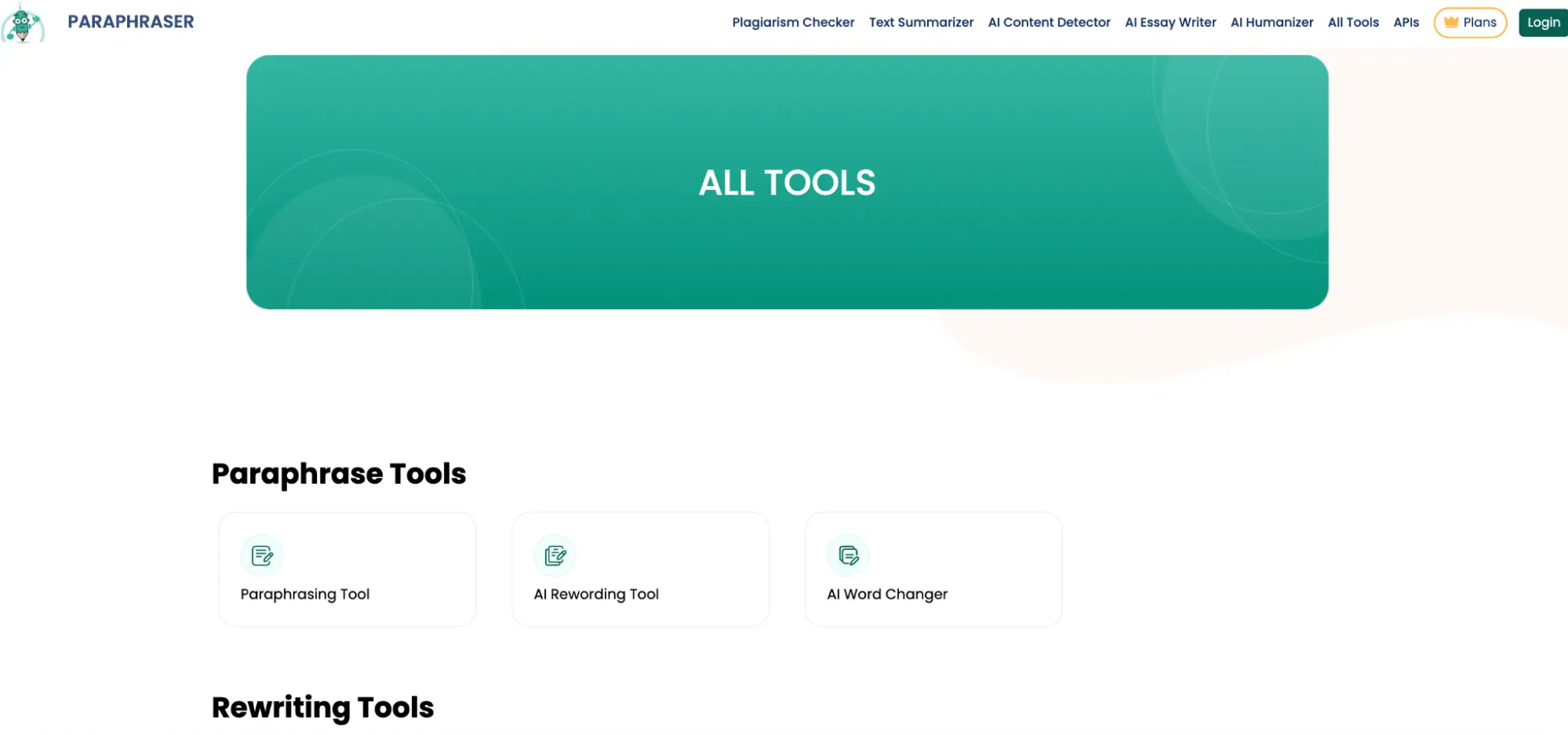
Paraphraser.io is designed for speed and simplicity. You don’t need an account to start, and it handles text quickly with minimal setup. For short content or brainstorming sessions, it’s one of the easier free tools to work with.
Its main strengths are:
- Instant access with no registration
- Quick results
- Simple layout for straightforward paraphrasing
While it lacks advanced controls, it’s helpful for generating alternative wording ideas that you can later refine manually.
How to Use It Effectively
To use Paraphraser.io effectively:
1. Enter your text in small batches, long passages can lead to text that loses meaning.
2. Review the paraphrased result closely.
3. Edit awkward phrasing and check that the meaning remains correct.
4. Integrate the refined text back into your content.
Think of Paraphraser.io as a creative spark, a place to generate ideas you’ll still refine with your own judgement.
Example Use
You might have a two-sentence introduction that feels flat. By running each sentence through Paraphraser.io, you can quickly see alternative phrasing and choose the version that maintains your original meaning while sounding fresher.
3. SmallSEOTools Paraphrasing Tool
Best For
The SmallSEOTools Paraphrasing Tool is best for beginners exploring SEO and basic content rewriting. Because it’s part of a suite of free SEO utilities, it’s a convenient stop when you’re already checking readability, plagiarism, or keyword density.
Key Strengths
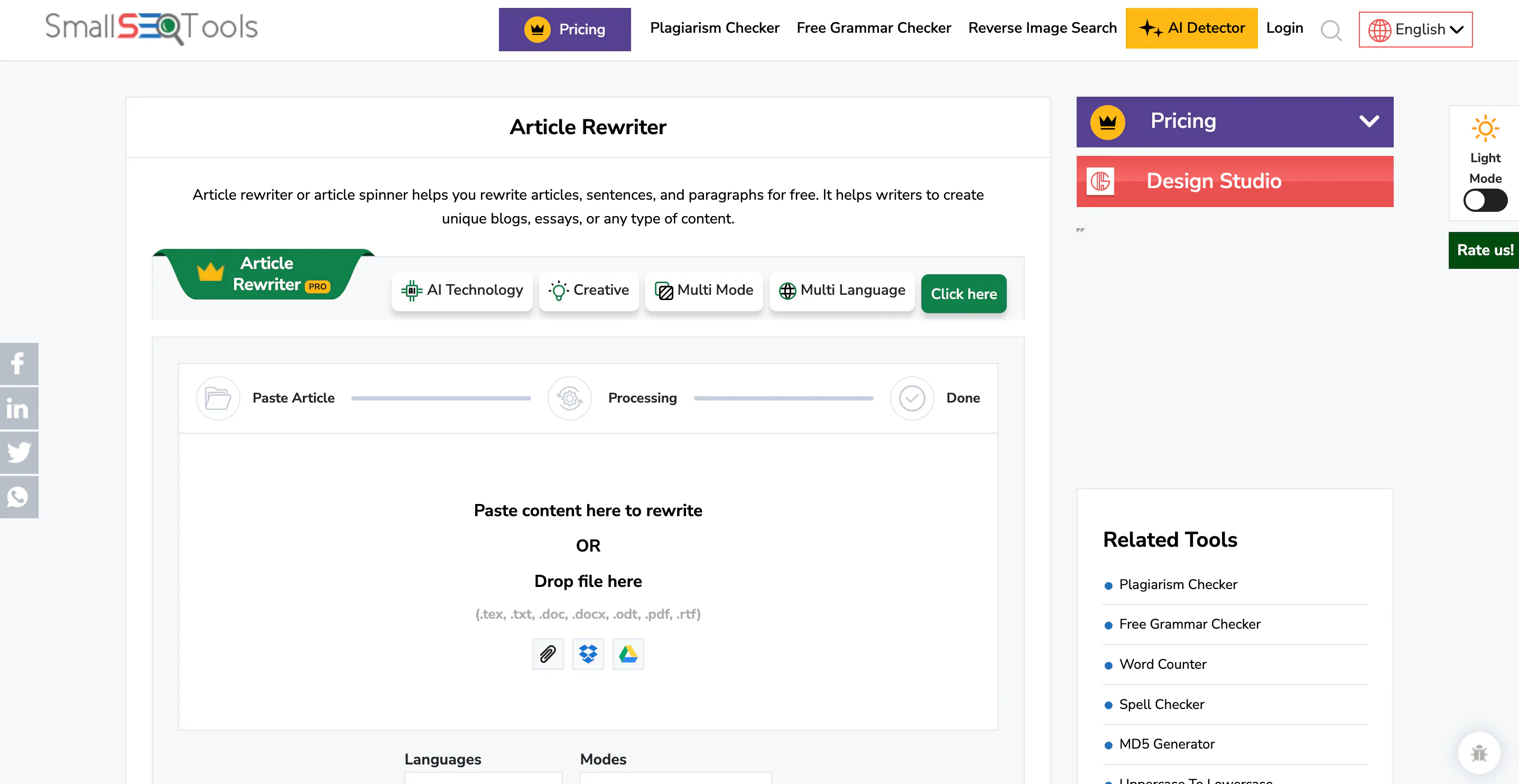
Its main appeal lies in its accessibility and ease of access. Like other free tools, it does the basics well:
- Rewrites sentences with alternative wording
- Is quick and easy to use
- Requires no login
For short snippets of text, it delivers simple paraphrasing that can help jumpstart manual editing.
How to Use It Effectively
To use this tool wisely:
1. Paste the segment you want to rewrite.
2. Accept the paraphrased output with caution, it may rely heavily on direct synonyms.
3. Manually refine keyword placement and sentence flow.
4. Ensure the edited content remains accurate and readable.
It’s best used as one part of a broader editing workflow where human review is always a central step.
Example Use
If you’re writing a brief blog snippet and find yourself using the same phrase repeatedly, running those sentences through the SmallSEOTools paraphraser can suggest alternatives that improve readability. You can then adjust word choice to suit your audience.
General Limitations of Free Tools
Although free paraphrasing tools are useful, it’s important to recognise their limitations:
- Word Count Caps: Many tools restrict text length, so they’re not suitable for revising long-form content in one go.
- Context Understanding: They often lack sophisticated comprehension, which can lead to awkward phrasing or altered meaning.
- Tone Control: Unlike paid tools, most free versions offer minimal control over formality, style, or audience tone, meaning you’ll spend more time editing manually.
Because of this, free tools are best thought of as supports in the creative process, not solutions that deliver publish-ready content on their own.
When Should You Use Free AI Paraphrasing Tools?
Free AI paraphrasing tools are most effective when used for:
1. Early Drafts and Brainstorming
Free AI paraphrasing tools are particularly effective during the early stages of content creation, when ideas are still taking shape. At this point, the goal is not perfection but exploration. These SEO AI tools can help you see alternative ways of expressing an idea, which often sparks clearer thinking and stronger structure.
For example, if you have written a rough paragraph outlining a blog topic, a free paraphrasing tool can:
- Offer different sentence structures
- Highlight simpler ways to explain complex ideas
- Reveal content gaps or redundancies in your original wording
Once you have reviewed the output, use it as inspiration rather than a final solution. By combining your original draft with selected improvements, you can move into the editing phase with greater confidence and direction.

2. Short Content Revisions
Free paraphrasing tools work best when applied to short pieces of content that need quick refinement. Because these tools typically have word limits and less advanced contextual understanding, keeping text concise leads to better results.
This approach is particularly useful for:
- Social media captions
- Short product descriptions
- Email subject lines
- Introductory or concluding sentences
For instance, if a sentence feels repetitive or unclear, paraphrasing it through a free tool can quickly provide alternatives. From there, choose the version that reads most naturally and refine it manually to match your tone and audience expectations.
3. Learning and Experimentation
Another valuable use of free AI paraphrasing tools is skill development. By comparing your original text with paraphrased versions, you can better understand how sentence structure, word choice, and flow affect readability.
To make this process more effective:
- Compare multiple paraphrased outputs to spot patterns
- Note which rewrites improve clarity and which reduce it
- Apply those insights when writing future content manually
For junior writers or non-native English speakers, this method builds confidence and improves writing skills over time. Rather than replacing learning, free tools can actively support it when used thoughtfully.

4. Supporting Manual Rewrites
Free AI paraphrasing tools are most effective when used alongside manual rewriting rather than as a replacement for it. They can help you overcome writer’s block or speed up the revision process, especially when you already understand the topic well.
A practical workflow might look like this:
- Write the content in your own words
- Use a free paraphrasing tool on selected sentences
- Combine the strongest ideas from the output with your original text
- Edit for tone, accuracy, and consistency
For example, a small business owner updating a short blog section can use a free tool to rephrase outdated sentences, then fine-tune them to better reflect the brand voice and current messaging.
However, they are not designed for scaling content production or publishing SEO-critical pages without further editing.
How to Use AI Paraphrasing Tools Effectively
AI paraphrasing tools work best when guided by human strategy. At Saigon Digital, we recommend the following best practices:
1. Start with Strong Original Content
AI paraphrasing tools perform best when they are built on a solid foundation. If the original content lacks clarity, accuracy, or structure, paraphrasing will only amplify those weaknesses. Therefore, begin with content that clearly communicates the main idea, even if the wording is not yet perfect.
For example, before using a paraphrasing tool:
- Ensure the key message is clear
- Confirm facts, data, and terminology are correct
- Organise ideas into logical paragraphs
Once this foundation is in place, AI can help refine and improve the language without distorting the message. In practice, this approach leads to faster revisions and quality outcomes.

2. Use Paraphrasing for Refinement, Not Replacement
AI paraphrasing tools are most effective when used to enhance existing content rather than generate it entirely. Instead of pasting full articles into a tool and publishing the output as-is, focus on refining specific sections that need improvement.
This works particularly well for:
- Simplifying complex explanations
- Improving sentence flow
- Removing repetition
- Adapting tone for different audiences
For instance, a technical paragraph written for industry specialists can be paraphrased into clearer language for a broader audience. By targeting refinement rather than wholesale rewriting, you maintain control over messaging and intent.
3. Always Edit Manually
No matter how advanced AI becomes, human editing remains essential. Paraphrasing tools may occasionally introduce awkward phrasing, change emphasis, or remove important nuance. Manual review ensures accuracy, consistency, and alignment with brand voice.
When editing AI-paraphrased content:
- Read it aloud to check natural flow
- Compare it against the original to confirm meaning
- Adjust tone to suit your audience
- Remove unnecessary complexity
This final step transforms AI output from “acceptable” to genuinely high-quality content that builds trust with readers.

4. Align with SEO Intent
Paraphrasing should never compromise search intent. Each page exists to answer a specific user query, and rewriting content without considering that purpose can weaken SEO performance.
Before and after paraphrasing, ask:
- Does the content still answer the user’s question?
- Are primary and secondary keywords used naturally?
- Is the structure still easy to scan and understand?
For example, if a blog post targets informational intent, the paraphrased version should remain educational rather than becoming overly promotional. Maintaining this alignment helps protect rankings while improving readability.
5. Avoid Overuse
While AI paraphrasing tools can save time, excessive use can lead to content that feels generic or diluted. Readers quickly recognise writing that lacks originality or human perspective, which can reduce engagement and credibility.
To avoid this:
- Paraphrase selectively rather than uniformly
- Preserve original insights and examples
- Combine AI assistance with subject-matter expertise
For instance, paraphrasing introductory or transitional sentences may improve flow, while leaving expert insights untouched preserves authenticity. This balanced approach delivers content that feels both polished and human.
Are AI Paraphrasing Tools Safe for SEO?
Yes, when used responsibly. Search engines evaluate content quality, not how it was produced. The risk comes from publishing low-value, machine-heavy content without human input.
The best AI paraphrasing tools support SEO by:
- Improving readability
- Reducing duplication
- Helping scale content updates
They become a liability only when misused.
Choosing the Right Tool for Your Business
Choosing the right AI paraphrasing tool is not about finding the most advanced technology, it is about finding the right fit for your business goals, team structure, and content maturity. Different tools excel at different tasks, so clarity around how and why you will use them is essential.
For SEO and Content Marketing Teams
If your business relies heavily on organic traffic, the paraphrasing tool you choose must support SEO rather than undermine it. Tools such as QuillBot Premium and Jasper AI are well suited to this environment because they allow controlled rewrites that preserve search intent and keyword relevance.
When evaluating tools for SEO use, prioritise the following:
- Ability to maintain natural keyword placement
- Support for long-form content rewriting
- Output that improves readability and structure
For example, an SEO team updating blog content for a ranking refresh can use these tools to rewrite underperforming sections while keeping internal links, headings, and topical relevance intact. This approach supports scalability without sacrificing quality.

For Brand Tone and UX Writing
If consistency, clarity, and user experience are your top priorities, tools like Wordtune are often the better choice. These tools focus less on volume and more on how content feels to the reader.
This category is ideal for:
- Website copy
- Product messaging
- Email campaigns
- User interface text
For instance, a product team refining onboarding messages can use tone-based rewrites to make instructions clearer and more encouraging. By adjusting language at the sentence level, teams can improve engagement without changing core messaging.
For Professional and Corporate Communication
Businesses producing formal documents, such as reports, proposals, and client communications, benefit most from tools like Grammarly Premium. These tools prioritise precision, clarity, and professionalism rather than creative rewording.
Key considerations include:
- Context-aware rewrite suggestions
- Formal tone detection
- Minimal risk of meaning distortion
As an example, a consultancy preparing client deliverables can use Grammarly to refine explanations, remove ambiguity, and ensure consistent tone across documents. This enhances credibility and trust without introducing unnecessary complexity.

For Light or Occasional Use
If paraphrasing is not a core part of your workflow, free or entry-level tools may be sufficient. These tools are best for individuals or small teams handling occasional content updates rather than ongoing production.
Free tools are suitable when:
- Content volume is low
- Manual editing is planned
- The content is non-critical
For example, a small business owner updating a short “About Us” section may find a free tool helpful for exploring alternative phrasing before finalising the copy manually.
Balancing Cost, Control, and Scale
Beyond features, consider how each tool fits into your wider workflow. A more advanced tool may require training and setup but offer long-term efficiency. Conversely, a simpler tool may deliver faster wins for small teams with limited resources.
Ask the following questions before committing:
- How often will we paraphrase content?
- Who will use the tool, and at what skill level?
- Do we need brand voice control or SEO support?
- How much manual editing are we prepared to do?
Answering these questions helps ensure your investment aligns with real business needs rather than perceived trends.
Make AI Paraphrasing Tools Work Smarter for You
In 2026, AI paraphrasing tools are steadily becoming a part of modern digital workflows. However, technology alone does not drive results. Strategy, creativity, and human judgement remain essential.
At Saigon Digital, we see AI as an enabler. When paired with strong SEO foundations, clear brand messaging, and user-centric thinking, the best AI paraphrasing tools help businesses move faster without compromising quality.
Get in touch with Saigon Digital and start integrating AI in your workflow today!
Want to be the brand AI engines recommend?
We make businesses visible on Google and inside AI answers, measured in leads, not vanity metrics.