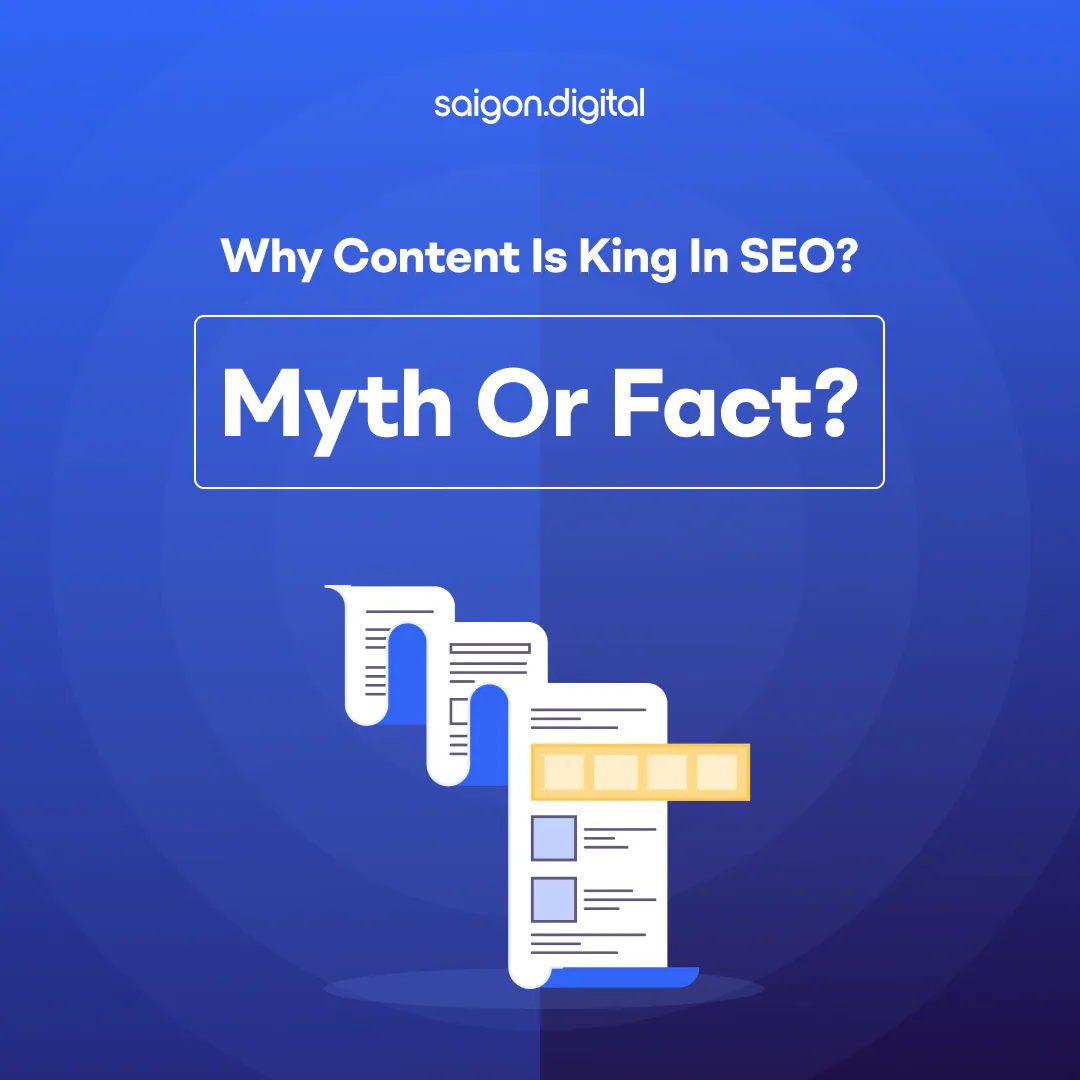
Why content is king in SEO comes down to one simple fact: search engines and AI assistants exist to answer questions, and content is the only thing that answers them. Without useful pages, there is nothing to rank, nothing to link to and nothing for AI Overviews to cite.
But "content is king" has also been misused for years as an excuse to publish more and more articles and hope for the best. This guide explains why content still sits at the centre of SEO in 2026, what Google actually means by good content, and the supporting pieces that every king needs to rule: technical health, authority, user experience and promotion.
Key Takeaways
- Content is king because it is what search engines rank, what other sites link to and what AI answers draw on.
- Quality beats quantity. Google says its March 2024 core update led to 45% less low-quality, unoriginal content in results.
- Google rewards helpful, reliable, people-first content that shows first-hand experience and clear expertise.
- Content alone is not enough. It needs a technically sound site, earned authority, good user experience and active promotion.
- Existing content needs regular audits, refreshes and pruning to keep its value.
- In AI search, original data, clear structure and trustworthy sources make content more likely to be cited.
Where "Content Is King" Comes From
The phrase comes from a 1996 essay by Bill Gates, who predicted that most of the money on the internet would be made from content, just as it had been in broadcasting. SEO professionals adopted it because it described what search engines were trying to reward: pages that genuinely answered what people searched for.
Google has spent the years since making that principle harder to fake:
- 2011, Panda: targeted thin, low-quality and content-farm pages.
- 2022, helpful content system: rewarded content written for people rather than for search engines.
- March 2024 core update: folded helpful content into core ranking and, by Google's own estimate, cut low-quality, unoriginal content in results by 45%.
- 2024 onwards, AI Overviews and AI Mode: generated answers built from indexed web content, raising the value of pages worth citing.
Each change pushed in the same direction: content is still king, but only content that earns the title.
Why Content Is King in SEO: 6 Reasons
1. Content Is What Gets Ranked
Search engines rank pages, and pages are made of content. Every keyword you want to rank for needs a page that covers the topic well enough to deserve a top position. Without content, there is simply nothing to optimise.
2. Content Is How You Match Search Intent
Rankings go to the page that best satisfies what the searcher wants. Whether someone wants a definition, a comparison or a product, content is how you meet that search intent. Two sites with identical technical health will be separated by which one answers the question better.
3. Content Earns Links and Mentions
Other websites link to things worth referencing: original research, useful tools, in-depth guides and expert opinion. Those links remain one of the strongest authority signals, and they are far easier to earn with great content than to chase with outreach alone. Our link building strategies guide covers how to turn content into links.
4. Content Builds Trust and E-E-A-T
Experience, expertise, authoritativeness and trustworthiness are demonstrated through content: named authors, first-hand examples, accurate facts and cited sources. Our guide to implementing E-E-A-T explains how to show these signals clearly.
5. Content Creates Topical Authority
A body of connected articles around one subject tells search engines you are a reliable source on that topic, not just on one page. A larger content library also creates more internal linking opportunities, helping both users and crawlers find your most important pages. Our topical authority map guide shows how to plan it.
6. Content Feeds AI Answers
AI Overviews, AI Mode, ChatGPT and Perplexity build their answers from existing web content. Pages with clear structure, specific facts and original insight are the ones most likely to be cited. See the content types to boost AI visibility for formats that perform well.
What Google Means by Good Content in 2026
Google's guidance on creating helpful, reliable, people-first content gives a clear checklist. The table below summarises the questions it asks and what they mean in practice.
| Google asks | What it means for your content |
|---|---|
| Does it provide original information, research or analysis? | Add your own data, examples or perspective rather than restating what already ranks |
| Does it show first-hand experience and depth of knowledge? | Write from real projects, tests and customer conversations |
| Is it written or reviewed by someone who knows the topic? | Use named authors with relevant credentials and a visible bio |
| Is it clearly sourced and free of easily checked errors? | Cite primary sources and fact-check figures before publishing |
| Would someone arriving directly feel they learned enough to reach their goal? | Answer the question fully, then help readers take the next step |
| Is it mainly made to attract search visits? | Avoid churning out pages on topics you have no expertise in just because they have volume |
| Is the length driven by a target word count? | Google says there is no preferred word count; write as long as the topic needs |
Google also stresses who created the content, how and why. Make authorship clear, explain how content was produced where readers would expect it, and make helping visitors the main purpose. If you use AI in production, our guide to E-E-A-T for AI content covers how to keep that trust.
Why Content Alone Isn't Enough
Many marketers believe the slogan and keep pumping out content, hoping for the best. But that doesn't always work. Great content is the foundation, but it is just one piece of the SEO puzzle.
Think of content as the king, and the rest of SEO as the kingdom it needs to rule effectively:
| Part of the kingdom | Its role | What happens without it |
|---|---|---|
| Technical SEO | Makes content crawlable, indexable, fast and mobile-friendly | Great pages never get found or rank below slower competitors |
| Authority and links | Signals that others trust your content | Strong pages stall behind better-linked rivals |
| User experience | Turns visitors into readers, leads and customers | Traffic arrives but leaves without converting |
| Promotion | Gets content in front of people who will read, share and link to it | Content waits months to be discovered, if it ever is |
| Maintenance | Keeps facts, dates and rankings current | Rankings decay as content goes stale |
Technical Foundations
You need to optimise the site itself so search engines can understand your content. That means fast load times, a mobile-friendly design, clean site architecture, structured data and logical internal linking. Our technical SEO checklist and guide to Core Web Vitals cover the essentials.
Content Doesn't Guarantee Sales
Just because you have a lot of content doesn't mean people will buy from you. For content to truly support your sales goals, it needs to offer clear value, answer common questions and guide potential customers through their buying journey.
Your website must also be easy to navigate. A confusing layout, slow load times or cluttered design can drive visitors away before they ever reach your content. A seamless user experience, paired with well-targeted, helpful content, is what builds trust and encourages conversions.
Writing for Rankings Instead of People
The sole pursuit of high rankings can lead to content that prioritises algorithms over user intent. Keyword stuffing might once have boosted rankings, but today it breaks Google's spam policies and creates a frustrating experience for readers. Remember, you are writing for humans first.
How to Create Content That Earns the Crown
Content may not rule alone, but it remains a powerful force. Here is how to craft content that resonates with your audience and search engines:
Know your audience. Research their needs, pain points and preferred formats, such as articles, videos, tools or comparisons. This knowledge becomes the foundation for your content strategy.
Solve real problems. Great content does not just inform; it helps readers get something done.
Lead with thought leadership. Do not just repeat what already ranks. Add your unique perspective, experience and conclusions.
Use data well. Facts and figures add weight to your content, but avoid overwhelming readers with numbers that do not support a point.
Plan before you write. A clear SEO content outline keeps each page focused on one intent and covers what searchers need.
Optimise as you publish. Use our SEO content optimisation guide to get titles, headings and internal links right.
Build around entities, not just keywords. An entity-first content strategy helps search engines and AI systems connect your brand with the topics you cover.
Avoid thin pages. Many short, overlapping posts are weaker than one strong page. Learn to spot thin content before it drags your site down.
For the full planning process, from audience research to an editorial calendar, see our SEO content strategy guide.
Promote Your Content
Content creation is just the first step. To maximise its impact, you need a promotion plan that gets your content in front of the right people.
- Share new content through email, LinkedIn and the communities where your buyers spend time.
- Pitch data-led pieces and expert commentary to industry publications to earn links and mentions.
- Repurpose long guides into short posts, videos or carousels for social channels.
- Link new articles from relevant existing pages so they are discovered and crawled quickly.
Some marketers suggest spending as much effort promoting content as creating it. Treat that as a reminder rather than a rule: a smaller number of well-promoted pieces usually beats a large library nobody sees.
Keep Your Content Fresh
Content is a living document, not a static monument. It needs to be updated to keep up with your industry.
- Audit regularly. Review your content at least twice a year to find underperforming pages, starting with those already ranking for valuable keywords.
- Refresh, do not just redate. Update facts, examples and screenshots. Google warns against changing dates only to look fresh. Our guide to the SEO content lifecycle explains when to update, merge or retire a page.
- Prune what no longer helps. Content pruning removes or consolidates outdated and overlapping pages so your strongest content gets the attention.
- Invest in evergreen topics. SEO evergreen content keeps attracting traffic for years with light maintenance.
- Fill the gaps. Look for content gaps where competitors answer questions you do not.
Is Content Still King in the Age of AI Search?
Yes, and arguably more than ever. AI-generated answers do not replace content; they are built from it. What has changed is which content wins:
- Original beats rewritten. AI can summarise what already exists, so pages that add new data, experience or analysis stand out.
- Structure helps citation. Clear headings, direct answers and tables make passages easy for AI systems to extract and quote.
- Trust signals matter. Named experts, cited sources and consistent brand information make your content a safer source to cite.
- AI-assisted content is fine, low-value content is not. Google judges quality rather than how content was produced. Read more in will AI-generated content hurt your rankings.
If you hear that content no longer matters because "AI has killed SEO", our article on SEO myths explains why that is one of the most costly beliefs in marketing today.
Content Marketing and SEO: How They Work Together
Content marketing and SEO are often treated as separate jobs, but they depend on each other. SEO identifies what people search for and makes pages findable; content marketing creates the material worth finding and gets it in front of people.
| Content marketing brings | SEO brings |
|---|---|
| Expertise, stories and original insight | Keyword and intent research |
| Formats people want to read, watch and share | Technical foundations and site structure |
| Distribution through email, social and PR | Visibility in search results and AI answers |
| Trust and brand recognition | Measurement through rankings, traffic and conversions |
When both teams work from the same plan, content gets found and SEO has something worth ranking.
Turn Content Into Real SEO Assets
That is why content is king in SEO, but a king needs a kingdom. High-quality, people-first content works best alongside a technically sound site, earned authority, a smooth user experience, active promotion and regular maintenance. Get those pieces working together and your content becomes an asset that compounds rather than a cost that keeps growing.
Saigon Digital helps businesses in the UK, US, Australia and across Asia plan, create and optimise content that ranks in Google and gets cited in AI answers. Explore our SEO services or get in touch to find out which of your pages could be working harder.
FAQs About Content and SEO
1. Is content still king in SEO in 2026?
Yes. Content is what search engines rank and what AI answers draw on. The difference today is that only helpful, original and trustworthy content earns visibility, and it needs technical health, authority and promotion behind it.
2. Why is good content important for SEO?
Good content matches search intent, keeps visitors engaged, earns backlinks and demonstrates expertise. Together these improve rankings, build trust with your audience and make your pages more likely to be cited in AI answers.
3. What makes content SEO-friendly?
SEO-friendly content targets a clear search intent, uses its main keyword naturally in the title and headings, answers questions directly, is easy to scan, links to related pages and is written or reviewed by someone with real expertise.
4. Is content more important than backlinks?
They work together. Content gives search engines something worth ranking, and backlinks signal that others trust it. Great content is also the most reliable way to earn quality backlinks.
5. Does AI-generated content count as good content?
It can, if it is accurate, original and reviewed by someone with expertise. Google evaluates the quality and helpfulness of content, not whether AI was used, but it acts against mass-produced, low-value pages.
6. How often should I update my content?
Review important pages at least twice a year and update them whenever facts, prices, tools or best practices change. Prioritise pages that already rank for valuable keywords.
Want to be the brand AI engines recommend?
We make businesses visible on Google and inside AI answers, measured in leads, not vanity metrics.