



As AI-powered search continues to reshape how people discover information online, businesses face a new challenge: how to appear not only in traditional search engine results but also within AI-generated answers.
One platform leading this shift is Perplexity AI. Unlike conventional search engines that primarily present a list of links, Perplexity generates direct answers and cites sources it considers trustworthy and relevant. For businesses in industries such as F&B, retail, education, hospitality, and professional services, being featured within these answers can significantly increase visibility, credibility, and website traffic.
If you are wondering how to appear in Perplexity AI answers, this guide explains how Perplexity selects sources, what factors influence citations, and the practical strategies your business can implement to improve its visibility in AI-driven search experiences.
What Is Perplexity AI?
Perplexity AI is an AI answer engine that combines large language models with real-time web search. Instead of presenting users with a page of search results, it generates conversational responses while citing sources that support the information provided.
When a user asks a question such as:
- "What are the best boutique hotels in Ho Chi Minh City?"
- "How can retailers improve customer retention?"
- "What are the latest trends in restaurant digital marketing?"
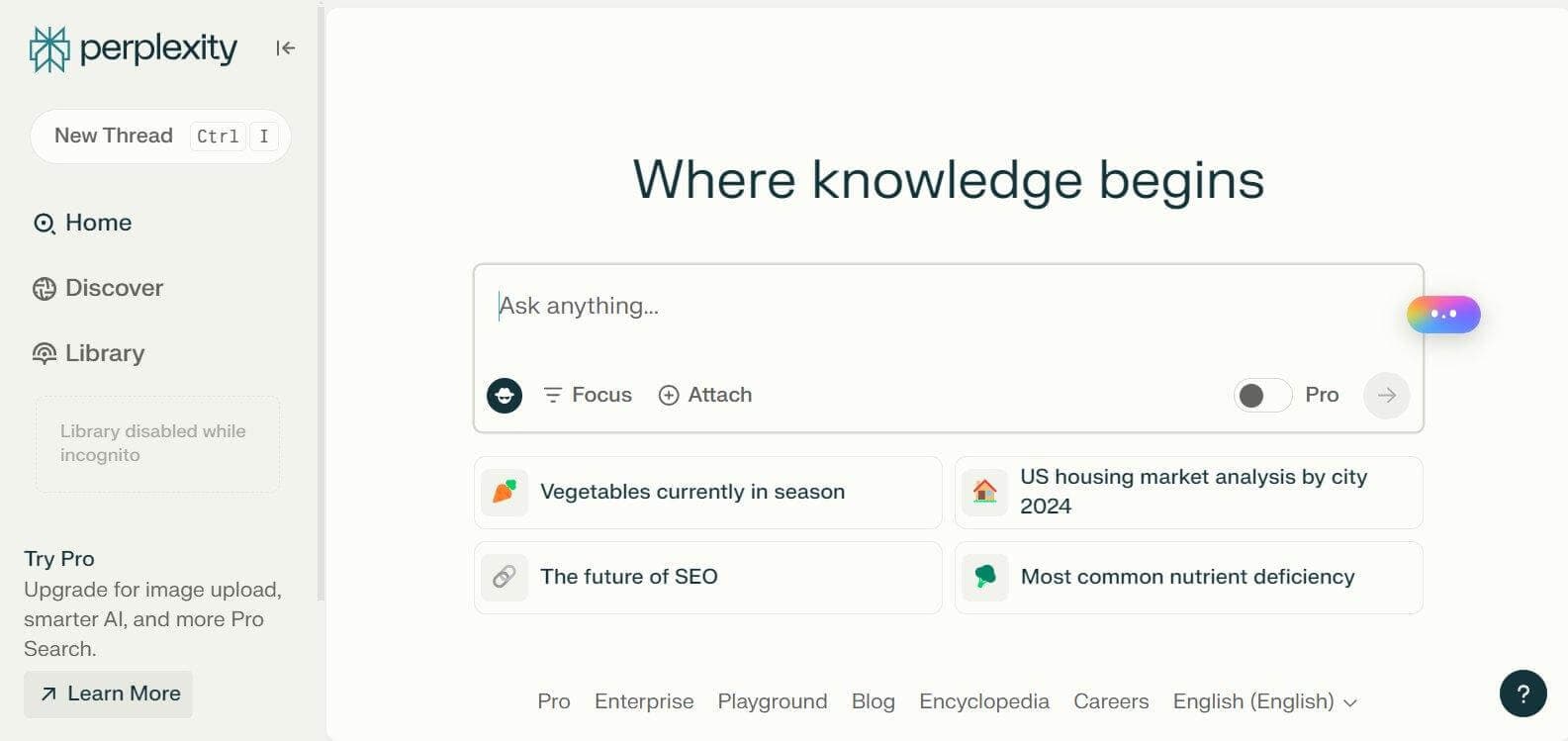
Perplexity analyses content across the web, identifies reliable sources, and generates a response that includes citations.
This creates a new opportunity for businesses. Rather than competing solely for clicks in traditional search rankings, companies can position their content as a trusted source that AI platforms reference when answering user queries.
Why Appearing in Perplexity AI Answers Matters
AI-powered search is rapidly influencing customer journeys.
Many users now seek direct answers rather than browsing multiple websites. When Perplexity cites your content, your brand gains exposure at the exact moment users are looking for information.
Benefits include:
1. Increased Brand Visibility
Your business can appear prominently within AI-generated responses, even when users never perform a traditional search.
2. Enhanced Authority and Trust
Being cited by Perplexity signals that your content is considered reliable and valuable.
3. Qualified Website Traffic
Users often click source citations to learn more, resulting in highly relevant traffic.
4. Future-Proof Digital Presence
As answer engines become more popular, businesses that optimise for AI discovery gain a competitive advantage.
Understanding how to appear in Perplexity AI answers is becoming an essential component of modern SEO and digital marketing strategies.
How Perplexity AI Selects Sources and How Brands Can Appear in Perplexity AI
Before implementing any optimisation strategy, it is important to understand how Perplexity AI identifies and selects sources for its answers. Unlike traditional search engines that primarily rank webpages, Perplexity's objective is to generate the most accurate and useful response possible. To achieve this, it analyses content from multiple sources and selects information that appears trustworthy, relevant, and easy to understand.
>>> Read more: How AI Search Engines Work: RAG, Retrieval & Summarisation Explained
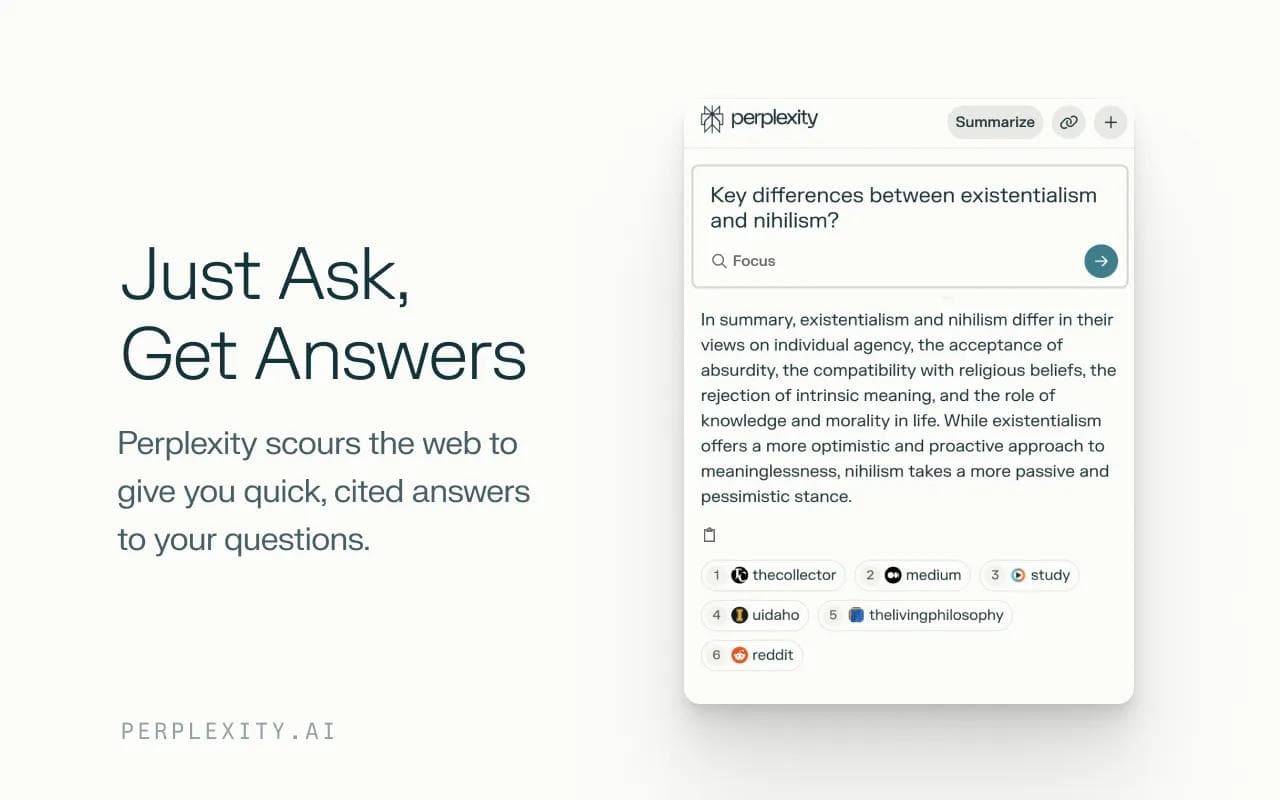
Although Perplexity has not publicly revealed its complete ranking methodology, observable patterns across thousands of citations suggest that several factors consistently influence which websites are referenced.
In general, Perplexity tends to favour content that demonstrates:
- Strong topical relevance
- Clear and direct answers
- High levels of authority and trust
- Well-structured content
- Current and accurate information
- Strong organic search visibility
- Credible external references
For businesses, this means that success in AI search often stems from the same foundations that drive success in traditional SEO. However, AI answer engines place an even greater emphasis on content clarity, factual accuracy, and answerability.
Let's explore each of these factors in greater detail.
1. High Topical Relevance
Perhaps the most important factor in appearing within Perplexity AI answers is topical relevance.
When a user asks a question, Perplexity attempts to identify content that specifically addresses the topic being discussed. Rather than looking for pages that simply mention a keyword, the platform seeks content that thoroughly explains the subject.
For example, imagine a user searches: "How can a restaurant improve local SEO?"
A generic digital marketing article that briefly mentions local SEO may not be selected. Instead, Perplexity is more likely to cite a comprehensive guide dedicated to restaurant local SEO strategies because it provides deeper and more relevant information.
This highlights an important distinction between keyword targeting and topical expertise.
Businesses should focus on creating content that:
- Covers a subject comprehensively
- Answers related questions
- Explores challenges and solutions
- Provides practical recommendations
- Demonstrates industry-specific knowledge
For instance, a hospitality business could create content around:
- Hotel SEO best practices
- Google Business Profile optimisation
- Online reputation management
- Local search ranking factors
- Guest review strategies
Collectively, these articles signal strong expertise in hospitality marketing, increasing the likelihood of being cited for related queries.
What This Means for Brands
Rather than publishing isolated articles targeting individual keywords, brands should build topical authority around their core services and industries.
For example:
- An education provider should create comprehensive content covering student recruitment, digital marketing for schools, local SEO for educational institutions, and emerging education technology trends.
- A restaurant group should publish content around restaurant marketing, local search visibility, online ordering strategies, customer retention, and hospitality technology.
- A retailer should develop resources on ecommerce growth, omnichannel experiences, local SEO, customer loyalty, and retail analytics.
The goal is to become the most useful source within your niche. When Perplexity consistently sees your website publishing high-quality content across a subject area, it becomes easier for the platform to recognise your expertise and cite your content for related queries.
2. Strong Factual Accuracy
Accuracy is fundamental to Perplexity's mission. Because the platform generates direct answers, it seeks information that appears reliable and verifiable.
Content containing unsupported claims, outdated statistics, or misleading information is less likely to become a trusted source.
To improve factual accuracy:
- Reference reputable studies and reports
- Link to authoritative sources
- Verify statistics before publishing
- Include publication dates where appropriate
- Update information regularly
Consider the difference between these two statements:
❌ "Most consumers prefer online shopping."
✅ "According to a 2024 retail industry survey, 76% of consumers research products online before purchasing."
The second example provides measurable evidence, making it significantly more useful for both readers and AI systems.
Whenever possible, support key claims with credible sources. This helps Perplexity identify your content as a trustworthy reference rather than an opinion-based article.
What This Means for Brands
Brands should move beyond generic marketing content and prioritise evidence-backed information.
Whenever possible:
- Support claims with industry data.
- Reference reputable third-party research.
- Include expert commentary.
- Link to authoritative sources.
- Update outdated statistics.
This is particularly important for sectors such as education, healthcare, hospitality, and professional services, where trust plays a major role in purchasing decisions.
A useful rule is simple: if a statement could reasonably be questioned, support it with evidence. Not only does this improve credibility with readers, but it also increases the likelihood that AI systems will trust and cite your content.
3. Clear Structure and Readability
Even highly valuable information can be overlooked if it is difficult to interpret.
AI systems need to quickly identify the main points within a page. Well-structured content makes this process considerably easier.
Perplexity often favours content that uses:
- Clear headings and subheadings
- Logical content flow
- Short paragraphs
- Bullet points and numbered lists
- Tables and comparison charts
- FAQ sections
What This Means for Brands
Many companies focus heavily on what they write but overlook how they present information.
Brands should structure content so that answers are immediately visible.
Consider implementing:
- Clear H2 and H3 headings
- Summary sections
- FAQ blocks
- Bullet-point recommendations
- Step-by-step frameworks
- Comparison tables
Think of every article as serving two audiences simultaneously: human readers and AI systems. The easier it is for both to extract key information, the stronger your chances of being referenced.
A practical exercise is to review your existing content and ask: Can someone understand the main takeaway within 10 seconds of landing on this page?
If the answer is no, there may be opportunities to improve readability and AI accessibility.
4. Trustworthiness and Authority
Perplexity appears to place significant weight on authority signals when selecting sources.
In practice, this means that content from recognised experts, established organisations, and reputable publications often receives greater visibility.
Authority can be developed through multiple channels:
Demonstrating Expertise
Showcase real-world experience and industry knowledge.
Examples include:
- Expert-authored articles
- Detailed case studies
- Original research
- Professional insights
Building Brand Credibility
Strong brands often have advantages because they have already established trust.
Businesses can strengthen credibility by displaying:
- Awards and certifications
- Industry memberships
- Customer success stories
- Media mentions
- Professional partnerships
Earning Quality Backlinks
Links from reputable websites continue to serve as important trust signals.
For example, a hospitality marketing agency that receives mentions from respected tourism publications is likely to be viewed as more authoritative than a website with few external references.
The stronger your authority profile becomes, the greater the likelihood that AI systems will consider your content worthy of citation.
What This Means for Brands
Authority is not built through content alone. It is built through your entire digital presence.
Brands should actively invest in:
- Digital PR campaigns
- Thought leadership initiatives
- Industry speaking opportunities
- Expert-led content creation
- Case study development
- Reputation management
For example, a hotel group that is regularly featured in hospitality publications and contributes expert insights to industry discussions will likely be viewed as more authoritative than a competitor with little public visibility.
In the age of AI search, authority is increasingly becoming a competitive advantage. Businesses that establish themselves as recognised experts are more likely to appear in AI-generated answers across multiple platforms.
5. Fresh and Up-to-Date Information
Many user queries require current information. As a result, Perplexity often favours content that reflects recent developments.
This is especially important for topics involving:
- Technology
- AI
- Digital marketing
- Regulations
- Industry trends
- Consumer behaviour
For example, an article about AI search written in 2022 may contain outdated recommendations. Meanwhile, a regularly updated guide published in 2025 or 2026 is more likely to reflect current best practices.
Businesses should establish a content refresh process that includes:
- Reviewing key pages every six to twelve months
- Updating statistics and research
- Removing outdated recommendations
- Adding new industry developments
- Revising screenshots and examples
A useful approach is to prioritise updates for pages that already generate traffic and backlinks. Small improvements to established content often produce stronger results than constantly publishing new articles.
What This Means for Brands
Publishing content is only the beginning. Brands should treat content as an ongoing asset rather than a one-time project.
A content maintenance strategy should include:
- Scheduled content audits
- Annual updates to cornerstone articles
- Quarterly reviews of industry trends
- Regular statistic refreshes
- Updates to screenshots, examples, and recommendations
For many businesses, refreshing existing content can deliver greater returns than producing entirely new content.
From Perplexity's perspective, recent and accurate information is often more valuable than outdated content, regardless of how well the older article once performed.
6. Strong Organic Visibility
Interestingly, many sources cited by Perplexity also rank well in Google search results.
This does not necessarily mean Perplexity simply copies Google's rankings. However, it does suggest that many of the qualities that help content rank well in search engines also help it perform well in AI-driven environments.
Strong-performing content typically demonstrates:
- Comprehensive topic coverage
- User-focused writing
- High engagement levels
- Technical SEO excellence
- Strong authority signals
In other words, traditional SEO remains highly relevant.
Businesses should avoid viewing SEO and AI optimisation as separate disciplines. Instead, they should be considered complementary strategies.
A website with strong search visibility often provides the foundation required for AI visibility as well.
What This Means for Brands
Businesses should not abandon traditional SEO in favour of AI optimisation.
Instead, they should view SEO, GEO (Generative Engine Optimisation), and AEO (Answer Engine Optimisation) as interconnected disciplines.
Strong SEO fundamentals remain critical, including:
- Technical optimisation
- Keyword research
- Internal linking
- Backlink acquisition
- User experience improvements
- Content quality
Many of the brands appearing in AI-generated answers today are the same brands that have invested consistently in SEO over many years.
The difference is that AI platforms now create an additional channel through which that authority can be discovered.
7. Reputable External References
Perplexity appears to favour content that participates within a broader ecosystem of trusted information.
Pages that reference authoritative sources often provide stronger signals of reliability.
For example, an article discussing retail consumer behaviour may reference:
- Government statistics
- Industry reports
- Academic research
- Major consulting studies
- Recognised market research firms
These references help validate the information presented.
By contrast, unsupported claims can weaken perceived trustworthiness.
When creating content, consider asking:
- Can this statement be verified?
- Is there a credible source available?
- Would an industry professional trust this information?
The more evidence-backed your content becomes, the more likely AI systems are to view it as a dependable source.
What This Means for Brands
Brands should think beyond publishing content and focus on becoming part of a trusted information network.
When creating articles, include references from:
- Government agencies
- Industry associations
- Academic institutions
- Reputable research firms
- Established media organisations
This not only strengthens the credibility of your content but also demonstrates that your insights are grounded in recognised expertise.
For decision-makers evaluating SEO and GEO investments, this is particularly important because AI platforms increasingly reward information that can be verified and cross-referenced across multiple trusted sources.
Common Mistakes to Avoid
Businesses seeking to learn how to appear in Perplexity AI answers often focus on what they should do, but it is equally important to understand what they should avoid.
In many cases, brands fail to gain visibility in AI-generated answers not because they lack content, but because their content does not meet the standards that answer engines prioritise. By recognising these common mistakes early, businesses can avoid wasted effort and build a stronger foundation for long-term AI visibility.
1. Publishing Thin Content
One of the most common mistakes is publishing content that provides only surface-level information, thin content.
While short articles may occasionally rank for niche keywords, AI platforms such as Perplexity typically favour content that offers meaningful depth and genuinely helps users understand a topic. If an article simply repeats basic definitions or rephrases information already available elsewhere, it is unlikely to stand out.
For example, an article titled "What Is Local SEO?" that contains only a few hundred words and a generic explanation will often struggle to compete with a comprehensive guide that includes examples, best practices, common challenges, and actionable recommendations.
Instead of publishing a large volume of short articles, focus on creating fewer but more valuable resources that thoroughly address user questions.
2. Ignoring User Intent
Many businesses still create content around keywords without fully considering what users actually want to know.
However, Perplexity's primary goal is to answer questions, not simply match keywords. As a result, content that aligns closely with user intent is far more likely to be cited.
For example, someone searching "how to improve hotel occupancy rates" is probably looking for practical strategies and proven tactics. If the content focuses heavily on industry jargon or promotional messaging instead of providing useful advice, it may fail to satisfy the user's needs.
Before creating content, consider:
- What problem is the user trying to solve?
- What information are they hoping to find?
- What follow-up questions might they ask?
The more effectively your content addresses user intent, the more valuable it becomes to both readers and AI systems.
3. Overusing AI-Generated Content
AI can be an excellent tool for improving productivity, but relying on it without human expertise can create problems.
Many AI-generated articles lack original insights, practical experience, and unique perspectives. As a result, they often sound generic and provide little value beyond what already exists online.
Perplexity appears to favour content that demonstrates expertise and offers genuinely useful information. Therefore, businesses should use AI to support content creation rather than replace human input entirely.
A stronger approach is to combine AI efficiency with:
- Industry expertise
- Real-world examples
- Original insights
- Case studies
- Proprietary data
This combination creates content that is more trustworthy, differentiated, and citation-worthy.
4. Neglecting Authority Building
Even excellent content can struggle to gain visibility if the brand behind it lacks credibility.
Many businesses invest heavily in content production but spend little time building authority across the wider digital ecosystem. However, Perplexity often references sources that demonstrate strong trust signals beyond their own websites.
Authority-building activities may include:
- Earning high-quality backlinks
- Securing media coverage
- Publishing original research
- Building thought leadership
- Collecting positive reviews and testimonials
Over time, these signals help establish your business as a recognised source of expertise within its industry.
5. Focusing Only on Rankings
Traditional SEO has often encouraged businesses to focus heavily on keyword rankings. While rankings remain important, AI search introduces a broader definition of visibility.
A page does not necessarily need to hold the number one position in Google to be cited by Perplexity. In many cases, the quality, clarity, and usefulness of the content play a larger role.
For this reason, businesses should shift their focus from simply chasing rankings to creating genuinely valuable resources that answer real questions.
A more effective mindset is to ask:
"Would this content be useful enough for an AI platform to reference when answering a user's question?"
When brands prioritise usefulness, expertise, and trustworthiness, improved search performance and AI visibility often follow naturally.
The Future of SEO Is AI Visibility
Search behaviour is evolving rapidly.
Traditional SEO remains important, but businesses must now consider how AI platforms discover, interpret, and cite information.
Understanding how to appear in Perplexity AI answers is no longer a niche optimisation tactic. It is becoming a critical part of digital visibility.
The organisations that succeed will be those that create trustworthy content, build genuine authority, implement strong technical foundations, and structure information in ways that both humans and AI systems can understand.
Partner with Saigon Digital to Improve AI and Search Visibility
At Saigon Digital, we help ambitious brands navigate the next generation of search.
As a forward-thinking SEO agency, we combine strategy, creativity, technology, and data to help businesses improve visibility across traditional search engines and emerging AI platforms.
Our services include:
SEO Services
- Site Optimisation & Technical Performance
- Content & Authority Building
- Local & Global Search Strategy
Generative Engine Optimisation (GEO)
We help brands get discovered, cited, and trusted by AI platforms including ChatGPT, Gemini, Perplexity, and Google AI.
Our GEO services include:
- AI Readability Optimisation
- Generative Engine Optimisation (GEO)
- Answer Engine Optimisation (AEO)
- Knowledge Graph & Schema Setup
- AI Content Audit & Reformatting
- AI Performance Dashboard
AI Workflow Automation Services
We help businesses streamline operations and improve productivity through:
- AI-Driven Intelligence
- Pre-Built Automation Templates
- Custom AI Agents
The future of digital growth is here and the brands that become trusted sources for AI answers today will be the ones leading tomorrow.
Ready to Increase Your Visibility in Perplexity AI and Other Answer Engines?
As AI-powered search continues to evolve, businesses can no longer rely solely on traditional rankings to drive visibility. Today's customers are increasingly discovering brands through platforms like Perplexity, ChatGPT, Gemini, and Google AI Overviews, making it essential to optimise not just for search engines, but for answer engines as well.
At Saigon Digital, we help ambitious brands stay ahead of this shift. Our team combines technical SEO, content strategy, Generative Engine Optimisation (GEO), Answer Engine Optimisation (AEO), and AI-powered marketing solutions to help businesses become trusted sources across both traditional and AI-driven search experiences.
Want to discover how visible your brand is across AI search platforms? Contact Saigon Digital today for a consultation and learn how our SEO and GEO specialists can help your business become the source that AI trusts and recommends.
Frequently Asked Questions About Appearing in Perplexity AI Answers
1. How does Perplexity AI choose which websites to cite?
Perplexity AI selects sources based on several factors, including topical relevance, factual accuracy, authority, content structure, freshness, and overall trustworthiness. The platform aims to provide users with the most reliable and helpful answer possible, which means it often cites content that thoroughly addresses a topic and demonstrates expertise. Websites with strong SEO foundations, credible references, and well-organised content are generally more likely to be included in Perplexity's answers.
2. Can a small business appear in Perplexity AI answers?
Yes. Large brands do not automatically have an advantage in every situation. Perplexity often prioritises the quality and relevance of information over company size. A small business that publishes authoritative, well-structured content and demonstrates expertise within a specific niche can be cited alongside larger organisations. In many cases, highly specialised content can outperform broader resources because it provides more relevant answers to user questions.
3. Is ranking highly in Google necessary to appear in Perplexity AI answers?
Not necessarily, although strong Google rankings can help. Perplexity frequently references websites that perform well in traditional search because they often demonstrate authority, relevance, and quality. However, appearing in Perplexity AI answers is not solely dependent on ranking position. Content that directly answers user queries, is easy to understand, and provides trustworthy information can still be cited even if it is not the top-ranking result in Google.
4. What is the difference between SEO and Generative Engine Optimisation (GEO)?
Traditional SEO focuses on improving visibility in search engine results pages, while Generative Engine Optimisation (GEO) focuses on increasing visibility within AI-generated answers from platforms such as Perplexity, ChatGPT, Gemini, and Google AI Overviews.
Although the two disciplines share many best practices, GEO places additional emphasis on content clarity, answerability, authority, structured data, and AI readability. Businesses that combine SEO and GEO strategies are often better positioned to succeed in both traditional and AI-powered search environments.
5. How long does it take to appear in Perplexity AI answers?
There is no guaranteed timeframe, as inclusion depends on multiple factors such as content quality, website authority, industry competition, and how frequently Perplexity crawls and references your content. Some businesses may begin appearing in AI-generated answers within a few weeks of publishing high-quality content, while others may require several months of consistent SEO, GEO, and authority-building efforts. The most effective approach is to focus on creating genuinely useful content and building long-term trust signals rather than seeking quick wins.