



Artificial intelligence is changing how people discover businesses online.
Rather than clicking through pages of search results, decision-makers increasingly ask AI platforms such as ChatGPT, Gemini, Perplexity, Claude and Google AI Overviews direct questions and expect complete, trustworthy answers.
This shift creates both opportunities and challenges for B2B organisations and SaaS companies. Traditional SEO remains essential, but ranking well in Google is no longer enough. Businesses also need to become visible within AI-generated responses.
This is where AI search visibility for B2B and SaaS becomes a competitive advantage.
In this guide, we'll explain what AI search visibility means, why it matters, how AI search engines choose which brands to reference, and the practical strategies your business can implement today to improve visibility across AI-powered search experiences.
What Is AI Search Visibility for B2B and SaaS?
AI search visibility for B2B and SaaS refers to your company's ability to be discovered, referenced and recommended by AI-powered search engines and conversational assistants.
Instead of simply ranking webpages, AI systems generate answers by analysing information from multiple trusted sources. These may include:
- Company websites
- Knowledge bases
- Product documentation
- Industry publications
- Case studies
- News articles
- Research papers
- Reviews
- Structured data
- Knowledge graphs
Rather than presenting ten blue links, AI platforms synthesise information into a single answer.
For example, a user might ask:
- Which CRM is best for retail businesses?
- What is the best payroll software for growing companies?
- Which SEO agency specialises in hospitality businesses?
- How do SaaS businesses improve customer retention?
Instead of clicking multiple websites, the user may receive one comprehensive AI-generated response mentioning only a handful of companies.
If your brand is included, you've achieved AI search visibility.
Why AI Search Visibility Matters More Than Ever
The B2B buying process has always involved extensive research.
Decision-makers compare vendors, read reviews, evaluate features and seek expert advice before making purchasing decisions.
Today, AI accelerates this research process.
According to industry studies, professionals increasingly use AI assistants to:
- Research vendors
- Compare software
- Understand technical concepts
- Generate buying shortlists
- Summarise documentation
- Explore implementation strategies
This means the companies cited by AI gain valuable exposure much earlier in the buyer journey.
Benefits include:
- Increased Brand awareness: Being referenced by AI introduces your business to potential customers before they begin traditional searches.
- Higher perceived authority: AI systems tend to cite trusted, well-established sources. Appearing within AI responses reinforces your credibility.
- Better-qualified leads: People who discover your business through AI often arrive with clearer intent because they've already researched their problem.
- Long-term competitive advantage: Many organisations still focus solely on conventional SEO. Early investment in AI visibility allows forward-thinking brands to establish authority before competitors catch up.
How AI Platforms Choose Which Brands to Reference
Unlike traditional search engines that rank webpages primarily based on relevance and authority, AI platforms generate answers by combining information from multiple trusted sources. Their goal is to provide the most accurate, balanced and helpful response to a user's question.
While each AI platform uses its own methods, most evaluate similar quality signals before deciding which brands or websites to reference.
1. Topical Authority
AI platforms look for businesses that consistently demonstrate expertise within a specific subject area. Rather than publishing content across dozens of unrelated topics, focus on building comprehensive resources around the areas that matter most to your audience.
For example, a SaaS company specialising in restaurant management software is more likely to be recognised as an authority if it regularly publishes content on:
- Restaurant operations
- Inventory management
- Staff scheduling
- Point-of-sale systems
- Food cost control
- Hospitality technology trends
Over time, this depth of content helps AI understand that your website is a reliable source for hospitality technology, making it more likely to reference your brand when users ask related questions.
Tip: Think in terms of becoming the go-to expert for a niche rather than trying to rank for every possible topic.
>>> Read more: How to Build a Topical Authority Map That AI Search Engines Trust
2. Information Quality
AI systems prioritise content that genuinely helps users solve problems. They assess not only what you say but also how well you explain it.
High-quality content typically shares these characteristics:
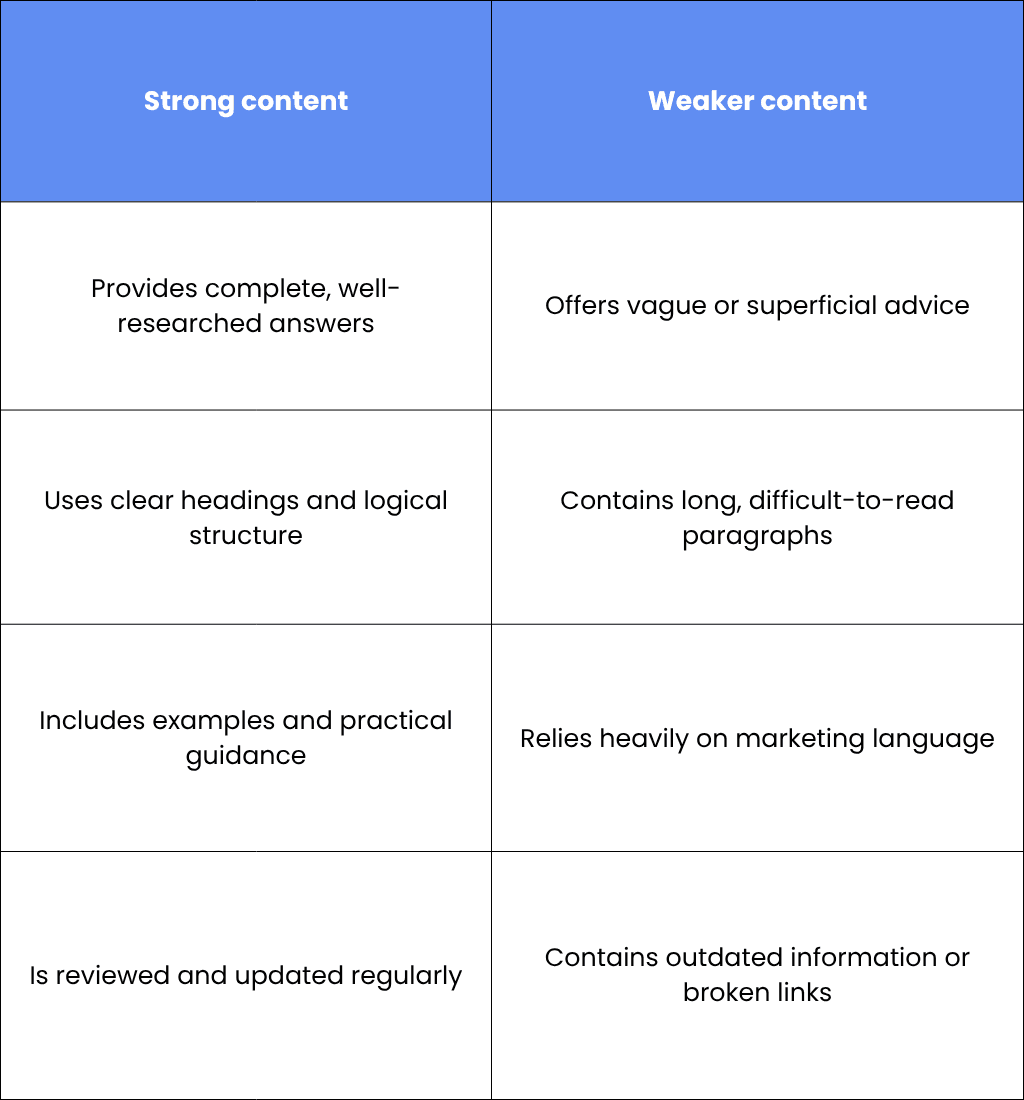
For example, an article titled "How to Choose the Right CRM for a Retail Business" should explain evaluation criteria, pricing considerations, implementation challenges and common mistakes, not simply promote a product.
The more useful your content is, the more likely AI platforms are to consider it a trustworthy source.
3. Trust Signals
Trust plays a significant role in AI-generated search results. AI platforms aim to minimise misinformation, so they favour organisations that demonstrate genuine expertise and credibility.
Common trust signals include:
- Detailed author profiles with relevant experience
- Customer case studies and success stories
- Industry awards or certifications
- Independent customer reviews
- References from reputable publications
- Transparent company information and contact details
For instance, a cybersecurity company that publishes technical guides written by certified security professionals is likely to be viewed as more credible than a website with anonymous, unverified content.
The stronger your trust signals, the more confidence AI has in referencing your information.
4. Consistency Across the Web
AI platforms don't rely solely on your website. Instead, they compare information from multiple online sources to verify your business and understand your expertise.
Key details should remain consistent across all digital channels, including:
- Company name
- Website URL
- Services
- Industry focus
- Business description
- Contact information
Imagine one directory describes your company as a digital marketing agency, while another lists you as a software consultancy. These inconsistencies make it harder for AI systems to accurately categorise your business.
Maintaining consistent information across your website, business profiles, social media and industry directories strengthens your overall digital authority.
5. Structured Data
Although visitors rarely notice it, structured data helps search engines and AI systems interpret your content more accurately.
Using Schema.org markup allows you to clearly identify important information, such as:
- Your organisation
- Products or software
- Services
- Articles
- Frequently asked questions
- Reviews
- Authors
For example, adding FAQ schema enables search engines to recognise questions and answers directly, making it easier for AI platforms to retrieve concise, reliable information when responding to similar queries.
While structured data alone won't guarantee AI visibility, it improves machine readability and supports the other signals that AI systems use to evaluate your website.
Key Strategies to Improve AI Search Visibility for B2B and SaaS
Improving AI search visibility for B2B and SaaS requires more than publishing content or adding a few keywords to your website. AI platforms evaluate your brand's expertise, credibility and usefulness across multiple signals before deciding whether to reference your content.
The following strategies will help your business become a more authoritative and trustworthy source for both traditional search engines and AI-powered search experiences.
1. Build Deep Topical Authority
Rather than creating isolated blog posts on unrelated subjects, organise your content around the core topics your business wants to be recognised for. AI platforms are more likely to trust websites that demonstrate consistent expertise within a specific niche.
For example, if your SaaS platform serves the hospitality industry, build a comprehensive content hub covering areas such as:
- Hotel operations
- Guest experience
- Revenue management
- Property management systems (PMS)
- Booking technology
- Hospitality marketing
- Industry trends
Instead of publishing one article on each topic, develop multiple pieces that address different stages of the buyer journey.
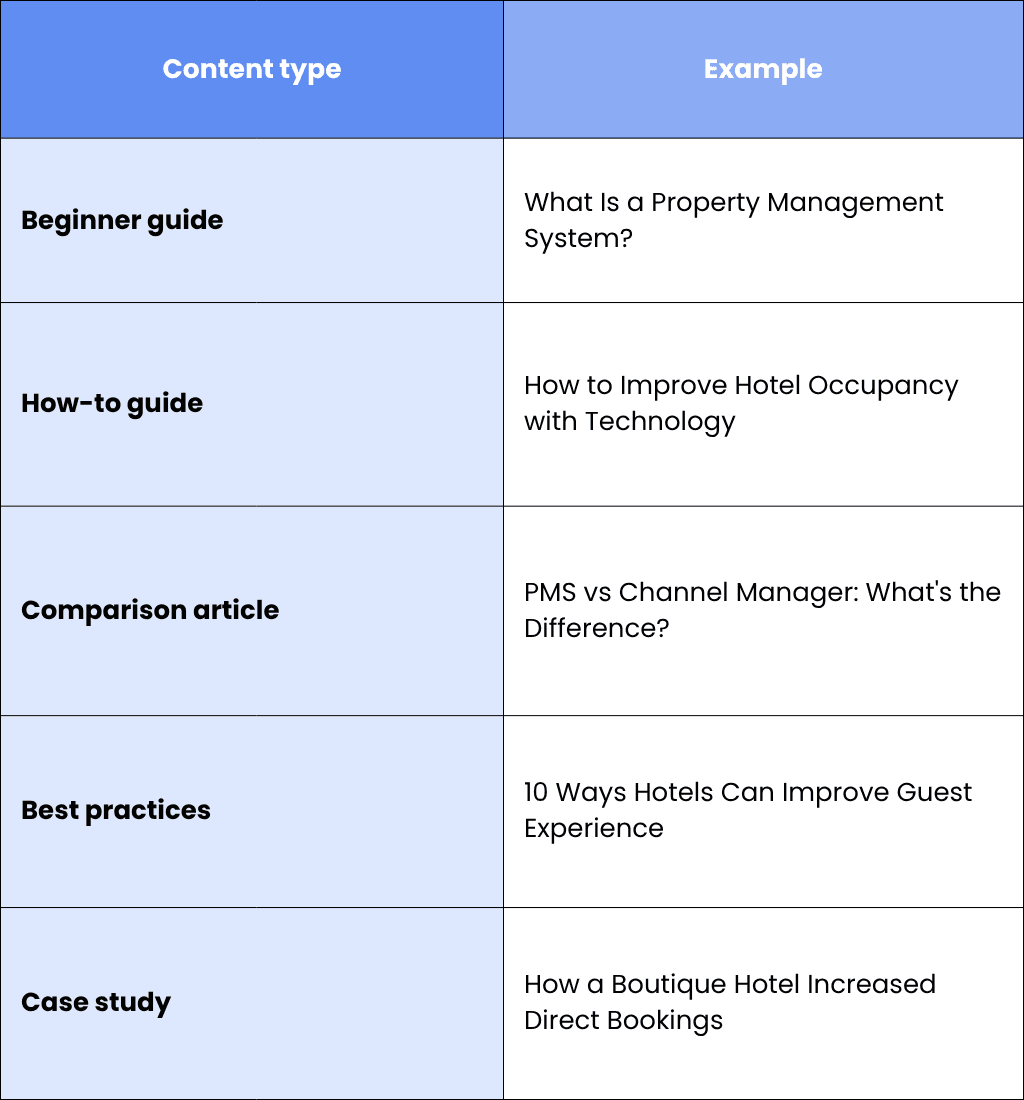
This "topic cluster" approach helps AI understand that your business has broad and deep expertise, making it more likely to cite your content.
Best practice: Aim to become the definitive resource on a handful of topics rather than producing superficial content across dozens of unrelated subjects.
2. Answer Real Business Questions
AI assistants are designed to answer questions. Therefore, your content should address the exact questions your prospective customers ask during their research process.
Start by identifying questions from:
- Sales calls
- Customer support tickets
- Product demonstrations
- Industry forums
- Search queries
- Internal FAQs
For example, instead of writing a broad article titled "Cloud ERP Software", create content that answers specific questions such as:
- How much does cloud ERP cost?
- How long does ERP implementation take?
- Which ERP features matter most for manufacturers?
- Is cloud ERP suitable for small businesses?
When answering these questions:
- Provide direct answers near the beginning of the article.
- Explain the reasoning behind your recommendations.
- Include examples, comparisons or practical scenarios.
- Address common misconceptions.
By focusing on user intent rather than keywords alone, you create content that AI platforms can confidently surface in conversational responses.
3. Create Content That AI Can Easily Understand
Even highly valuable information can be overlooked if it is difficult for AI systems to interpret. Clear formatting improves both readability for users and machine understanding.
Structure your content using:
- Descriptive headings (H2, H3 and H4)
- Short paragraphs
- Bullet point summaries
- Numbered processes
- Tables for comparisons
- Definitions for technical terms
- Frequently asked questions
For example, instead of presenting a long paragraph explaining CRM implementation, break the information into clear steps:
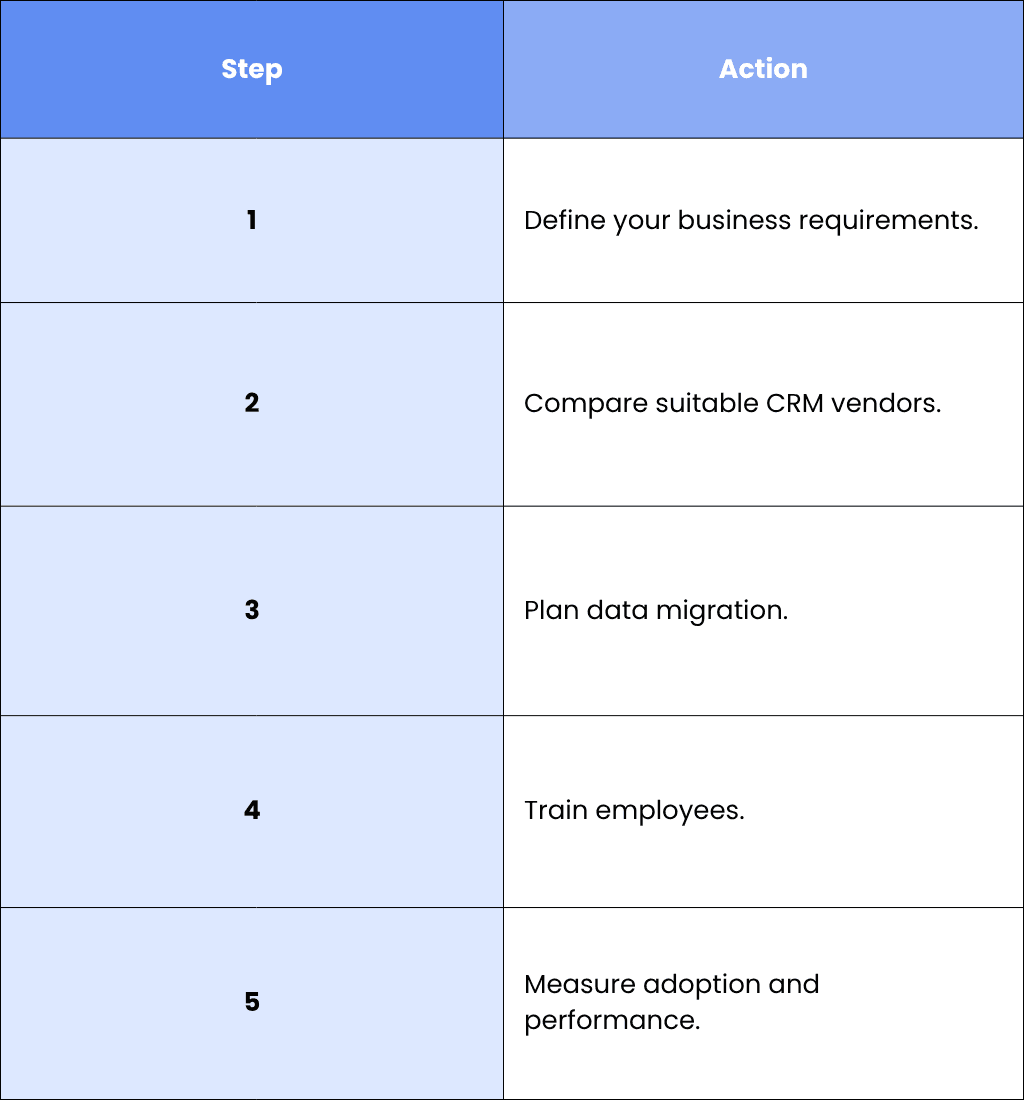
This structure makes it easier for AI systems to identify and extract relevant information while also improving the reader's experience.
4. Strengthen Your Expertise Signals
AI platforms increasingly assess who created the content, not just the content itself. Demonstrating expertise helps build confidence that your information is accurate and trustworthy.
Strengthen your credibility by including:
- Author biographies
- Professional qualifications
- Industry certifications
- Years of experience
- Editorial review processes
- Company expertise
For example, an article about cybersecurity written by a certified security consultant carries greater authority than one published anonymously.
Similarly, if your agency has extensive experience helping hospitality businesses improve their SEO, mention that expertise where relevant and support it with case studies or measurable outcomes.
The more evidence you provide of your knowledge, the stronger your expertise signals become.
5. Publish Original Research
Original research gives AI platforms something unique to reference. Instead of repeating information that already exists online, contribute new insights based on your own data or experience.
Examples include:
- Industry surveys
- Customer behaviour reports
- Benchmark studies
- Annual trend reports
- Internal performance data
- Proprietary research
For instance, imagine analysing 100 hospitality websites and discovering that businesses with structured FAQ content receive significantly more impressions in AI-powered search results. That finding becomes a valuable resource that other websites and AI systems may cite.
Even smaller businesses can create original content by analysing customer trends, campaign performance or operational data.
Unique insights help distinguish your brand from competitors publishing similar articles.
6. Optimise Product Documentation
Many SaaS companies overlook their documentation, yet it often contains some of the most detailed and practical information on their website.
Help centres, user guides and knowledge bases frequently answer the precise questions users ask AI assistants.
Review your documentation to ensure it is:
- Easy to navigate
- Clearly written
- Regularly updated
- Searchable
- Structured with headings and FAQs
For example, rather than publishing a single article titled "Getting Started", divide it into focused resources covering:
- User account setup
- System configuration
- Integrations
- Common troubleshooting steps
- Security settings
- Reporting features
Well-organised documentation not only supports customers but also provides AI platforms with highly relevant, trustworthy content.
7. Implement Structured Data
Structured data, often referred to as Schema markup, helps search engines understand the meaning behind your content.
Rather than guessing whether a page describes a product, an organisation or an article, structured data explicitly labels that information.
Common Schema types include:
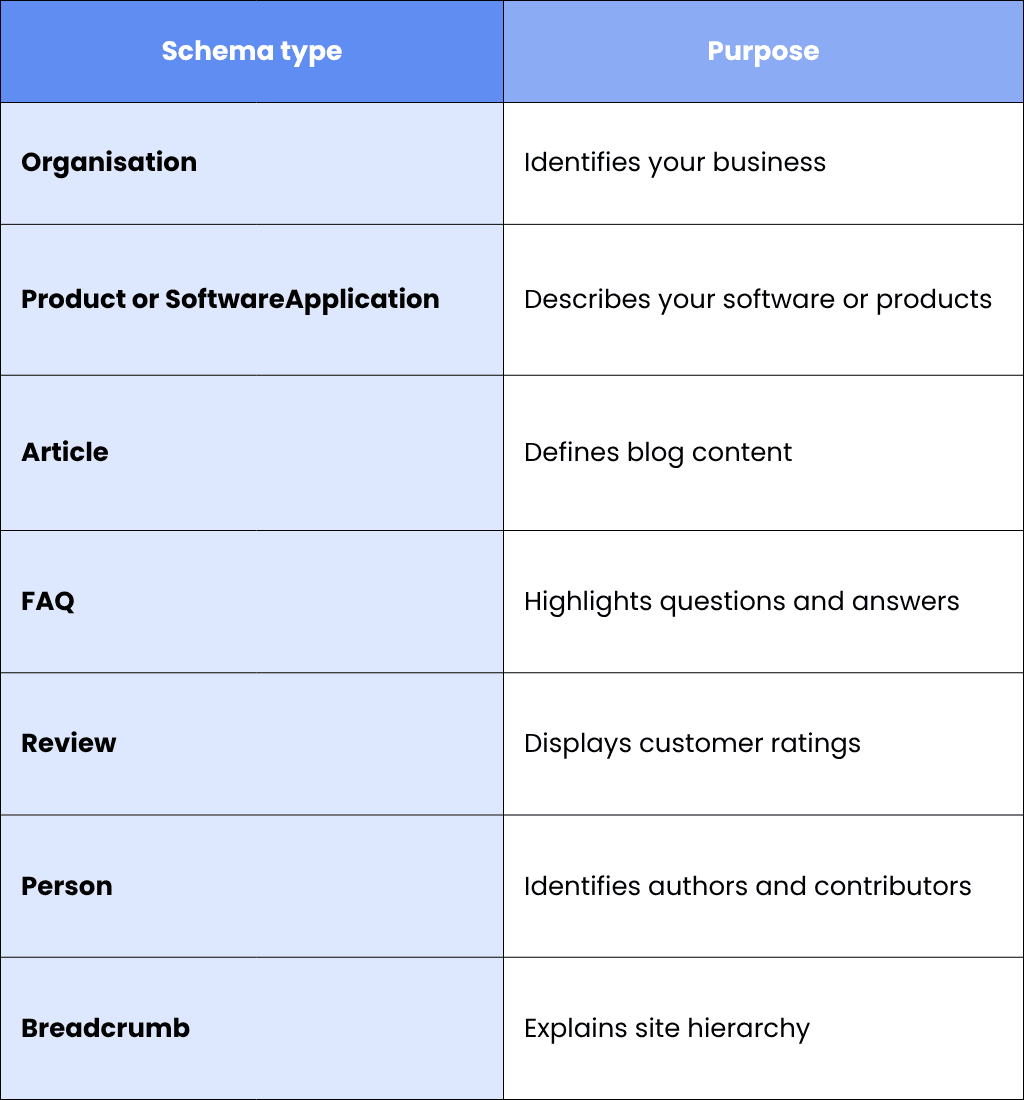
While Schema does not directly improve rankings, it makes your content easier for search engines and AI systems to interpret, increasing the likelihood that your information is surfaced accurately.
8. Build Brand Mentions Beyond Your Website
AI platforms assess your reputation across the wider web, not just on your own website. Independent mentions help validate your authority and demonstrate that others recognise your expertise.
Look for opportunities to earn visibility through:
- Industry publications
- Guest articles
- Podcasts
- Conference presentations
- Webinars
- Interviews
- Professional associations
- Independent review platforms
For example, if respected technology publications regularly quote your executives or link to your research, AI systems gain additional confidence in your brand's credibility.
Think of these external mentions as supporting evidence that reinforces the authority you've built on your own website.
9. Keep Content Fresh
AI platforms prefer information that reflects current best practices. Outdated content can reduce credibility, particularly in industries where technology and regulations change rapidly.
Develop a regular content review process to update:
- Statistics
- Screenshots
- Product features
- Pricing information
- Industry regulations
- External links
- Examples
A practical approach is to review your highest-performing articles every six to twelve months.
During each review, ask:
- Is the information still accurate?
- Have industry trends changed?
- Are there new examples or case studies to include?
- Could the article answer additional user questions?
Regular updates signal that your content remains reliable and relevant.
10. Improve Technical Website Performance
Excellent content alone is not enough if search engines struggle to crawl or understand your website.
Technical optimisation forms the foundation of strong AI search visibility.
Key priorities include:
- Fast page loading speeds
- Mobile-friendly design
- Secure HTTPS connections
- Clear internal linking
- Logical URL structures
- XML sitemaps
- Crawl error monitoring
- Accessible navigation
A technically sound website helps search engines discover, index and interpret your content more efficiently.
Think of technical SEO as the infrastructure that supports everything else. Even the most authoritative content cannot perform at its best if search engines encounter barriers when accessing your website.
Measuring AI Search Visibility
Unlike traditional SEO, AI search visibility cannot be measured using a single metric. There is currently no equivalent to "keyword rankings" for platforms such as ChatGPT, Gemini or Perplexity, as AI-generated responses vary depending on the user's prompt, location, context and the AI model itself.
Instead, businesses should monitor a combination of indicators that reveal whether their brand is becoming more visible and authoritative across AI-powered search experiences.
>>> Read more: How to Measure AI Search Visibility (Without Guesswork)
Brand Mentions in AI Platforms
One of the most direct ways to measure AI visibility is to check whether AI assistants mention your brand when answering relevant industry questions.
For example, you could test prompts such as:
- Which CRM software is best for retail businesses?
- What are the leading SEO agencies for hospitality companies?
- What are the top inventory management platforms for restaurants?
If your business is consistently mentioned alongside recognised competitors, it suggests that AI systems increasingly view your brand as a credible source.
Because AI responses can vary, test multiple prompts and repeat them periodically to identify trends rather than relying on a single result.
Tip: Create a list of 20–30 high-value questions that your target customers are likely to ask, then review AI responses every month to monitor changes in brand visibility.
Referral Traffic from AI Search Tools
As AI platforms increasingly include citations and links, many businesses are beginning to see visitors arriving directly from AI-generated answers.
Monitor your analytics platform for referral traffic from sources such as:
- ChatGPT
- Gemini
- Perplexity
- Microsoft Copilot
- Google AI-powered search experiences
Although referral volumes may currently be modest compared with Google Search, consistent month-on-month growth can indicate that your content is being surfaced more frequently by AI platforms.
Pay particular attention to the quality of this traffic by analysing:
- Engagement rate
- Average session duration
- Pages viewed per session
- Conversions
- Enquiry submissions
Highly engaged visitors often suggest that AI is matching your content with users who have genuine intent.
Growth in Branded Searches
As more users discover your business through AI-generated recommendations, they often conduct a branded search before visiting your website.
For example, after seeing your company mentioned in an AI response, a prospective customer might search for:
- Saigon Digital
- Saigon Digital SEO
- Saigon Digital reviews
Monitoring branded search volume through tools such as Google Search Console can help you identify whether overall awareness of your business is increasing.
While branded search growth alone does not prove AI visibility, it can be a useful supporting indicator when viewed alongside other metrics.
Organic Visibility for Informational Topics
Businesses that perform well in AI search typically have strong visibility for educational and informational content.
Track how your website performs for non-commercial keywords related to your expertise, such as:
- How-to guides
- Industry best practices
- Product comparisons
- Buyer guides
- Frequently asked questions
For example, a hospitality technology company might monitor rankings and impressions for topics such as:
- Hotel revenue management
- PMS implementation
- Guest experience strategies
- Hotel automation
Strong informational content provides AI platforms with valuable material to reference when generating answers.
Knowledge Graph Presence
Knowledge graphs help search engines and AI systems understand the relationships between organisations, people, products and topics.
As your brand authority grows, search engines may begin displaying richer information about your business, such as:
- Company details
- Logo
- Founding date
- Social profiles
- Products or services
- Key personnel
Improving your Knowledge Graph presence often involves:
- Implementing Organisation Schema
- Maintaining consistent business information
- Earning reputable third-party mentions
- Building strong entity relationships across the web
Although this is a long-term investment, a well-established digital entity makes it easier for AI platforms to recognise and reference your business accurately.
Share of Voice Across Industry Discussions
AI platforms gather information from a wide range of trusted sources rather than relying on a single website. As a result, your overall presence across your industry can influence how often your brand is referenced.
Track whether your business is gaining visibility through:
- Industry publications
- News coverage
- Guest articles
- Podcasts
- Conference presentations
- Research reports
- Professional communities
For example, if your executives are regularly quoted in respected publications or your original research is widely cited, AI systems gain additional evidence that your business is a recognised authority.
Over time, these external signals strengthen your overall share of voice and increase the likelihood that AI platforms will include your brand in their responses.
Citation Frequency in AI-Generated Answers
Another useful indicator is how often AI platforms reference your content or insights when answering different types of questions.
Rather than checking only whether your homepage appears, assess whether AI surfaces:
- Blog articles
- Research reports
- Case studies
- Product documentation
- Help centre articles
- White papers
If multiple content types are being referenced, it suggests that your website is becoming a broader source of trusted information rather than relying on a single high-performing page.
Keep in mind that citation patterns may change as AI models evolve, so ongoing monitoring is essential.
Build an AI Visibility Dashboard
Because no single metric tells the whole story, consider creating a simple dashboard that combines your most important AI visibility indicators.
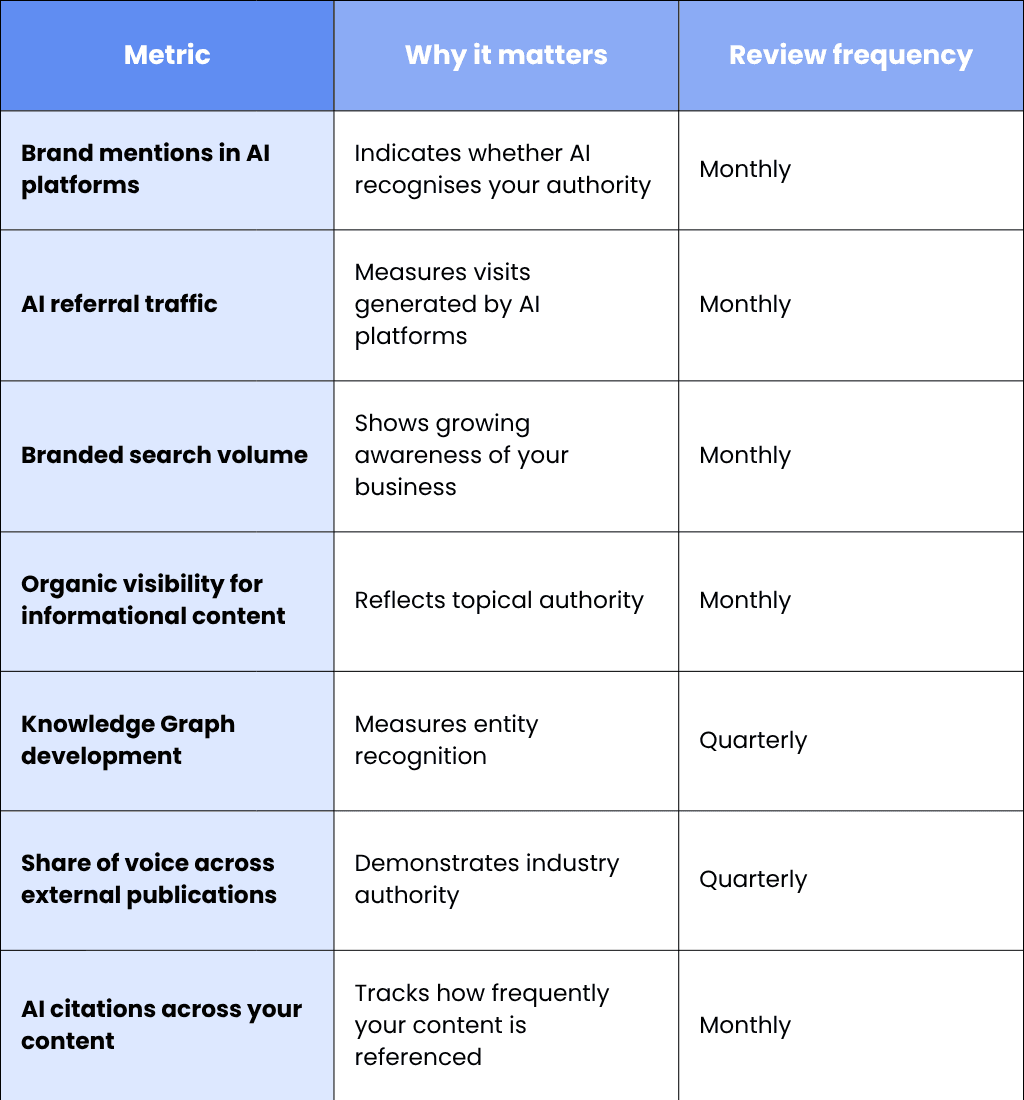
Reviewing these metrics together provides a more complete picture than focusing on any single indicator.
How Saigon Digital Helps Businesses Improve AI Search Visibility
Achieving strong AI search visibility for B2B and SaaS requires more than publishing content. It demands a strategic combination of technical SEO, authoritative content, structured data, AI optimisation and continuous performance analysis.
At Saigon Digital, we help ambitious brands adapt to the next generation of search through tailored SEO and AI-powered digital growth strategies.
Our services include:
SEO Services
We help businesses improve search performance through:
- Site optimisation and technical performance
- Content strategy and authority building
- Local and global search strategies
Our focus extends beyond rankings to deliver measurable traffic, qualified leads and sustainable business growth.
Generative Engine Optimisation (GEO)
As AI search becomes increasingly influential, we help businesses become discoverable across platforms such as ChatGPT, Gemini, Perplexity and Google AI.
Our GEO services include:
- AI readability optimisation
- Generative Engine Optimisation (GEO)
- Answer Engine Optimisation (AEO)
- Knowledge Graph and schema implementation
- AI content audits and restructuring
- AI performance reporting and dashboards
Our goal is to position your brand as a trusted source that AI platforms confidently reference.
AI Workflow Automation
Beyond search visibility, we help organisations improve operational efficiency through AI-powered automation.
Our solutions include:
- AI-driven business intelligence
- Pre-built automation templates
- Custom AI agents tailored to your workflows
By combining SEO, AI optimisation and intelligent automation, we enable businesses to scale more effectively in an increasingly AI-driven digital landscape.
Prepare Your Business for the Future of Search
AI-powered search is transforming how businesses are discovered online. While traditional SEO remains essential, organisations that invest in AI search visibility today will be better positioned to earn trust, increase brand exposure and connect with decision-makers throughout the buying journey.
If you're ready to strengthen your search presence across both traditional search engines and AI platforms, Saigon Digital can help.
Let's build a search strategy that's ready for the future, one that helps your business get found, trusted and chosen by both people and AI.
Get in touch with Saigon Digital today!
Frequently Asked Questions
1. What is AI search visibility for B2B and SaaS?
AI search visibility for B2B and SaaS refers to how easily your business can be discovered, referenced and recommended by AI-powered search platforms such as ChatGPT, Gemini, Perplexity and Google AI Overviews. Rather than simply ranking in traditional search results, the goal is to ensure your brand and content are recognised as trustworthy sources that AI systems use when generating answers to users' questions.
2. How is AI search visibility different from traditional SEO?
Traditional SEO focuses on improving your website's rankings in search engine results pages (SERPs) to drive organic traffic. AI search visibility, on the other hand, aims to optimise your content so that AI platforms can understand, trust and reference it in their generated responses. While many SEO best practices still apply, AI search also places greater emphasis on topical authority, content quality, structured data and brand credibility across the web.
3. Which businesses should invest in AI search visibility?
Any business that relies on online discovery can benefit from AI search visibility. For B2B companies and SaaS providers, it is particularly valuable because buyers often use AI tools to research solutions, compare vendors and evaluate industry expertise before making purchasing decisions. Businesses in sectors such as hospitality, retail, education, F&B and professional services can also gain a competitive advantage by becoming trusted sources in AI-generated search results.
4. How long does it take to improve AI search visibility?
There is no fixed timeline, as results depend on factors such as your website's existing authority, content quality, technical SEO and the competitiveness of your industry. In most cases, improving AI search visibility is an ongoing process that involves consistently publishing high-quality content, strengthening your website's technical foundations and building your brand's authority over time. Businesses that invest in these areas are more likely to see sustainable improvements in both traditional search performance and AI-generated visibility.
5. How can Saigon Digital help improve AI search visibility?
Saigon Digital helps businesses prepare for the future of search through a combination of technical SEO, content strategy and AI-focused optimisation. Our services include Site Optimisation, Content & Authority Building, Generative Engine Optimisation (GEO), Answer Engine Optimisation (AEO), AI Readability Optimisation, Knowledge Graph and Schema implementation, AI content audits and AI performance reporting. By combining proven SEO strategies with forward-thinking AI solutions, we help ambitious brands increase their visibility across both traditional search engines and AI-powered search platforms.