



You have written the better article.
It is more detailed. It answers more questions. Your examples are stronger, your research is more thorough, and your writing is easier to understand.
Yet when you search your target keyword, your competitor still appears above you.
It is one of the most frustrating situations in SEO, particularly when you know your content genuinely offers more value.
Key Takeaways
- Better content does not always mean higher rankings. SEO also depends on authority, technical performance, relevance, search intent and user experience.
- Understand why competitors rank higher before making changes. The real gap may be outside your content.
- Match search intent first. Your page needs to satisfy what users are actually looking for.
- Build authority and topical depth through relevant content, internal linking, credible backlinks and genuine expertise.
- Fix technical SEO issues that could prevent search engines from crawling, understanding or indexing your pages properly.
- Use first-hand experience and original insights to create content competitors cannot easily replicate.
- Focus on business value, not rankings alone. Prioritise SEO opportunities that can generate qualified traffic, leads and measurable growth.
- SEO is an ongoing process. Analyse the competitive gap, prioritise improvements, measure results and keep refining your strategy.
So, why competitors rank higher even when their content appears weaker?
The short answer is that Google does not rank content based on content quality alone.
Search rankings depend on a much broader set of signals. Google looks at relevance, links, site structure, technical accessibility, page experience, authority, context and many other signals when deciding which results are most useful for a particular search.
That means a competitor does not necessarily need to write a better article than you to outrank you.
In this article, we will look at the real reasons competitors can rank higher and what you can do about it.
1. Your Competitor May Have Stronger Authority
One of the clearest reasons why competitors rank higher is that they may have stronger authority signals around the topic, even if their individual article is weaker. Google uses links and other signals to understand the relevance and importance of pages, so a well-written article on a relatively new website can struggle against an average article published on a site with a strong reputation and a history of earning relevant references.
For example, imagine two B2B software companies publish guides targeting the same keyword. Company A produces a genuinely excellent 3,000-word guide but has very few external websites referencing it. Company B publishes a less comprehensive guide, but its website has been referenced by industry publications, partners and authoritative websites for years. Company B has a stronger authority foundation around the topic.
What To Do
Do not respond by buying hundreds of backlinks. Instead, build authority deliberately:
- Identify relevant websites that already influence your industry.
- Create original research, data, case studies or expert insights worth referencing.
- Build relationships with journalists, publishers, partners and industry organisations.
- Review your competitors' backlink profiles to understand where their authority comes from.
- Prioritise relevant and credible links over large numbers of low-quality links.
Simple test: If your content is better but your competitor has significantly stronger authority, improving the article alone may not close the ranking gap.
2. Your Competitor May Have Built Topical Authority
Sometimes you are not competing against one article. You are competing against an entire library of related content.
A competitor may have published dozens of useful pages covering the same subject from different angles. This gives search engines more context about what the website specialises in and creates opportunities to connect related pages through internal links. Google recommends organising websites logically and using relevant links to help users and search engines discover related content.
Consider a hospitality business targeting "hotel SEO". Your competitor may already have content covering hotel local SEO, Google Business Profile optimisation, hotel content marketing, hotel keyword research, hotel reputation management and hotel website optimisation. Your single guide might be better written, but their website provides much greater depth around the subject.
What To Do
Build topic clusters rather than isolated articles:
- Choose an important commercial topic.
- Create one strong primary page around it.
- Identify the related questions customers ask.
- Create useful supporting content for those questions.
- Link the supporting pages naturally to the main page.
- Keep updating the cluster as your industry changes.
For example:
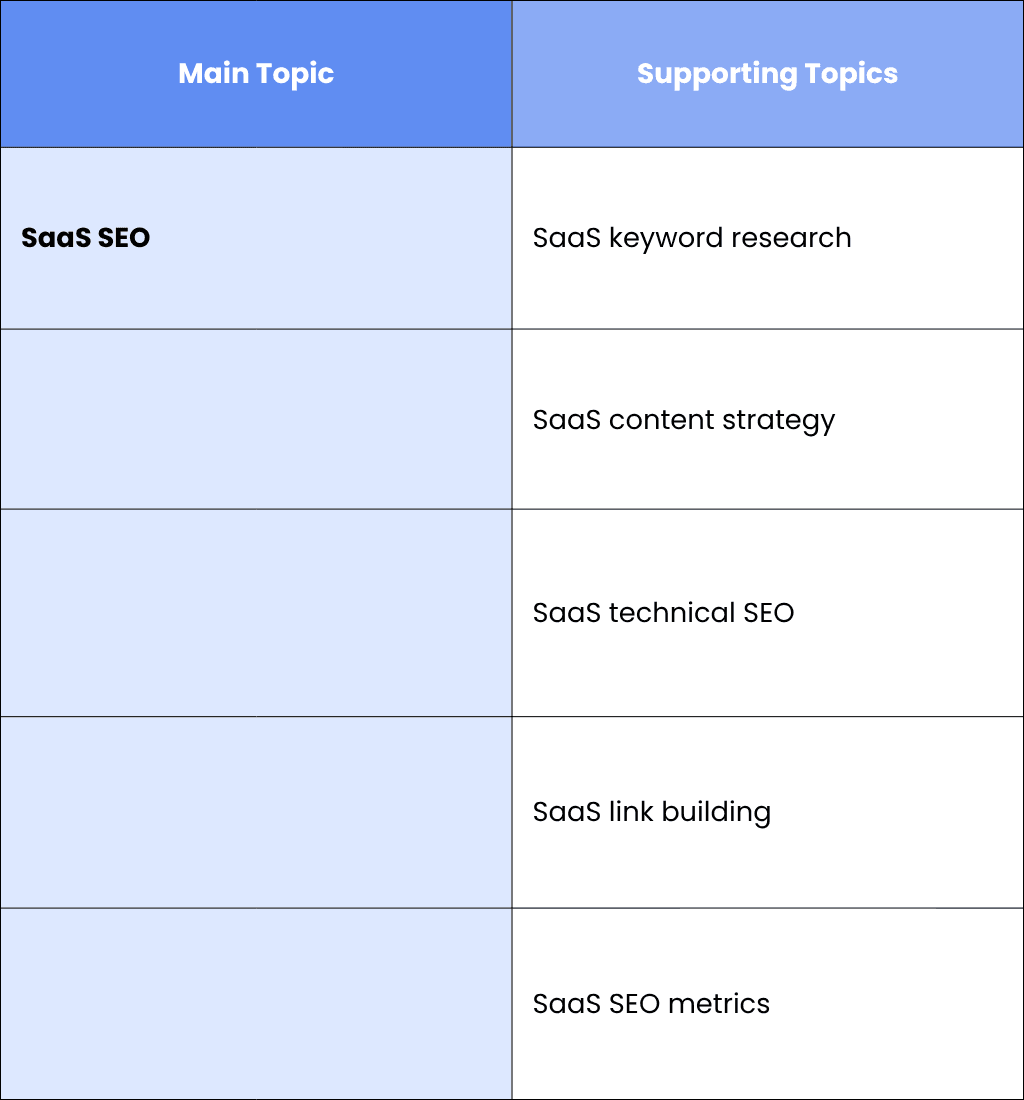
The objective is not to publish more simply for the sake of publishing. Build depth where it supports your customers and your commercial priorities.
3. Your Page May Not Match Search Intent As Closely
Your content can be more accurate, longer and better researched while still failing to satisfy the searcher's actual intention.
Search intent is simply what the user wants when they search. Someone searching "best CRM for small businesses" is probably comparing products, while someone searching "what is CRM software" is looking for an explanation. If you give the first person a general educational article and the second person a sales-heavy product page, neither page is a particularly strong match.
Therefore, before rewriting content, study the pages already ranking. Look for patterns in page type, format, topics covered and the actions they encourage users to take.
What To Do
For each important keyword, ask:
- Is the search informational, commercial, transactional or navigational?
- What type of pages dominate the results?
- What questions do those pages answer?
- What information appears near the top?
- What does the user probably want to do next?
Then compare that with your own page.
Example: If the top 10 results for "restaurant marketing ideas" are practical guides containing examples and actionable tactics, publishing a highly promotional restaurant marketing service page is unlikely to match the dominant intent.
Do not simply ask, "Can we make our content better?"
Ask, "Can we make our content more useful for the specific person behind this search?"
4. Your Competitor May Have A Better Internal Linking Structure
Internal linking is one of the simplest areas to overlook because it happens within your own website. However, a strong internal linking structure helps users discover related information and helps search engines understand how your pages connect.
Imagine you have 100 pages, but your most important service page receives almost no internal links. Meanwhile, your competitor has 30 relevant articles naturally linking to its equivalent service page. Their website gives that page a much clearer position within the overall site structure.
This is particularly important for businesses with large websites, such as retailers, universities, hotel groups and SaaS companies.
What To Do
Start with your most commercially important pages.
Then:
- List your key service, category and product pages.
- Find existing articles that discuss related subjects.
- Add natural internal links from those articles.
- Use descriptive anchor text that tells users what they will find.
- Check that important pages are not buried several clicks deep.
- Review internal links whenever you publish new content.
For example, an article about "choosing accounting software" could naturally link to a relevant SaaS product page, integration guide and comparison article.
Do not add links simply to increase the number of links. Add them where they genuinely help the reader continue their journey.
5. Your Website May Have Technical SEO Problems
Sometimes the problem is not your content at all. Your competitor may simply have a technically healthier website.
Search engines need to crawl, understand and index your pages before they can properly evaluate them. Problems with indexing, canonical tags, redirects, robots directives, JavaScript, duplicate pages or site architecture can make that process more difficult.
For example, suppose you have 500 product pages but 100 of them accidentally use incorrect canonical tags. Your content team may continue improving product descriptions while search engines receive confusing signals about which pages should appear in search.
What To Do
Run a technical SEO audit and prioritise problems by business impact.
Check:
- Indexation: Are important pages actually indexed?
- Crawlability: Can search engines access important content?
- Canonicalisation: Are duplicate or similar URLs handled correctly?
- Redirects: Are old URLs pointing to the right destinations?
- Internal links: Can important pages be discovered easily?
- Mobile experience: Does the site work properly on smaller screens?
- Performance: Do important pages load efficiently?
- Structured data: Is relevant information marked up correctly?
A useful rule is: Fix barriers before adding volume.
If technical problems affect your existing pages, publishing another 50 articles may simply give you 50 more pages with the same underlying problems.
6. Your Competitor May Have Stronger Signals Of Expertise And Trust
Google's guidance discusses E-E-A-T: experience, expertise, authoritativeness and trustworthiness. E-E-A-T is not a single ranking factor, but these qualities help explain what strong, reliable content should demonstrate.
This matters because readers want to know whether the person or organisation behind the information is credible. A generic article about financial software carries a different level of trust when it comes from an experienced financial technology company with identifiable experts and real examples.
The same applies across industries. An education provider can demonstrate expertise through qualified authors and teaching experience. A SaaS company can draw on product specialists and customer case studies. A hospitality brand can demonstrate genuine knowledge of destinations and guest experiences.
What To Do
Strengthen the signals that show who knows what and why readers should trust them:
- Add clear author information where appropriate.
- Explain relevant professional experience.
- Reference credible sources.
- Include original data and examples.
- Show genuine customer or industry experience.
- Keep important information accurate and up to date.
- Make it easy to understand who operates the website.
The key is not to add an "expert" badge and stop there.
Demonstrate expertise through the substance of the content.
7. Your Competitor May Have More First-Hand Experience
Your competitor may be ranking because its content contains information that cannot easily be reproduced by rewriting existing articles.
First-hand experience gives content depth and specificity. A hotel guide based on actual stays can offer practical observations that a generic travel article cannot. A SaaS company can explain how its customers solved a particular operational problem because its team has seen the problem in practice.
This is especially valuable when many competitors publish essentially the same information.
For example, ten websites might explain the basic benefits of restaurant POS systems. A restaurant technology company could go further by sharing anonymised implementation lessons, common mistakes, operational benchmarks and examples from real deployments.
What To Do
Look inside your business for knowledge that competitors cannot easily copy.
Ask your:
- Sales team what customers repeatedly ask.
- Customer service team what problems users encounter.
- Product team what customers struggle to understand.
- Consultants what they have learned from projects.
- Operations team what works in real situations.
- Leadership team what they have learned from the market.
Then turn those insights into content.
The best competitive advantage may already exist inside your company, it simply has not been published yet.
8. Your Competitor May Have A Better Page Experience
A page can contain excellent information and still provide a poor experience.
Think about what happens when someone lands on your page using a mobile phone. If they encounter slow loading, intrusive pop-ups, confusing navigation or a cluttered layout, they may struggle to find the information they need. Meanwhile, your competitor may present similar information in a much cleaner and more usable format.
Google considers page experience as part of the broader picture when its systems assess search results, although it does not recommend focusing on a single page-experience signal in isolation.
What To Do
Review your important pages from the perspective of a real customer.
Check:
- Can the main answer be found quickly?
- Does the page work well on mobile?
- Are pop-ups obstructing important information?
- Is the navigation obvious?
- Are headings easy to scan?
- Are images optimised?
- Are buttons and forms easy to use?
- Does the page load efficiently?
- Is the next logical action clear?
A useful exercise is to give a colleague a simple task such as: "Find out whether this service is suitable for a 50-person business."
Then watch how they use the page.
If they struggle, your customers probably will too.
9. Your Competitor May Simply Have Been Doing SEO For Longer
SEO is rarely an overnight competition.
A competitor that has invested consistently for five years may have accumulated content, links, brand recognition, technical improvements, customer insights and industry relationships that a newer SEO programme simply cannot replicate immediately.
This does not mean an established competitor is unbeatable. It means you need to understand the starting point.
Imagine your competitor has 200 useful pages and 500 relevant referring domains, while your site has 40 useful pages and 80 referring domains. Publishing one excellent article will not instantly erase that difference.
What To Do
Do not try to close the entire gap at once.
Instead, prioritise opportunities based on potential impact:
High opportunity + achievable competition = priority
For example:
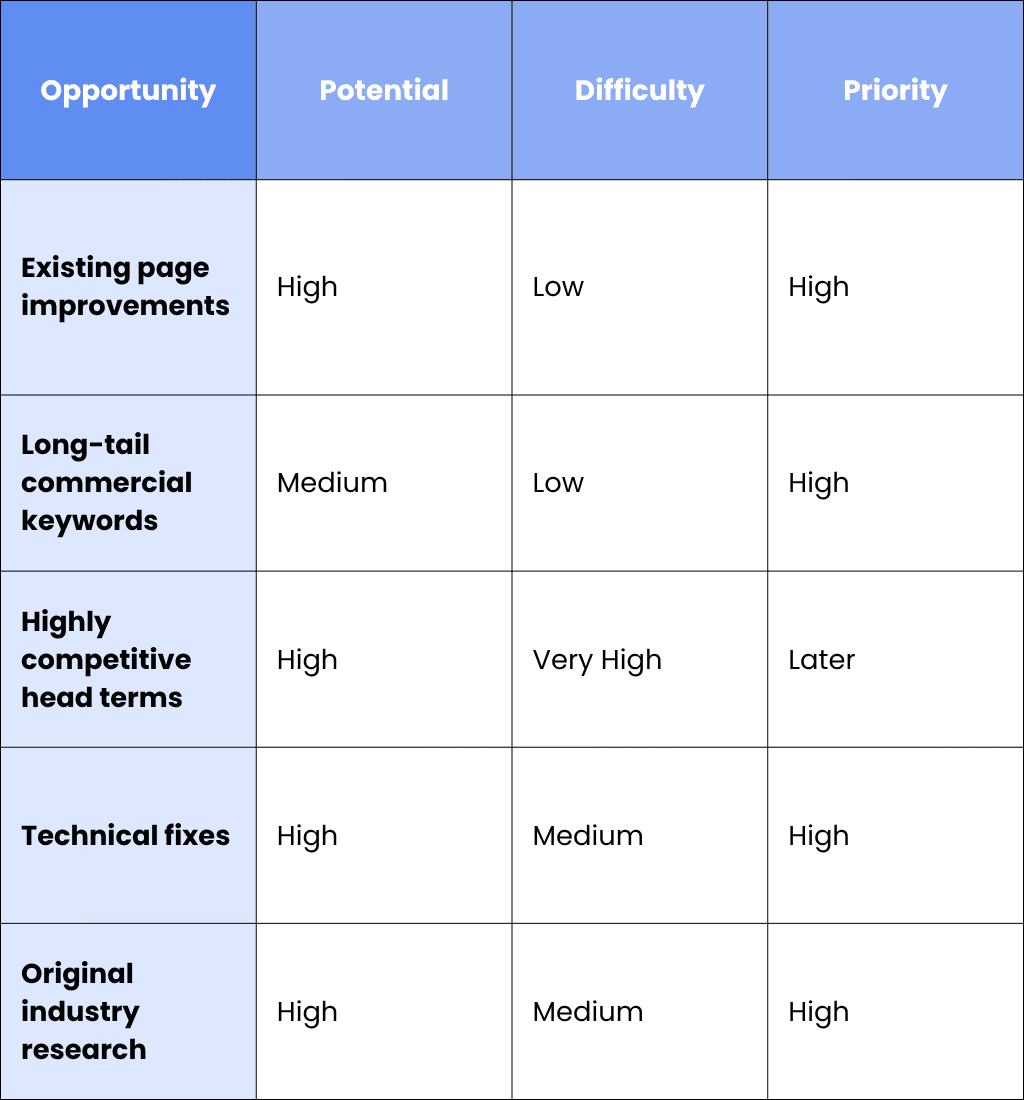
The goal is to build momentum. Consistent SEO improvements compound over time.
10. Your Competitor May Be Targeting The Keyword More Strategically
Search volume can be misleading.
A keyword with 10,000 monthly searches may look more attractive than one with 300. However, if the 10,000-search keyword attracts a broad audience while the 300-search keyword attracts people actively looking for your service, the smaller keyword may generate considerably more commercial value.
For example, a SaaS company could spend significant resources trying to rank for "project management". A more specific phrase such as "project management software for construction companies" may have fewer searches but a much clearer connection to its target customer.
What To Do
Evaluate keywords using more than search volume.
Consider:
- Business relevance: Does the search relate to what you sell?
- Search intent: What does the user want?
- Competition: Can your website realistically compete?
- Conversion potential: Could this search generate a lead or sale?
- Customer value: Is this the type of customer you want?
A simple way to think about it is:
SEO value ≠ Search volume
A more useful formula is:
SEO opportunity = Relevant demand × Intent × Commercial value × Realistic ranking potential
This helps prevent your team from chasing impressive-looking keywords that do little for the business.
11. Your Competitor May Have Better Brand Recognition
Brand recognition does not mean Google simply ranks famous companies above smaller businesses. However, an established brand can benefit from a broader digital footprint.
A recognised company may naturally receive more searches, mentions, references, reviews, partnerships and editorial coverage. Over time, these activities can create more opportunities for people to discover and reference the brand.
For example, a well-known hotel group may have travel publications, tourism websites and partners regularly discussing its properties. A newer hotel may have a better-written guide but a much smaller online presence.
What To Do
Connect SEO with broader brand-building activities.
Look for opportunities to:
- Publish original research.
- Contribute expert commentary to relevant publications.
- Develop industry partnerships.
- Create genuinely useful resources.
- Promote valuable content rather than simply publishing it.
- Encourage legitimate mentions and references.
- Build expertise around a clearly defined subject.
The goal is not to manufacture mentions.
Build things that people have a genuine reason to talk about.
12. Your Competitor May Have Fewer SEO Problems
Sometimes the most frustrating answer is also the simplest: your competitor has fixed the basics.
Their website may have clean indexation, logical architecture, strong internal linking, correct redirects, effective metadata, accessible content and a solid mobile experience. Meanwhile, your team may be investing heavily in new articles without addressing fundamental problems across the existing website.
Consider an e-commerce website with 5,000 product URLs. If hundreds of unnecessary URL variations are being crawled, important pages may become harder to manage and the site's architecture may become unnecessarily complicated. Publishing another 500 product descriptions will not solve that underlying issue.
What To Do
Create an SEO health checklist and review it regularly:
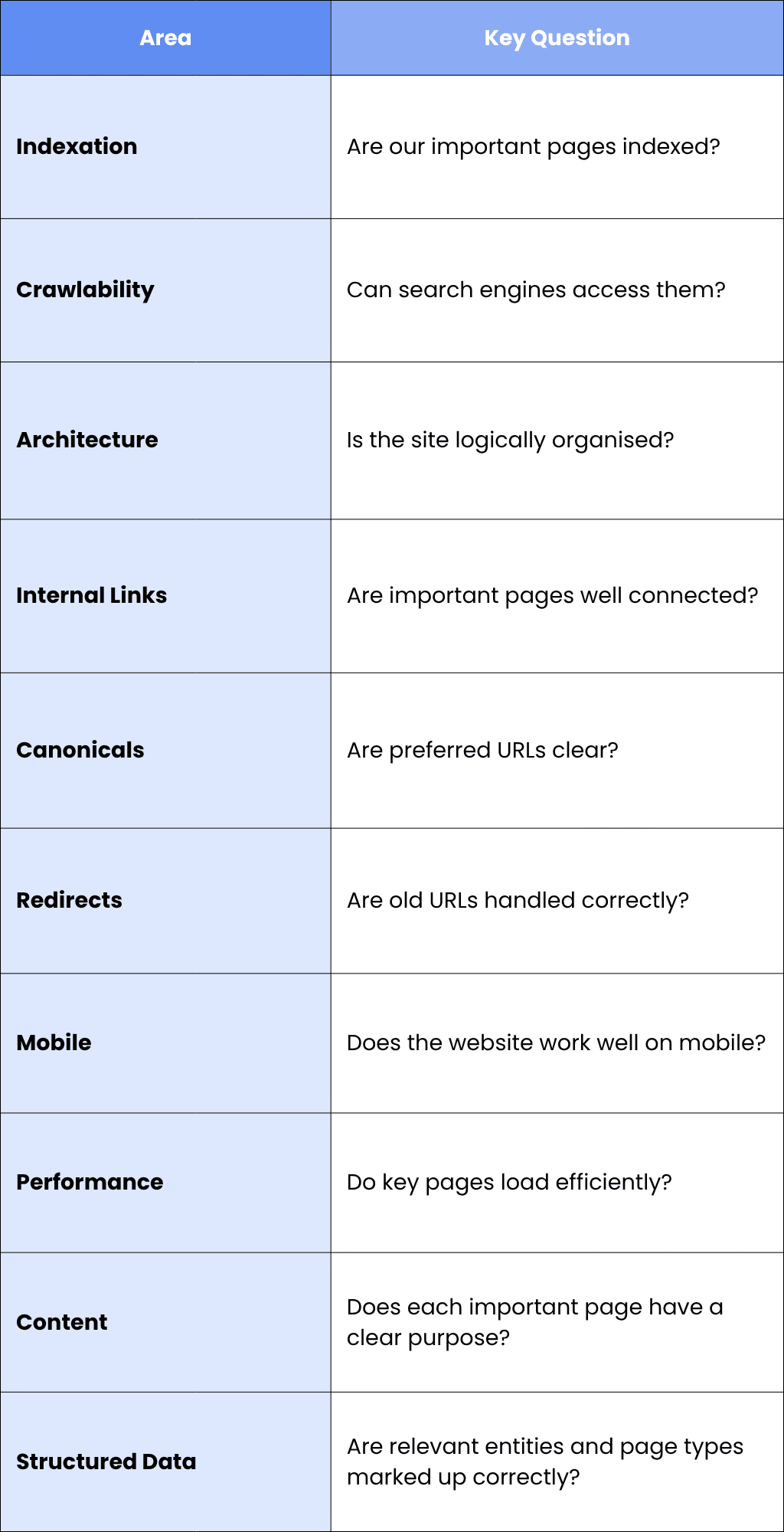
Prioritise issues according to business impact, not how easy they are to fix.
A minor metadata improvement might take five minutes, but fixing a large-scale indexing problem could have far greater value.
The broader lesson is important: before asking how to create more SEO assets, make sure the assets you already have can perform properly.
So, What Should You Do When Your Competitor Outranks You?
Once you understand why competitors rank higher, the next step is to work out what is actually holding your page back.
The biggest mistake is to immediately rewrite the article. As the 12 reasons above show, ranking gaps rarely come from one issue alone.
Therefore, use the following process in order. Each step builds on the previous one, so you can move from identifying the problem to deciding exactly where to invest your SEO resources.
Step 1: Compare Search Intent First
Before comparing word counts, backlinks or technical metrics, establish whether your page is actually trying to do the same job as the competing pages.
This should come first because everything else depends on it. If your page targets the wrong intent, improving its authority or adding more content may not solve the problem.
For example, suppose you want to rank for "hotel in Hanoi". If the results are dominated by hotel booking platforms, hotel listing pages and location-specific commercial pages, a long educational article about choosing a hotel may struggle even if it is exceptionally well written.
What To Check
Search your target keyword and record what appears on the first page:
- What type of pages rank?
- Are they guides, product pages, category pages or service pages?
- What questions do they answer?
- What information appears above the fold?
- What action does the page encourage?
- Are the results aimed at beginners, researchers or buyers?
Then compare the search results with your own page.
If your intent does not match, fix that before moving to the next step.
Once you know your page is targeting the right search intent, you can make a meaningful comparison of the content itself.
Step 2: Compare Content Quality Properly
Once search intent is aligned, compare your content with the pages that rank above you.
This is where many SEO teams make the mistake of asking, "How many words does the competitor have?"
Word count is not the objective. Usefulness is.
Google has stated that there is no preferred word count that guarantees a higher ranking. Instead, focus on whether your content provides substantial value, satisfies the user's needs and offers information that cannot easily be found elsewhere.
Now assess both pages against the same criteria:
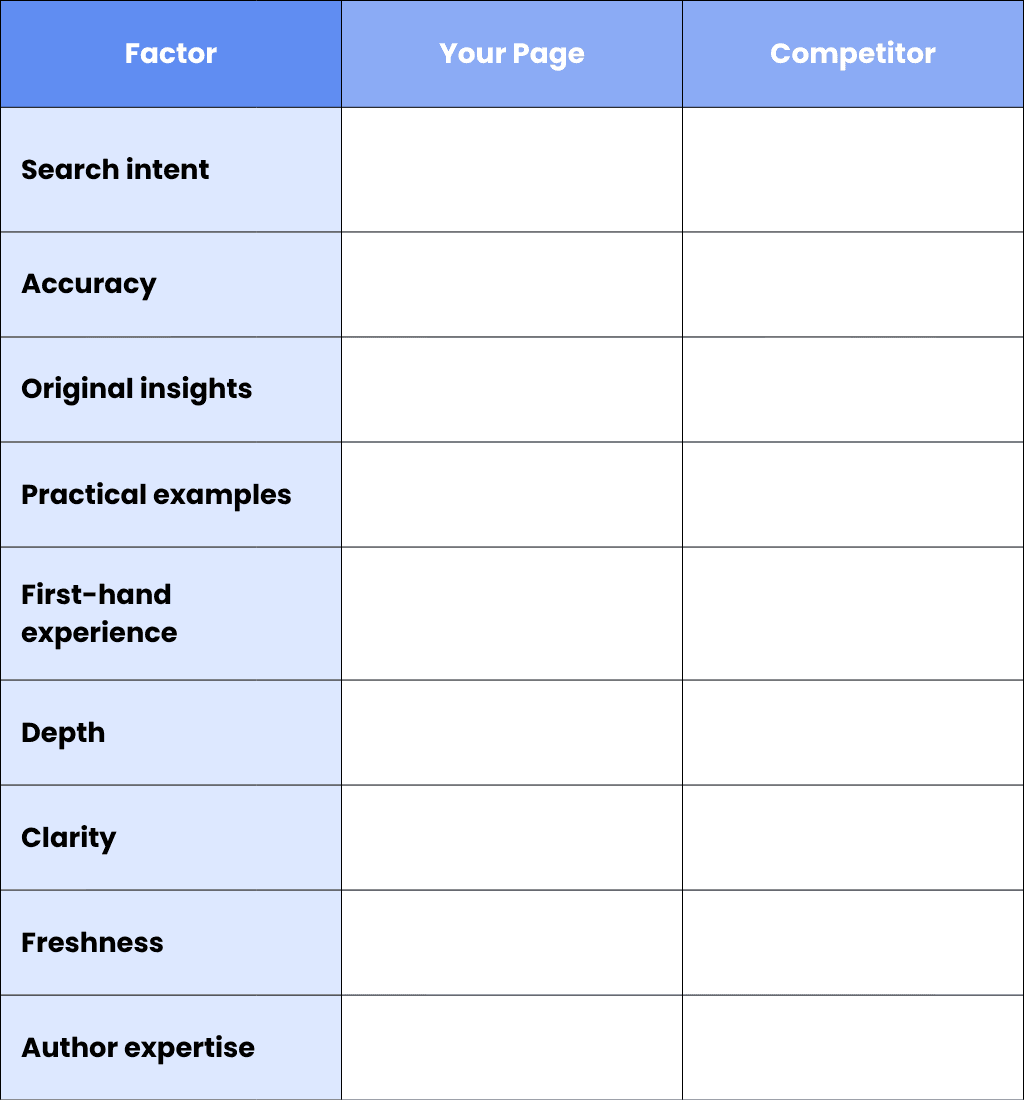
Do not try to make your article "better" in every possible way.
Instead, identify the three biggest content gaps and fix those first.
For example, if your competitor provides real examples while your article only gives generic advice, adding another 1,000 words is less useful than adding original examples.
Once your content is genuinely competitive, you can move beyond the page itself and investigate whether your website has enough authority to compete.
Step 3: Investigate Authority And Backlinks
If your content satisfies search intent and is genuinely useful, but your competitor still outranks you, look at authority.
This connects directly to the first reason we discussed earlier: your competitor may have stronger authority around the topic.
Compare the ranking pages and their wider websites.
Look for:
- Relevant referring domains
- Industry publications mentioning them
- Editorial links
- Partner links
- Original research being cited
- Industry associations
- Digital PR coverage
- Links from authoritative websites
Do not reduce this analysis to "Competitor has 300 links; we have 100, so we need 200 more."
That approach encourages quantity over quality.
Instead, ask:
Why would another reputable website want to reference our business or content?
That question leads to better strategies.
You might create original research, publish industry data, produce useful tools, contribute expert commentary or develop resources that solve a genuine problem.
Once you understand the authority gap, the next question is whether your own website is supporting the pages you want to rank.
Step 4: Audit Your Internal Links
Now that you have assessed the external authority of the competing page, look inside your own website.
Your important pages should not exist in isolation.
Suppose your main service page targets a valuable commercial keyword. You might already have 20 related articles discussing that subject, yet none of them link naturally to the service page.
That is a missed opportunity.
Start With Your Priority Pages
Create a list of your:
- Core service pages
- Product or category pages
- Important location pages
- Highest-value informational pages
Then find relevant supporting content that could link to each one.
For example:
"Restaurant SEO Services"
could be supported by:
- Restaurant keyword research
- Local SEO for restaurants
- Google Business Profile for restaurants
- Restaurant content strategy
- Restaurant website optimisation
Connect these pages where the link genuinely helps the reader.
Once your internal structure is clear, move to the technical foundations. There is little value in building an excellent content network if search engines cannot reliably crawl and interpret it.
Step 5: Audit Technical SEO
At this point, you know:
- The search intent is right.
- The content is competitive.
- You have considered authority.
- Your internal links are supporting important pages.
Now check whether technical problems are preventing those improvements from working properly.
A technical SEO audit should answer one fundamental question: Can search engines efficiently crawl, understand and index the pages we want to rank?
Review:
- Indexation
- Robots directives
- XML sitemaps
- Canonical tags
- Redirects
- Duplicate URLs
- Broken links
- JavaScript-dependent content
- Mobile usability
- Page performance
- Structured data
- Site architecture
Prioritise issues based on their potential impact.
For example, fixing a widespread indexing problem affecting 1,000 important pages should take priority over manually improving the title tag on one low-value page.
Once the technical foundations are sound, you can return to something that is increasingly important in competitive search: demonstrating genuine expertise and trust.
Step 6: Strengthen Expertise And Trust
If your technical foundation is healthy, ask whether your content gives readers enough reason to trust your business.
This step builds naturally from the content review. You may have identified that your competitor provides stronger evidence, clearer authorship or more first-hand expertise.
Now close that gap.
Consider adding:
- Relevant author biographies
- Expert reviews
- First-hand examples
- Original research
- Customer case studies
- Transparent business information
- Credible references
- Evidence supporting important claims
- Regular content updates
For example, a SaaS company could have its product specialist review an article about software integrations. An education provider could involve an experienced educator. A hospitality company could use genuine local expertise in destination content.
The important point is that expertise should come from the business, not simply from adding impressive-sounding language to a page.
Once your content demonstrates expertise, take the next step: make that expertise genuinely useful by incorporating your organisation's first-hand experience.
Step 7: Add First-Hand Experience
At this stage, ask:
What can we tell the reader because we have actually done this ourselves?
This question can transform generic content into something genuinely distinctive.
For example, instead of writing another generic article about implementing CRM software, a B2B company could explain the implementation mistakes it repeatedly sees in real projects.
Instead of publishing another generic hotel guide, a hospitality brand could provide practical recommendations based on genuine local knowledge.
Instead of explaining a product category using manufacturer descriptions, a retailer could provide original comparisons based on real customer questions and product experience.
A Simple Exercise
Ask teams across your business:
"What do customers repeatedly misunderstand about this topic?"
Then ask:
"What have we learned from helping customers solve it?"
Those answers can become some of your most valuable content.
Once the information itself is distinctive, make sure the page is also easy and pleasant to use.
Step 8: Improve The Page Experience
Now look at the page from the reader's perspective.
A technically sound page can still be frustrating to use. Therefore, test the actual experience rather than assuming that good technical scores automatically mean a good page.
Ask someone unfamiliar with the website to complete a simple task.
For example:
"You are looking for SEO services for a SaaS company. Find out what this agency offers and how you can contact them."
Then observe what happens.
Do they:
- Find the answer quickly?
- Understand the page structure?
- Know what to click?
- Encounter distracting pop-ups?
- Struggle on mobile?
- Understand what the company offers?
- Know what to do next?
Fix the most obvious friction points first.
This is particularly important for commercial pages because ranking is only the beginning. A visitor who cannot easily understand your offer is unlikely to become a lead.
Once your page and website provide a strong experience, you can zoom out and consider the competitive gap over time.
Step 9: Assess The Time And Authority Gap
If your competitor still has an advantage after you have addressed the major page-level issues, consider the age and maturity of its SEO programme.
Your competitor may simply have been investing consistently for much longer.
This does not mean you should try to replicate everything they have done. Instead, identify where you can gain traction fastest.
Divide your opportunities into three groups:
Quick Wins
Existing pages that could improve with relatively little work.
Examples:
- Updating outdated information
- Improving internal links
- Fixing title tags
- Improving search-intent alignment
- Resolving technical issues
Strategic Growth
Projects that require more time but can create lasting advantages.
Examples:
- Topic clusters
- Original research
- Digital PR
- Authority building
- New commercial landing pages
Long-Term Competition
Highly competitive topics where established competitors have significant authority.
These may require sustained investment rather than a single campaign.
This approach prevents your SEO team from spending most of its budget trying to win the hardest keyword first.
Step 10: Reassess Your Keyword Strategy
After analysing the competitive landscape, you may discover that the keyword you originally chose is not actually your best opportunity.
This is where the previous steps become particularly useful.
You now understand:
- What users want.
- What competing pages provide.
- How strong your website is.
- Where your authority gaps exist.
- Which topics you can realistically compete for.
Use that information to refine your keyword strategy.
For every target keyword, consider:
Relevance + Intent + Competition + Commercial Value
A keyword should ideally satisfy all four.
For example, a SaaS company might find that "CRM" is extremely competitive and broad, while "CRM software for property management companies" is more specific and commercially relevant.
The second keyword may attract less traffic, but the visitors could be much closer to becoming customers.
Therefore, do not measure SEO success by traffic alone. Measure whether the traffic contributes to business growth.
Step 11: Build Brand Recognition Around Your Expertise
Once your SEO strategy targets the right opportunities, expand your efforts beyond your website.
This step follows naturally from the authority analysis. If competitors benefit from being recognised and referenced within their industry, you need to build similar visibility over time.
That could include:
- Publishing original research
- Speaking at industry events
- Contributing expert commentary
- Working with relevant publications
- Developing partnerships
- Creating useful industry resources
- Promoting genuinely valuable content
The goal is not to manufacture brand mentions.
Instead, build something useful enough that other people have a reason to discuss, reference or share it.
For example, a retail company could publish an annual consumer trends report. A B2B company could conduct original industry research. A SaaS business could create a free benchmarking tool.
These assets can support both brand visibility and authority-building.
Step 12: Fix The Remaining SEO Problems And Measure Again
Finally, bring everything together.
You have now examined search intent, content, authority, internal linking, technical SEO, expertise, first-hand experience, page experience, competitive maturity, keyword strategy and brand visibility.
The final step is to turn those findings into an ongoing process.
Create a prioritised SEO roadmap based on:
Impact × Confidence × Effort
For example:
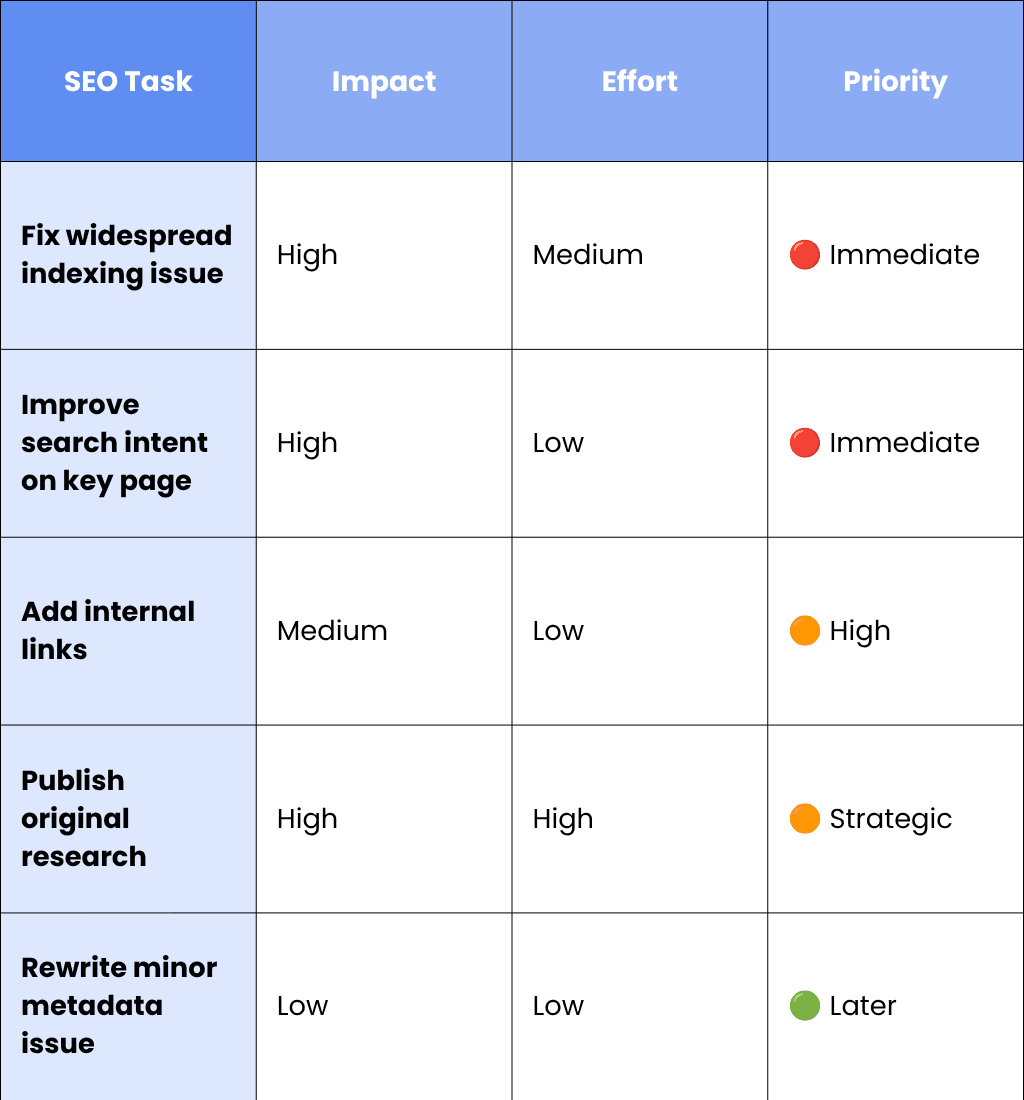
Then measure the outcomes.
Track more than rankings:
- Organic traffic
- Qualified organic leads
- Conversion rate
- Revenue or pipeline influenced by SEO
- Rankings for priority terms
- Non-brand visibility
- Organic landing-page performance
- Indexation health
- Referring domains
- Engagement and user behaviour
Most importantly, give changes enough time to produce meaningful data. SEO is not a switch that turns on immediately after an optimisation. Search performance can change as search engines recrawl, reassess and reprocess pages and as your wider authority grows.
The Complete Process At A Glance
The full process should now look like this:
1. Search Intent → 2. Content Quality → 3. Authority → 4. Internal Linking → 5. Technical SEO → 6. Expertise & Trust → 7. First-Hand Experience → 8. Page Experience → 9. Competitive Gap → 10. Keyword Strategy → 11. Brand Authority → 12. Measure & Improve
The sequence matters.
There is little point building hundreds of backlinks to a page that does not satisfy search intent. Likewise, there is little value in publishing more content if technical problems prevent important pages from being properly crawled and indexed.
By working through the process in order, you move from "Why is my competitor above me?" to a much more useful question:
"What specific signals are they stronger in, and what should we improve first?"
That is the foundation of a more effective SEO strategy.
And ultimately, the goal is not simply to beat one competitor for one keyword. It is to build a website, brand and digital presence that can compete consistently across the searches that matter most to your business.
Content Quality is Only One Part of SEO
It is tempting to think of Google as a content judge. You publish two articles. Google reads both, decides which one is better, and ranks the winner.
In reality, search is considerably more complex.
Google says its ranking systems use many factors and signals to identify relevant and useful results. These include signals related to relevance, usability, expertise, authority and trust, among others. Links can also help Google understand what pages are about and which pages may be useful.
Think about it this way.
Your content is the product.
SEO is the infrastructure that helps Google discover, understand, evaluate and connect that product with the right search.
You can have an excellent product inside a poorly organised shop. If customers cannot find it, understand what it is or trust the shop, its quality alone will not solve the problem.
The same principle applies to search.
Your competitor's article may be less comprehensive, but their website may have:
- More relevant websites linking to it
- A stronger topical reputation
- Better internal linking
- A cleaner site structure
- Stronger technical SEO
- A page that better matches the search intent
- More established authority in the topic
- Better signals of first-hand experience
- A stronger history of performing for related searches
- Better local or geographic relevance
- A better overall page experience
None of this means your content is bad.
It means content and rankings are not the same thing.
The Bigger Lesson: SEO is Bigger than Content
If there is one idea to take away from this article, it is this: Your competitor may not have better content. They may have a better SEO system.
That system could include stronger technical foundations, better site architecture, greater authority, clearer topical relevance, stronger internal linking, better search-intent alignment and a better overall user experience.
This changes how you should approach SEO.
Instead of asking: "How can we write a better article?"
Ask: "Why does Google currently believe this page is a better result for this search?"
That question leads to a much more useful investigation.
You might discover that the answer is content.
But you might also discover that it is links.
Or technical SEO.
Or intent.
Or internal architecture.
Or authority.
Or a combination of several factors.
And once you understand the gap, you can invest in the work that actually matters.
How Saigon Digital Can Help You Close the Gap
At Saigon Digital, we believe SEO should do more than move a website up a rankings report.
It should help create measurable business growth.
Our approach combines strategy, technical expertise, content, data and user experience to help ambitious brands improve their visibility and turn search demand into meaningful business outcomes.
SEO Services
Our SEO services focus on the foundations that help search engines understand your website and help customers find your business.
This includes:
- Site Optimisation & Technical Performance
- Content & Authority Building
- Local & Global Search Strategy
Whether you operate in F&B, retail, education, hospitality, B2B, SaaS or another competitive sector, we look beyond individual keywords to understand what is holding your organic performance back.
That means identifying the real reasons why competitors rank higher — then building a practical strategy to close the gap.
Generative Engine Optimisation
Search is also changing.
People increasingly use AI platforms such as ChatGPT, Gemini, Perplexity and Google's AI experiences to discover information, compare options and research businesses.
That creates a new question for brands:
Are you only optimising to appear in search results, or are you also building the digital signals that help AI systems understand and trust your business?
Saigon Digital's Generative Engine Optimisation (GEO) service helps brands become easier for AI platforms to discover, understand, quote and trust.
Our capabilities include:
- AI Readability Optimisation
- Generative Engine Optimisation (GEO)
- Answer Engine Optimisation (AEO)
- Knowledge Graph & Schema Setup
- AI Content Audit & Reformatting
- AI Performance Dashboard
AI Workflow Automation
SEO is only one part of digital growth.
We also help businesses use AI to reduce repetitive work, improve operational efficiency and build scalable processes.
Our AI Workflow Automation services include:
- AI-driven intelligence
- Pre-built automation templates
- Custom AI Agents
For businesses that want to compete more effectively, the opportunity is not simply to produce more content.
It is to build better systems for marketing, data, operations and customer engagement.
Stop Guessing. Start Closing The SEO Gap.
If your competitors are consistently ranking above you, publishing more content is not always the answer. The real opportunity is to understand why competitors rank higher, identify the gaps across your content, authority, technical SEO and overall digital presence, then focus your resources where they can make the biggest difference.
At Saigon Digital, we combine SEO, data, technical expertise and AI to help ambitious brands turn search visibility into measurable business growth.
Ready to find out what is holding your SEO back?
Let Saigon Digital help you find the gaps, fix what matters and build a stronger path to organic growth.
Frequently Asked Questions
1. Why Do Competitors Rank Higher Even When Their Content Is Worse?
Content quality is only one part of SEO. Your competitor may have stronger website authority, more relevant backlinks, better internal linking, stronger technical SEO, better search-intent alignment or a more established presence in the topic. Therefore, why competitors rank higher cannot usually be explained by content quality alone.
2. Does Having More Content Help You Outrank Competitors?
Not necessarily. Publishing more content does not automatically improve rankings, and Google does not use word count as a ranking requirement. Instead, focus on creating useful content that satisfies search intent, demonstrates expertise and provides information that genuinely helps your audience. Quality, relevance and overall SEO foundations matter more than simply increasing the number of pages.
3. Should I Get More Backlinks If My Competitor Has More Than Me?
Not automatically. The quality and relevance of backlinks matter more than simply matching a competitor's link count. Focus on earning genuine references from relevant and credible websites through original research, useful resources, expert insights, digital PR and industry relationships.
4. How Long Does It Take To Outrank A Competitor?
There is no fixed timeframe. It depends on factors such as your website's current authority, the competitiveness of the keyword, the quality of your SEO improvements and how established your competitors are. Rather than focusing only on a specific deadline, track improvements in rankings, organic traffic, qualified leads and other business outcomes over time.
5. What Should I Do If My Content Is Better But My Competitor Still Ranks Higher?
Start with a structured SEO audit rather than immediately rewriting the content. Compare search intent, content quality, authority, internal linking, technical SEO, expertise, page experience and keyword strategy. This will help you identify the actual reason your competitor is outperforming you and prioritise the improvements most likely to close the gap.