



For many B2B businesses, search is one of the most valuable channels for reaching potential customers at the moment they are actively looking for answers, solutions, suppliers or partners.
But ranking for a few high-volume keywords is not the same as generating qualified leads.
A successful B2B SEO strategy connects search visibility with commercial intent. It helps the right people discover your business, understand what you offer, trust your expertise and take the next step towards becoming a customer.
This matters even more as B2B buying journeys become increasingly digital. Gartner reported in 2025 that 61% of B2B buyers preferred an overall rep-free buying experience, while its 2026 research found that 45% of surveyed B2B buyers had used generative AI during a recent purchase, mainly to research vendors and products.
For businesses in sectors such as SaaS, education, hospitality, F&B, retail and professional services, this creates an important opportunity: build a search presence that supports buyers before they ever speak to sales.
This guide explains how to do it.
Key Takeaways
- B2B SEO is about qualified leads, not just traffic. Focus on attracting the right decision-makers and connecting search visibility with business outcomes.
- Target search intent and business value. Prioritise keywords based on relevance, buyer intent and their potential to generate leads.
- Build a strong website foundation. Clear site structure, technical SEO, useful service pages and internal linking make it easier for both users and search engines to navigate your website.
- Create genuinely useful content. Answer real customer questions, demonstrate expertise and build topic clusters around important business areas.
- Build authority and trust. Use case studies, original research, credible external mentions and customer evidence to strengthen your brand.
- Optimise for the evolving search landscape. Traditional SEO remains important, while GEO and AEO can help businesses improve visibility across AI-powered search experiences.
- Connect SEO to revenue. Measure qualified leads, sales opportunities, pipeline and revenue rather than relying only on rankings and organic traffic.
- Treat SEO as a long-term growth channel. Consistent optimisation, content development and data-driven improvements can turn organic search into a sustainable source of qualified B2B leads.
What Is B2B SEO?
B2B SEO, or business-to-business search engine optimisation, is the process of improving a company's website and online presence so that it can attract relevant business buyers through organic search.
The basic principles are similar to SEO for any other business. You still need:
- A technically sound website
- Useful and relevant content
- Strong keyword targeting
- Clear website architecture
- Internal links
- Authoritative external links and mentions
- A good user experience
- Measurement and continuous improvement
However, B2B SEO has a different commercial context.
B2B purchases can involve multiple stakeholders, longer decision-making processes, larger budgets and more research. A person searching for a solution may not be ready to request a proposal immediately.
They may first search for:
- How a particular solution works
- Problems affecting their organisation
- Different approaches to solving a problem
- Software or service comparisons
- Pricing information
- Implementation considerations
- Reviews and case studies
- Suppliers in a particular market
- Technical specifications
- Alternatives to an existing provider
This means a good B2B SEO strategy should not focus only on transactional keywords.
It should build visibility across the entire journey from problem → research → evaluation → decision.
Why B2B SEO Matters For Lead Generation
Paid advertising can put your business in front of an audience quickly, but organic search can create a valuable source of qualified traffic over the long term.
The key word is qualified.
For a B2B company, 10,000 visitors are not necessarily more valuable than 500 visitors. If the 500 visitors include decision-makers and businesses actively looking for your solution, they may generate significantly more commercial value.
B2B SEO helps you target demand rather than simply traffic.
Consider a SaaS company selling inventory management software.
Someone searching for "what is inventory management" may be interested in the subject but could be years away from becoming a customer.
Someone searching for "inventory management software for retail chains" has a much clearer commercial need.
Both searches can be useful. But they should have different roles within your SEO strategy.
The first can help build awareness and establish expertise.
The second can attract a potential buyer.
This is why effective B2B SEO combines search demand, search intent and business relevance.
How B2B SEO Differs From Traditional SEO
The biggest difference is not necessarily the technical SEO work. It is the way you connect SEO activity to a more complex buying journey.
Longer Buying Journeys
A consumer may discover a product, compare prices and purchase within minutes.
A B2B buyer may spend weeks or months researching options.
They may also involve:
- Marketing teams
- Procurement
- Finance
- IT
- Operations
- Senior management
- Legal teams
- End users
Your website therefore needs to answer different questions for different people.
Lower Search Volumes Can Still Be Valuable
B2B keywords often have lower search volumes than broad consumer keywords.
That does not automatically make them less valuable.
A keyword with 100 highly relevant monthly searches may generate more commercial value than a keyword with 10,000 searches from an unrelated audience.
For example, a specialist B2B technology provider might prefer to rank for:
"enterprise CRM implementation partner"
rather than:
"CRM"
The second keyword may have more searches, but the first provides much stronger signals about the user's requirements.
Multiple Decision-Makers
Your SEO strategy should account for the fact that the person researching your business may not be the final decision-maker.
A technical manager might search for implementation information.
A marketing manager might research capabilities.
A finance stakeholder might look for pricing.
A director might search for business outcomes and case studies.
Strong B2B SEO gives each stakeholder enough useful information to move the conversation forward.
Trust Matters
B2B customers are often making decisions that affect budgets, teams and business performance.
They need reasons to trust a supplier.
That means your website should demonstrate expertise rather than simply claim it.
Google's guidance emphasises helpful, reliable, people-first content and encourages businesses to demonstrate experience, expertise, authority and trustworthiness.
Start With Business Goals, Not Keywords
One of the most common B2B SEO mistakes is starting with a keyword tool.
Keyword research is important, but it should come after you understand what the business is trying to achieve.
Start by asking:
- Which products or services generate the most revenue?
- Which services have the strongest margins?
- Which markets are strategic priorities?
- Which customer types are the best fit?
- Which services does the sales team want more enquiries for?
- Which products or services have the greatest growth potential?
- Which customers tend to stay the longest?
- What makes the company different from competitors?
This information gives SEO a commercial direction.
For example, suppose an education company offers corporate training, language courses and leadership programmes.
A generic SEO strategy might try to maximise traffic for "training courses".
A business-led strategy could instead prioritise searches such as:
- Corporate leadership training
- Executive training programmes
- Business English training
- Corporate language training
- Leadership development programmes
- Employee training solutions
The second approach gives the SEO programme a clearer connection to revenue.
Build A B2B SEO Keyword Strategy
A strong B2B SEO keyword strategy should connect what your customers search for with what your business actually sells. Rather than targeting as many keywords as possible, focus on terms that indicate a genuine business need and can eventually contribute to qualified leads.
Start by building a list of keywords around your products, services, customers, industries and common customer problems. Then, group these keywords by search intent and business value. This makes it easier to decide which terms deserve dedicated landing pages, supporting articles or other content.
A simple way to prioritise keywords is to consider three factors:
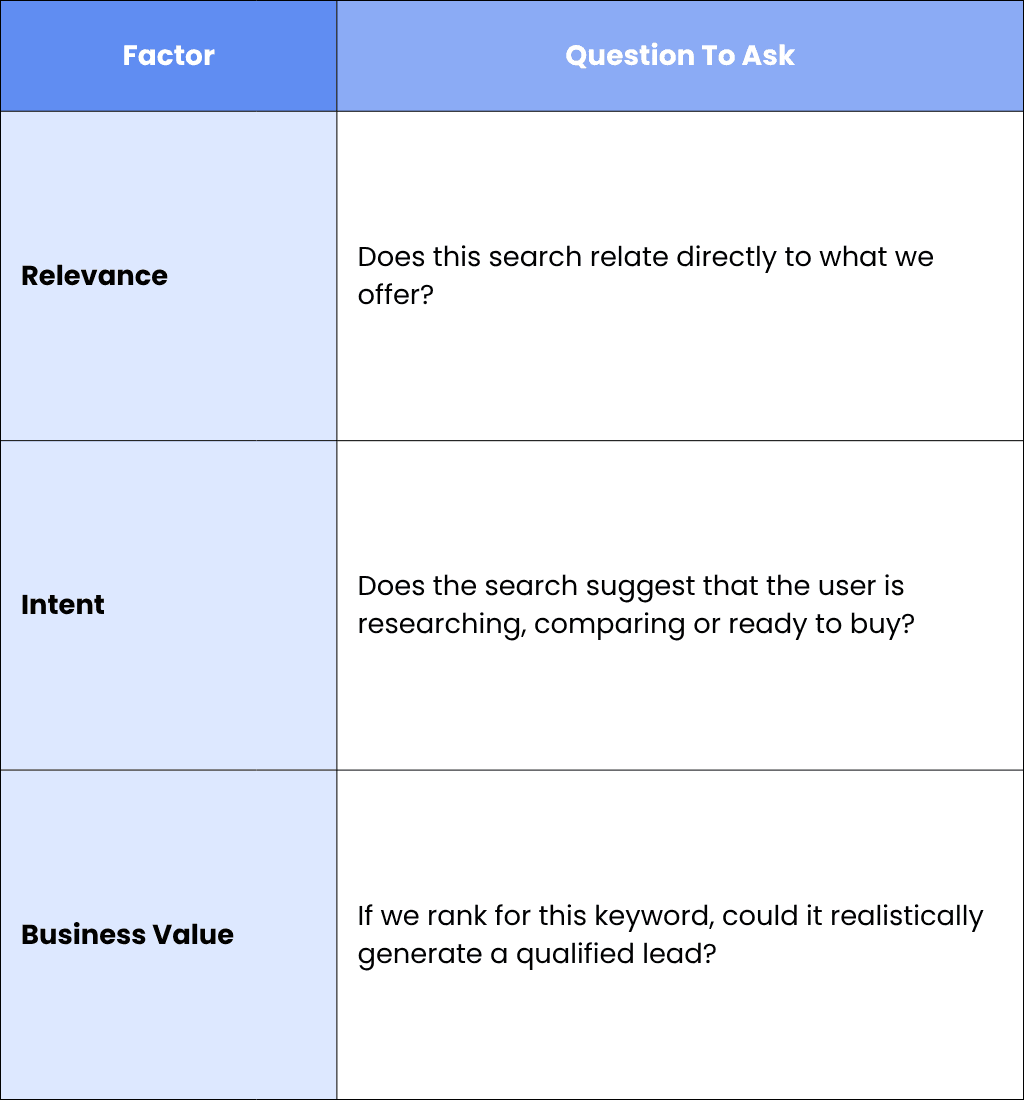
For example, a SaaS company selling HR software might find that "HR software" has 5,000 monthly searches, while "HR software for medium-sized businesses" has only 500. If the more specific keyword attracts visitors who are twice as likely to become leads, the smaller keyword could deliver greater commercial value.
1. Identify Your Core Commercial Keywords
Start with the keywords that directly describe your products or services. These are your core commercial keywords because the people searching for them are already looking for a solution that your business provides.
For example, an SEO agency might target:
- B2B SEO services
- SEO agency
- Technical SEO services
- Enterprise SEO services
- International SEO services
A hotel technology company might instead target:
- Hotel management software
- Hotel booking software
- Hospitality technology solutions
- Hotel CRM software
The important point is to avoid choosing keywords simply because they have high search volume. A keyword should be relevant to your actual offering and the customers you want to attract.
A simple process:
- List your main products and services.
- Write down the different ways customers might describe each one.
- Check search demand and competition using an SEO tool.
- Remove terms that attract an irrelevant audience.
- Group closely related terms around one primary page.
For example, if "technical SEO services" and "technical SEO agency" satisfy the same search intent, you probably do not need two separate pages. One strong service page can target both naturally.
2. Find Problem-Based Searches
B2B buyers do not always search for a product or service by name. Instead, they often search for the problem they are trying to solve.
For example, someone looking for an automation platform may search for:
- How to reduce manual data entry
- How to automate reporting
- How to reduce repetitive admin work
- How to improve workflow efficiency
These searches are valuable because they allow your business to reach potential customers before they know which solution they need.
To find these opportunities, speak with your sales and customer service teams. Review customer questions, support tickets, sales calls and common objections. Then turn recurring problems into useful content.
For example:
Problem: Retailers spend hours compiling weekly sales reports.Search: "How to automate retail sales reporting"Content: A practical guide explaining the process, followed by relevant information about your automation solution.
This approach also creates a natural path from informational content to commercial pages.
A useful content structure is:
Problem → Explanation → Possible Solutions → Recommended Approach → Product/Service
The content should help the reader first rather than immediately pushing them towards a sales pitch.
3. Research Comparison Searches
Once buyers understand their problem, they often start comparing potential solutions. This makes comparison keywords particularly useful for B2B SEO.
Look for searches containing terms such as:
- Best
- Vs
- Alternative
- Comparison
- Review
- Pricing
- Features
- Provider
- Platform
For example:
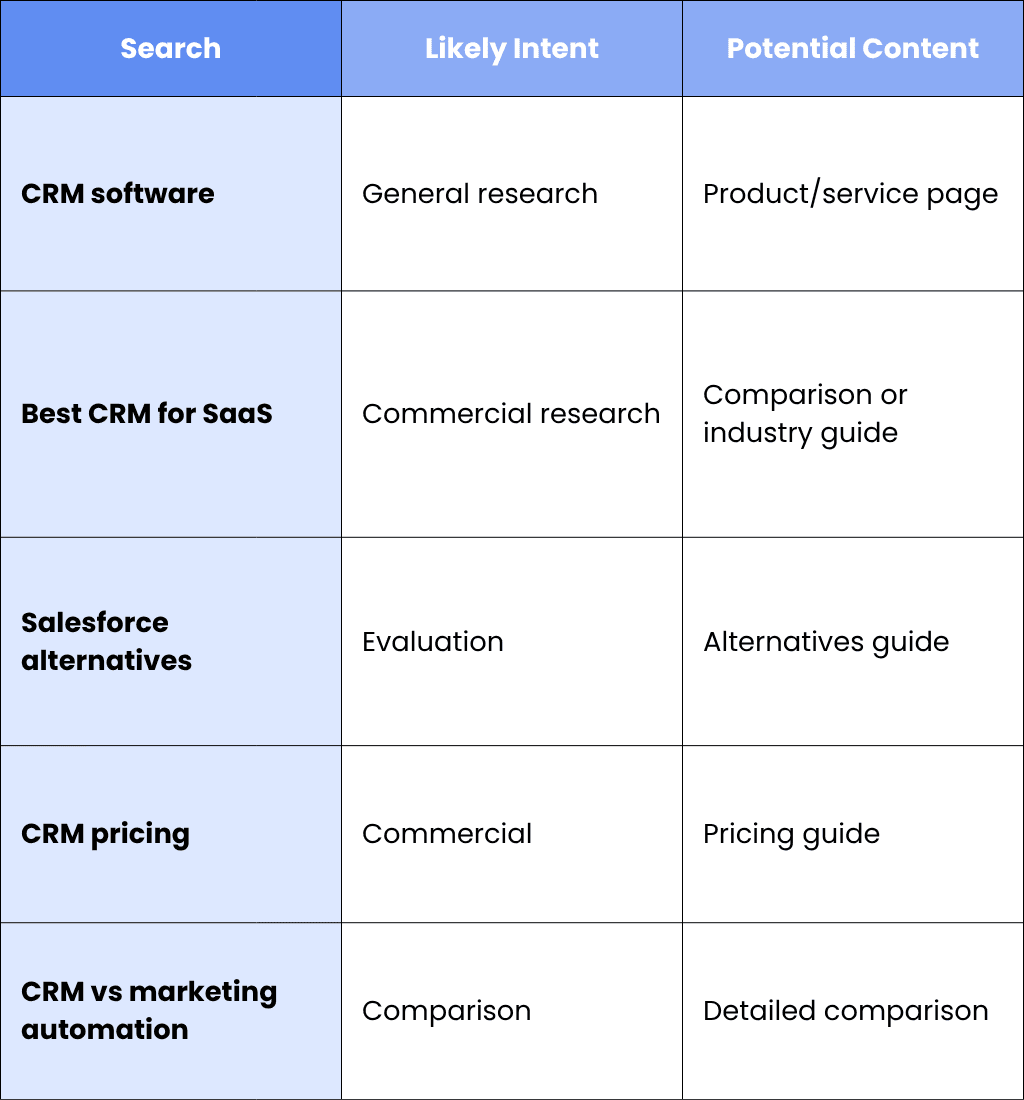
When creating comparison content, avoid making unsupported claims about competitors. Instead, explain the differences clearly and give readers a useful framework for evaluating their options.
For your own solution, be transparent about pricing, features, integrations, implementation and limitations where appropriate. This builds trust and can help prospects make decisions without needing to contact sales simply to obtain basic information.
4. Target Industry-Specific Searches
B2B buyers often want solutions designed for their particular industry because their requirements, regulations and workflows can differ significantly.
For example, instead of targeting only:
"CRM software"
a SaaS provider could also explore:
- CRM software for education
- CRM software for hospitality
- CRM software for retail
- CRM software for professional services
These keywords may have lower search volumes, but they can be much more relevant to your target customers.
You can estimate the potential value with a simple calculation:
500 monthly searches × 10% click-through rate = 50 visits
If 8% of those visitors become leads:
50 visits × 8% = 4 leads per month
Now compare that with a broader keyword:
5,000 searches × 2% click-through rate = 100 visits
If only 1% become leads:
100 visits × 1% = 1 lead per month
The numbers are hypothetical, but they demonstrate an important principle: search volume does not equal lead potential.
When creating industry-specific pages, do not simply replace the industry name in an existing template. Explain the industry's specific challenges, use relevant terminology, include appropriate examples and demonstrate why your solution fits that market.
5. Consider Location
Location can become an important part of your B2B SEO strategy when your business serves particular cities, countries or regions.
For example:
- SEO agency in Vietnam
- B2B SEO agency in Singapore
- Corporate training in Ho Chi Minh City
- Digital marketing agency in Bangkok
However, avoid creating dozens of near-identical location pages simply to target different cities. Each page should provide genuine local value.
Consider including:
- The services available in that location
- Local market knowledge
- Relevant customer examples
- Local terminology
- Service areas
- Local case studies
- Regional expertise
- Contact or consultation information
For international businesses, also consider how customers in different markets search. The same service may have different terminology, spelling or commercial intent across countries.
For example, a business targeting both the UK and US should consider differences such as "optimisation" and "optimization", while also checking whether customers use different terms for the service itself.
How To Prioritise Your Keyword List
After collecting keywords across these five categories, avoid trying to target everything at once. Instead, create a simple scoring system to determine which opportunities deserve attention first.
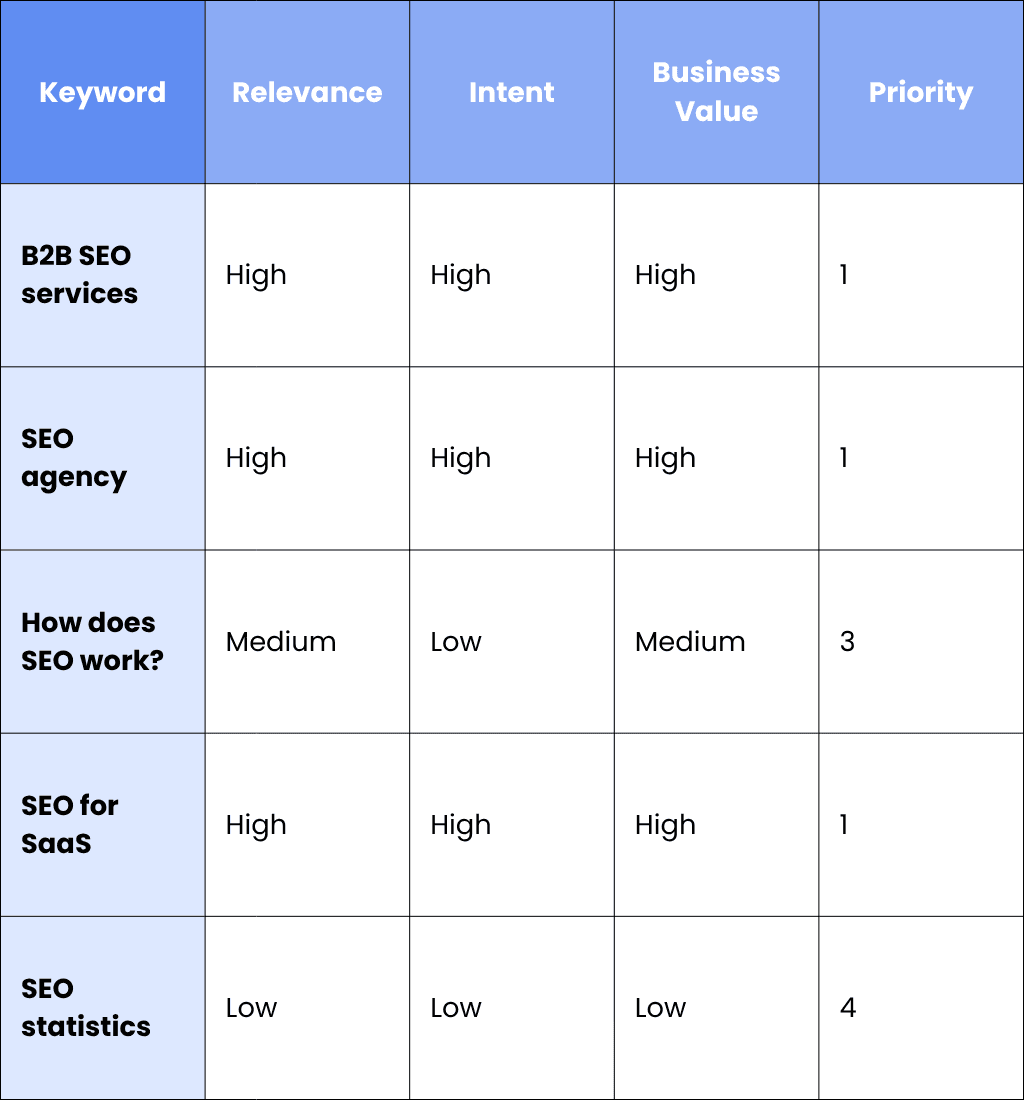
You can make this even more data-driven by assigning each keyword a score from 1–5 for relevance, intent and business value, then adding the scores together.
For example:
B2B SEO services5 relevance + 5 intent + 5 business value = 15/15
How does SEO work?3 relevance + 2 intent + 2 business value = 7/15
This does not mean you should ignore the second keyword. It simply tells you which opportunity should receive resources first.
Ultimately, the best B2B SEO keyword strategy balances search demand with commercial relevance. Target the searches your customers actually use, build useful content around their problems, and prioritise the terms that give your business the strongest opportunity to generate qualified leads.
Map Keywords To Search Intent
Once you have a keyword list, the next step is to understand why someone is searching for each term. This is known as search intent, and it helps you choose the right page and content format for each keyword. A useful B2B SEO strategy should cover the buyer journey rather than force every keyword onto a sales page.
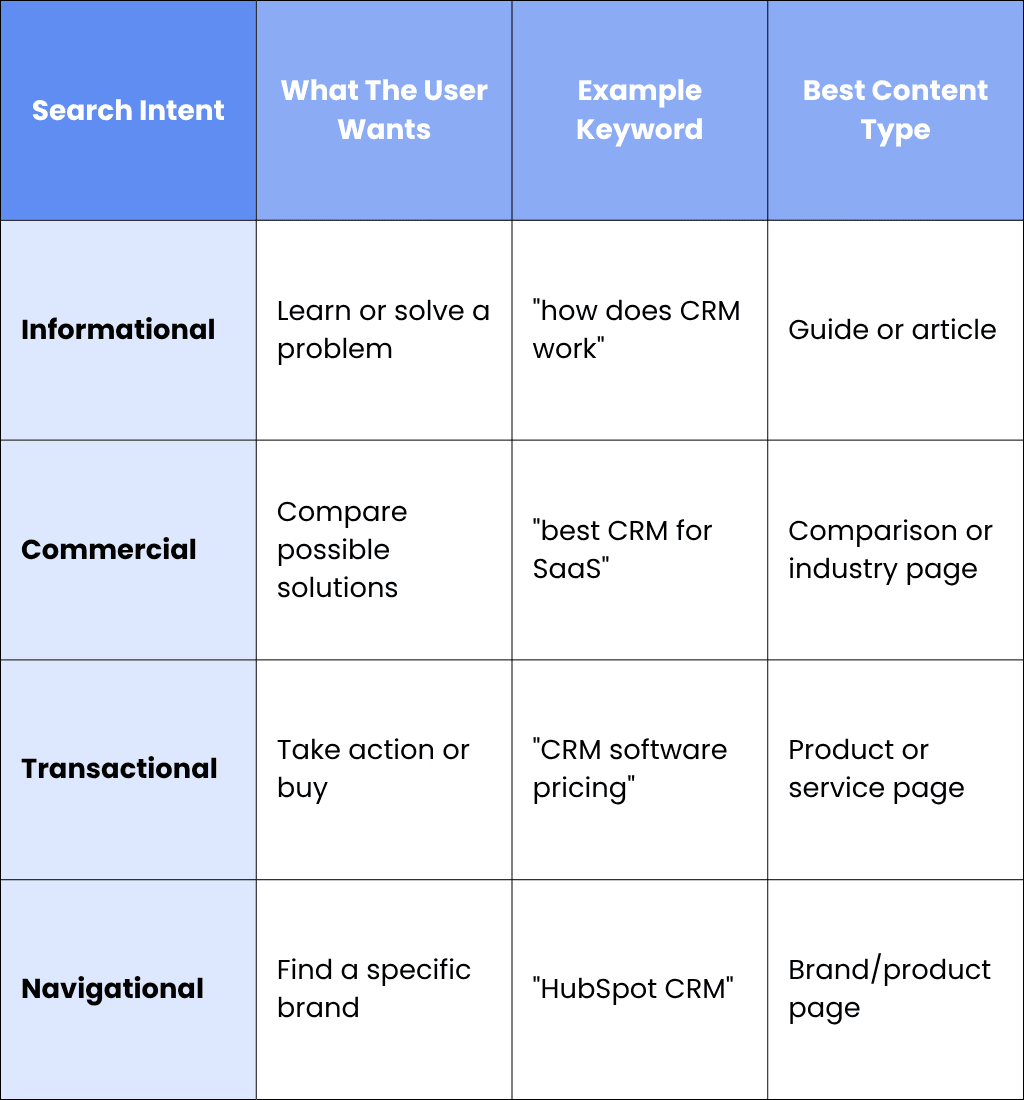
Start by reviewing the current search results for an important keyword. If Google mainly shows detailed guides, do not create a short sales page and expect it to satisfy the same intent. Instead, create content that matches what users are already looking for.
You can also map keywords across the buying journey:
Problem → Research → Comparison → Decision → Action
For example:
"How to automate sales reporting" → "Sales reporting software" → "Sales reporting software comparison" → "Sales reporting software pricing" → "Request a demo"
This approach prevents keyword cannibalisation and gives each page a clear purpose. Most importantly, it ensures that your SEO strategy supports buyers at different stages instead of targeting only people who are ready to contact you.
Content For Different Buying Stages
B2B buyers rarely move from their first Google search to a purchase in one step. Instead, they typically research a problem, explore possible solutions, compare providers and then decide whether to take action. Therefore, your B2B SEO strategy should create content for different stages of the buying journey rather than focusing only on keywords with strong purchase intent.
A simple framework is:
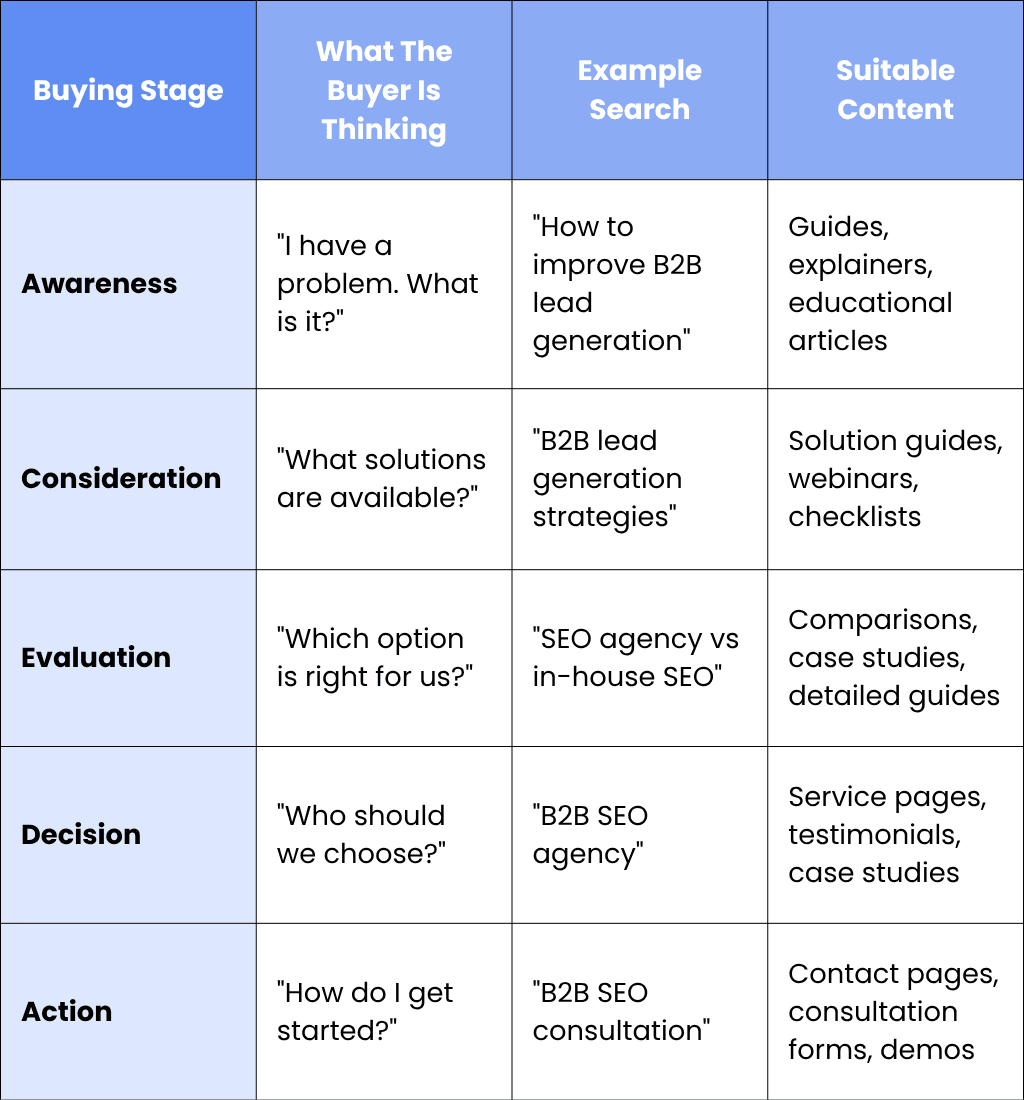
At the awareness stage, focus on answering questions and explaining problems rather than promoting your services too aggressively. For example, an SEO agency could publish a guide on "Why B2B Websites Struggle To Generate Organic Leads". The objective is to introduce the brand while providing genuinely useful information.
As buyers move into the consideration and evaluation stages, make the content more specific. Explain possible solutions, compare different approaches and provide practical information that helps prospects make informed decisions. For example, content such as "In-House SEO vs SEO Agency" or "How Much Does B2B SEO Cost?" can help buyers evaluate their options.
At the decision stage, focus on demonstrating why your business is a credible choice. Service pages, case studies, client testimonials, results and detailed explanations of your process can help reduce uncertainty.
Finally, at the action stage, make the next step simple. A visitor who is ready to speak with your team should not have to search through your website to find a contact form or consultation option.
The key is to create a connected journey rather than treating each piece of content as an isolated asset:
Awareness → Consideration → Evaluation → Decision → Action
Not every buyer will follow this journey in exactly the same order. However, creating useful content for each stage increases the chances that your business can remain visible and helpful throughout the research process, while giving qualified prospects a clear path towards becoming leads.
Create A Strong B2B Website Structure
A strong website structure helps both users and search engines understand how your business, products, services and expertise connect. Start by organising your website around the way customers search for and evaluate your solutions, rather than around your company's internal departments.
For many B2B businesses, a simple structure could look like:
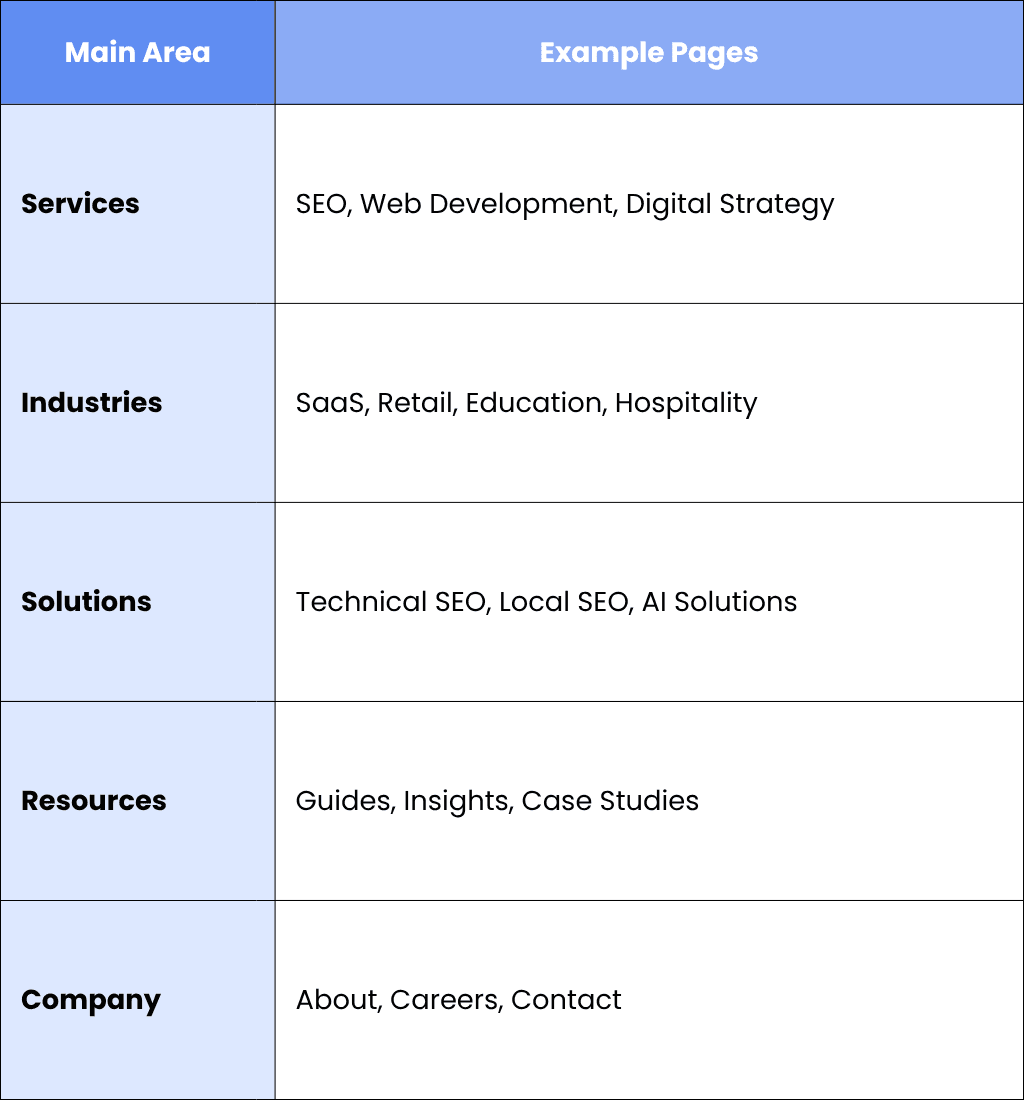
Keep important pages within a few logical clicks from the homepage and connect related pages with internal links. For example, an article about "SEO for SaaS" should link naturally to your SaaS SEO service page, while that service page can link to relevant case studies and supporting guides.
Use descriptive navigation labels and clear URLs, such as:
/services/b2b-seo/
rather than:
/page?id=123
The goal is simple: a visitor should understand where they are, what the page is about and where they can go next without having to think too much.
Before launching new pages, create a simple site map and check whether every important commercial page has a clear place within it. This also helps prevent orphan pages that receive little or no internal linking.
Build High-Quality Service And Product Pages
Your service and product pages are often the pages with the strongest potential to generate B2B leads. Therefore, they should do more than describe what you sell. They should answer the questions a prospective customer needs answered before they feel comfortable taking the next step.
A strong page should clearly explain:
- What you offer and who it is designed for
- Which problems it solves
- How your approach works
- What customers can expect
- Why your business is credible
- What implementation involves
- What makes your solution different
- What the next step should be
For example, instead of writing:
"Our SEO service helps businesses improve their rankings and grow online."
provide more useful information about the process, such as technical optimisation, content strategy, authority building, reporting and how these activities contribute to qualified leads.
Where possible, support claims with evidence such as case studies, testimonials, results, client logos, certifications or original research.
Also make the page easy to scan. Use short paragraphs, descriptive headings, bullet points, FAQs and clear calls to action. Then review the page from a buyer's perspective: "If I were considering this service, what information would I still need before contacting this company?"
Answer those questions directly on the page.
Create Content Around Real Customer Questions
The most useful B2B content often comes from questions your business already answers every day. Instead of choosing topics solely from keyword tools, collect questions from sales calls, customer support conversations, emails, product demonstrations and account management teams.
For example, if prospects repeatedly ask a SaaS company, "How long does implementation take?", that question could become an article, FAQ or section on the relevant product page.
You can organise customer questions like this:
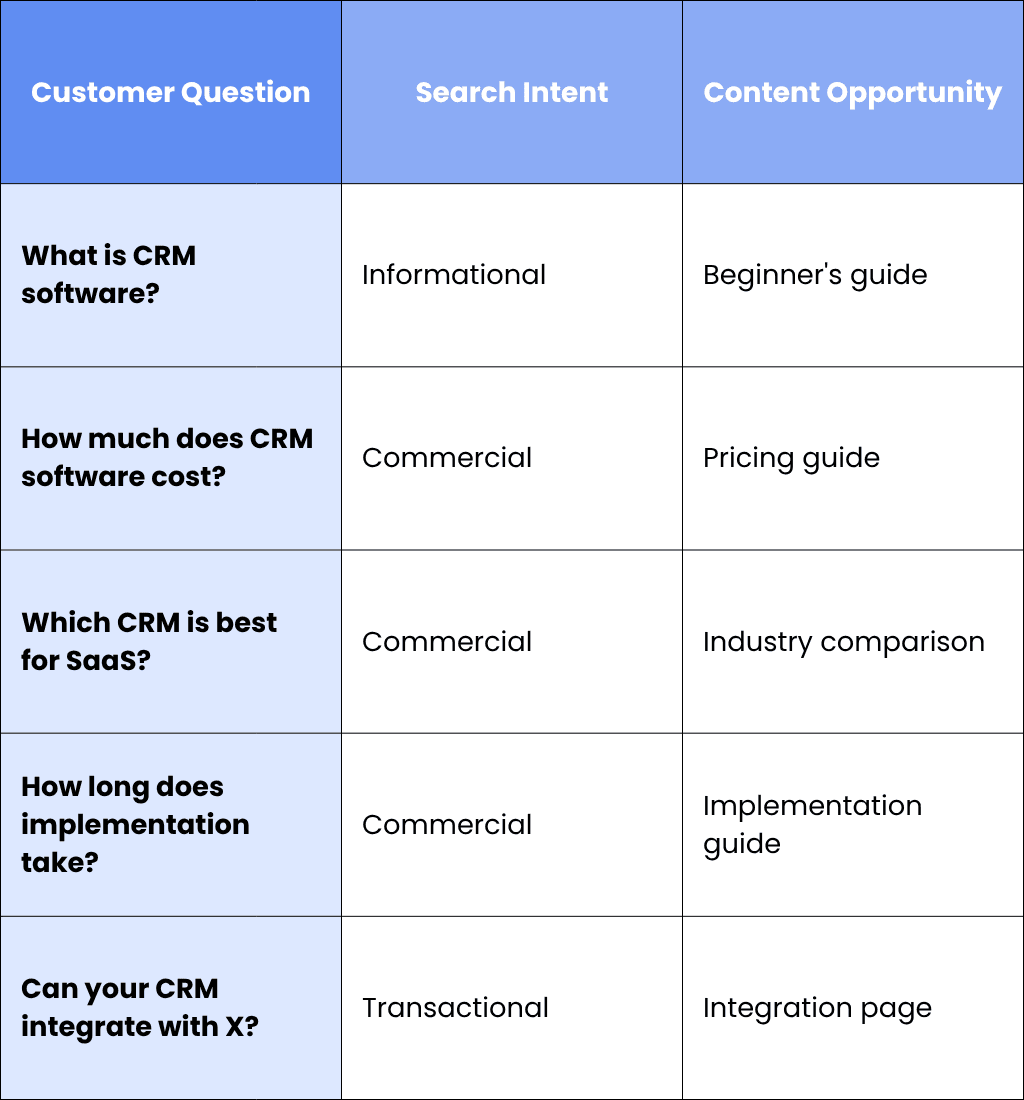
Prioritise questions that appear frequently and have a clear connection to your products or services.
Most importantly, answer the question before promoting your solution. For example, if someone searches "how much does CRM implementation cost?", explain the factors that influence cost, provide realistic considerations and then show how your service approaches implementation.
This makes the content more useful and can build trust before the sales conversation begins.
Use Topic Clusters To Build Authority
Instead of publishing unrelated articles whenever you have an idea, organise your content around important topics that matter to your business. This is the basic idea behind a topic cluster: one comprehensive core page is supported by several more focused pieces of content.
For example, a B2B SaaS company targeting CRM could build a cluster around CRM Software:
Core page:CRM Software
Supporting content:
- CRM implementation guide
- CRM data migration
- CRM integrations
- CRM automation
- CRM reporting
- CRM security
- CRM for SaaS companies
- CRM for enterprise businesses
- CRM software comparison
Link these pages together where the connection is genuinely useful. The supporting articles can then direct relevant users towards the main commercial page.
A useful way to think about it is:
One important topic → multiple related questions → multiple useful pages → strong internal linking → clearer topical coverage
However, do not create pages simply to make the cluster look bigger. If two articles answer essentially the same question, combine them into one stronger resource.
You can also measure the commercial value of a topic cluster. For example, if 10 supporting articles each generate 200 relevant organic visits per month, that creates 2,000 visits across the cluster. If 3% become leads, that represents approximately 60 leads per month before considering lead quality.
The numbers will vary considerably by industry, but the principle remains: build depth around topics that connect to real business opportunities.
Make Content People-First
People-first content starts with the reader's problem rather than the search engine. Your goal should be to provide the clearest and most useful answer possible, while naturally incorporating relevant keywords where they make sense.
Before publishing, ask:
- Does this answer the user's main question?
- Does it provide information they can actually use?
- Is the information accurate and current?
- Does it offer something beyond generic advice?
- Can readers understand it without specialist knowledge?
- Is the structure easy to scan?
- Does the page provide a logical next step?
Avoid adding unnecessary words simply to make an article longer. If a question can be answered properly in 800 words, there is little benefit in turning it into 2,500 words filled with repetition.
Likewise, avoid writing the same generic article that already exists across hundreds of websites. Add value through practical examples, original insights, first-hand experience, data, expert opinions or clearer explanations.
A simple test is to remove the keyword from your thinking and ask:
"Would this still be useful if search engines did not exist?"
If the answer is yes, you are much more likely to be creating content that serves the reader first.
Demonstrate Expertise Through Evidence
B2B buyers need confidence before they commit to a supplier, particularly when the purchase involves significant budgets, technical requirements or long-term contracts. Therefore, do not simply tell readers that your business is experienced; show them why they should believe you.
Strengthen your content with evidence such as:
- Original research and data
- Customer case studies
- First-hand experience
- Expert commentary
- Client results
- Industry certifications
- Customer testimonials
- Relevant awards
- Detailed methodologies
- Author credentials
- Examples of completed projects
For example, instead of writing:
"We help retailers increase their online visibility."
you could explain how a particular retail client approached the problem, what strategy you implemented, which challenges appeared and what measurable outcomes followed.
Evidence also makes content more distinctive. A generic article can be copied by hundreds of competitors, but your own research, customer experience and business data are much harder to replicate.
Where statistics or third-party claims are important, cite the original source and check that the information remains current. For your own claims, be specific about what was measured and over what period.
Ultimately, expertise is not about using complicated language or making the biggest claims. It is about giving readers credible, useful and demonstrable reasons to trust your advice and your business.
Build Authority Beyond Your Website
B2B SEO does not stop at your own website. Search engines also use signals from across the web to understand a brand's relevance, credibility and authority. Therefore, your goal should be to build a reputation that exists beyond your domain, rather than simply collecting as many backlinks as possible.
Start by identifying websites, publications, organisations and communities that your target customers already trust. Then look for genuine opportunities to contribute useful information or original research.
Effective approaches can include:
- Publishing original industry research or reports
- Contributing expert commentary to relevant publications
- Speaking at industry events and conferences
- Building partnerships with complementary businesses
- Participating in reputable industry associations
- Creating useful resources that others naturally reference
- Earning coverage through digital PR
- Developing customer stories and co-marketing campaigns
For example, a SaaS company could publish an annual report based on anonymised customer data. If industry publications reference the findings, the company can gain both relevant backlinks and greater brand visibility.
However, focus on relevance and credibility over quantity. Ten links from genuinely relevant industry websites can be more valuable than hundreds of unrelated or low-quality links.
A useful question to ask before pursuing any external opportunity is:
"Would this still be valuable to our business if it did not provide an SEO benefit?"
If the answer is yes, it is more likely to be a worthwhile authority-building activity.
Use Case Studies As SEO Assets
Case studies are particularly valuable for B2B SEO because they can serve two purposes at the same time: they demonstrate your capabilities to potential customers and create useful, search-friendly content.
Instead of simply saying that your service delivers results, show readers what happened when you applied your approach to a real business.
A strong case study should explain:
- The Client: Who the business is and what it does.
- The Challenge: What problem needed to be solved?
- The Objective: What did the client want to achieve?
- The Approach: What strategy or solution did you implement?
- The Results: What changed, ideally using measurable data?
- The Lessons: What can other businesses learn from the project?
For example:
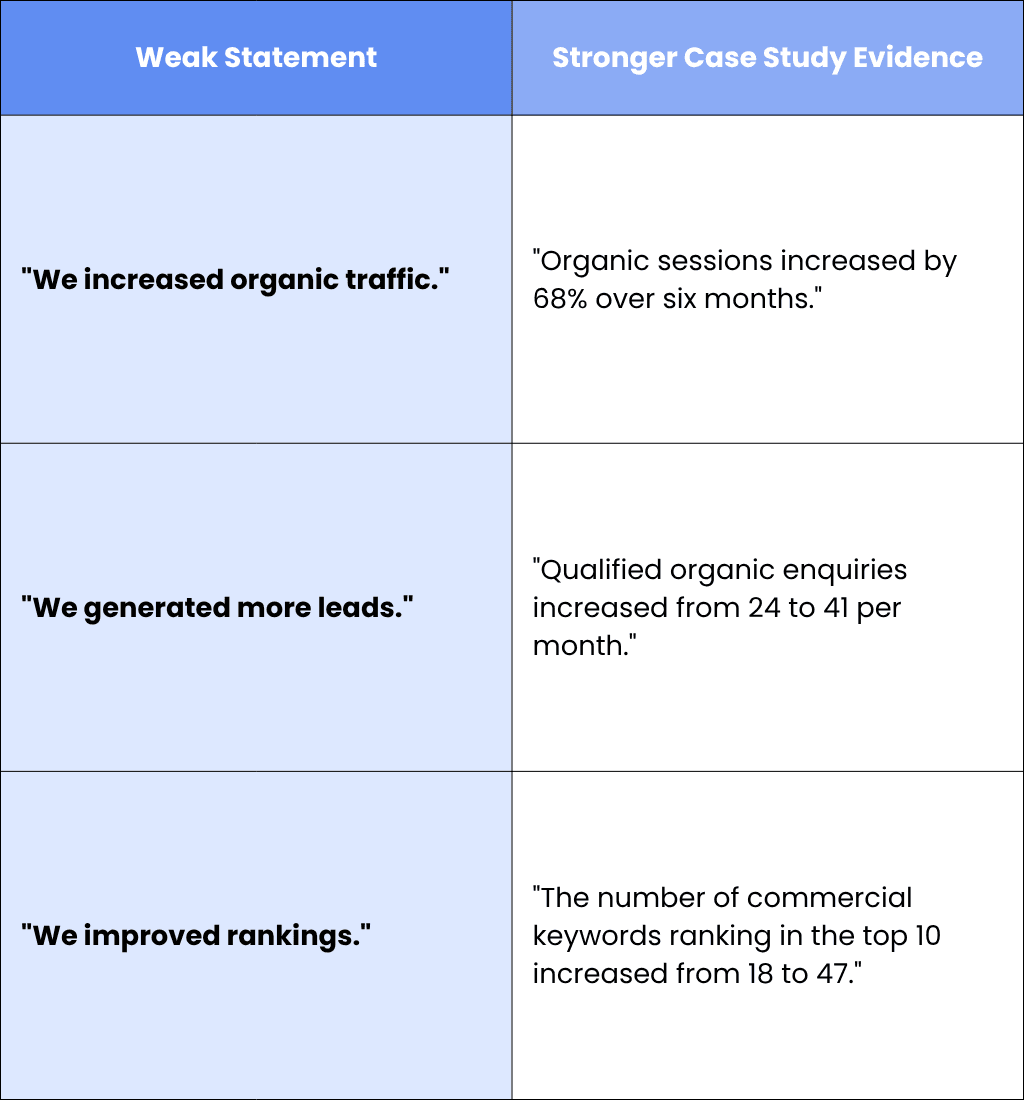
The stronger examples give prospects something concrete to evaluate.
You can also optimise case studies around relevant themes, industries and solutions. A hospitality SEO agency, for instance, could create case studies around hotel SEO, direct booking growth or local search visibility.
Finally, link case studies to relevant service and industry pages. Someone reading about a successful SaaS SEO project should have an obvious path to learn more about your SaaS SEO services.
Optimise For Local And International Search
B2B companies often serve specific cities, regions or countries, making geographic SEO an important part of their growth strategy. However, local and international SEO require more than adding a location name to an existing page.
For local SEO, start by making your business information consistent and accurate across important platforms. Then create genuinely useful location pages where there is a real business reason to serve that market.
A useful local page might include:
- Services available in that location
- Local market knowledge
- Relevant customer examples
- Areas served
- Local terminology
- Reviews or testimonials
- Local case studies
- Clear contact information
For example, an agency targeting Singapore should not simply create a page called "SEO Agency Singapore" and replace the word "Singapore" on every paragraph. Instead, explain how the agency approaches the Singapore market, which industries it serves and what local considerations affect SEO.
International SEO requires even more planning. Before creating country-specific pages, research how customers in each market actually search.
Consider:
- Language and spelling
- Local terminology
- Search behaviour
- Currency
- Regulations
- Local competitors
- Country-specific services
- Cultural differences
For example, British English uses "optimisation", while American English uses "optimization". More importantly, the same service may have completely different search terms in different markets.
Where appropriate, use international SEO technologies such as hreflang to help search engines understand language and regional variations.
The key principle is simple:
Localise the experience, not just the URL.
Think Beyond Google: SEO In The AI Search Era
Search is no longer limited to a traditional list of blue links. Potential customers increasingly use AI tools to research companies, understand complex topics, compare solutions and summarise information.
For B2B businesses, this creates a new opportunity to become a trusted source of information across multiple discovery channels.
However, AI search does not mean abandoning traditional SEO. The fundamentals still matter because AI-powered search experiences need to discover, understand and evaluate information from online sources.
Google's guidance for AI search experiences continues to emphasise important SEO fundamentals, including helpful content, unique value, good page experience and making content accessible to search systems.
To prepare your website, focus on making information:
- Clear
- Accurate
- Well structured
- Easy to understand
- Supported by evidence
- Consistently updated
- Accessible to search systems
Structured data can also help search engines understand entities, products, organisations and other important information about your business when implemented correctly.
You should also think about the questions your customers might ask an AI assistant rather than a traditional search engine.
For example, a buyer may ask:
"What are the best SEO agencies for SaaS companies in Southeast Asia?"
This is different from simply searching:
"SaaS SEO agency."
Your brand needs a strong digital footprint, clear expertise and authoritative information if you want to be considered in these broader discovery experiences.
This is where Generative Engine Optimisation (GEO) and Answer Engine Optimisation (AEO) can complement traditional B2B SEO.
The goal is not to manipulate AI systems. Instead, make your business information clear, trustworthy and useful enough to become a credible source when AI platforms research a topic.
Turn Organic Traffic Into Qualified Leads
Organic traffic only creates business value when it attracts the right visitors and gives them a clear path towards becoming customers. Therefore, do not treat every organic visitor as equally valuable.
Start by matching your calls to action with the visitor's likely stage in the buying journey.
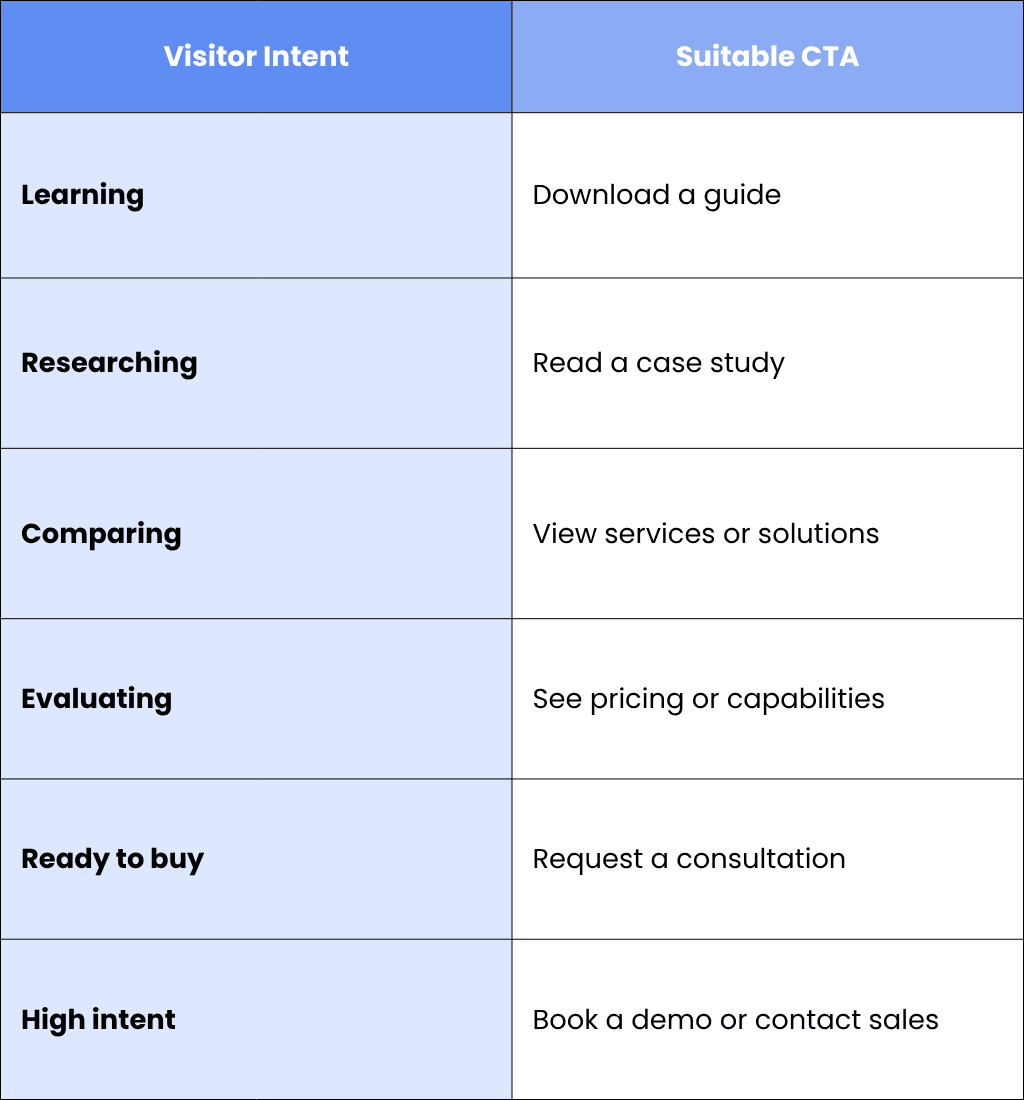
For example, asking someone who has just read an introductory article to "Request a Quote" may be too aggressive. Instead, invite them to read a related guide or case study.
On the other hand, someone landing on a page for "B2B SEO Services" is likely to have stronger commercial intent. A prominent consultation or enquiry CTA may therefore be more appropriate.
You can also improve lead quality by adding useful qualifying information to forms. Depending on your business, this could include:
- Company name
- Industry
- Company size
- Website
- Service required
- Approximate budget
- Project timeframe
However, avoid asking for unnecessary information. Every additional form field creates another potential point of friction.
A simple way to measure the difference between traffic and lead quality is:
1,000 organic visitors × 2% conversion rate = 20 leads
If only 25% of those leads are qualified:
20 × 25% = 5 qualified leads
Now imagine improving the landing page so the conversion rate reaches 3% while qualified lead rate increases to 35%:
1,000 × 3% = 30 leads
30 × 35% = 10.5 qualified leads
That is more than double the number of qualified leads without increasing traffic.
The lesson is important: improving conversion quality can be just as valuable as increasing organic traffic.
Connect SEO With Your CRM And Sales Data
Your SEO team can tell you which pages generate traffic and conversions. Your CRM can tell you whether those leads actually become opportunities and customers. Connecting the two gives you a much clearer picture of SEO's commercial value.
Start by tracking the source and landing page for every organic lead. Then, where possible, connect that information to later stages of the sales process.
A useful reporting journey looks like:
Organic Search → Website Visit → Lead → Qualified Lead → Opportunity → Customer → Revenue
For example:
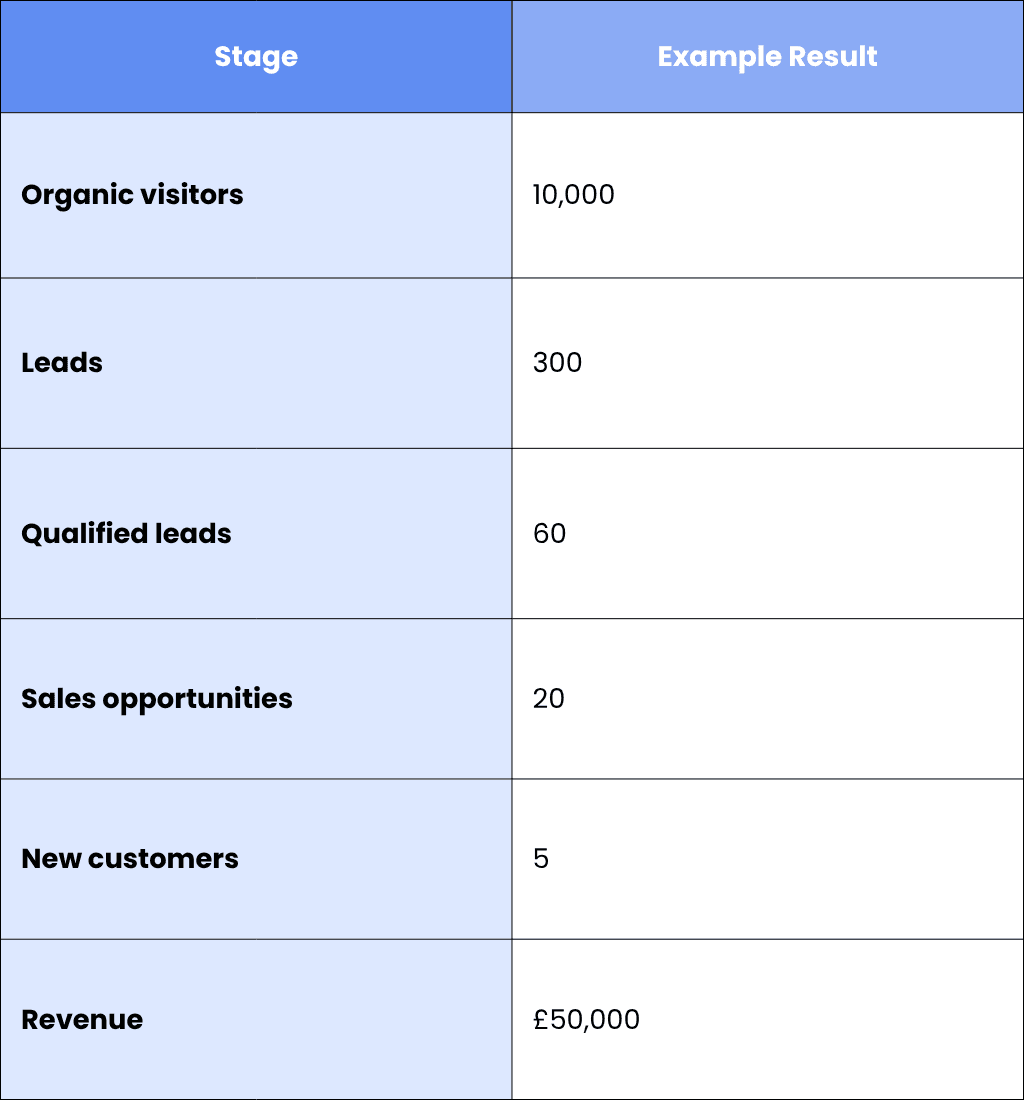
This data can reveal which SEO activities are actually contributing to growth.
For instance, suppose two pages perform as follows:
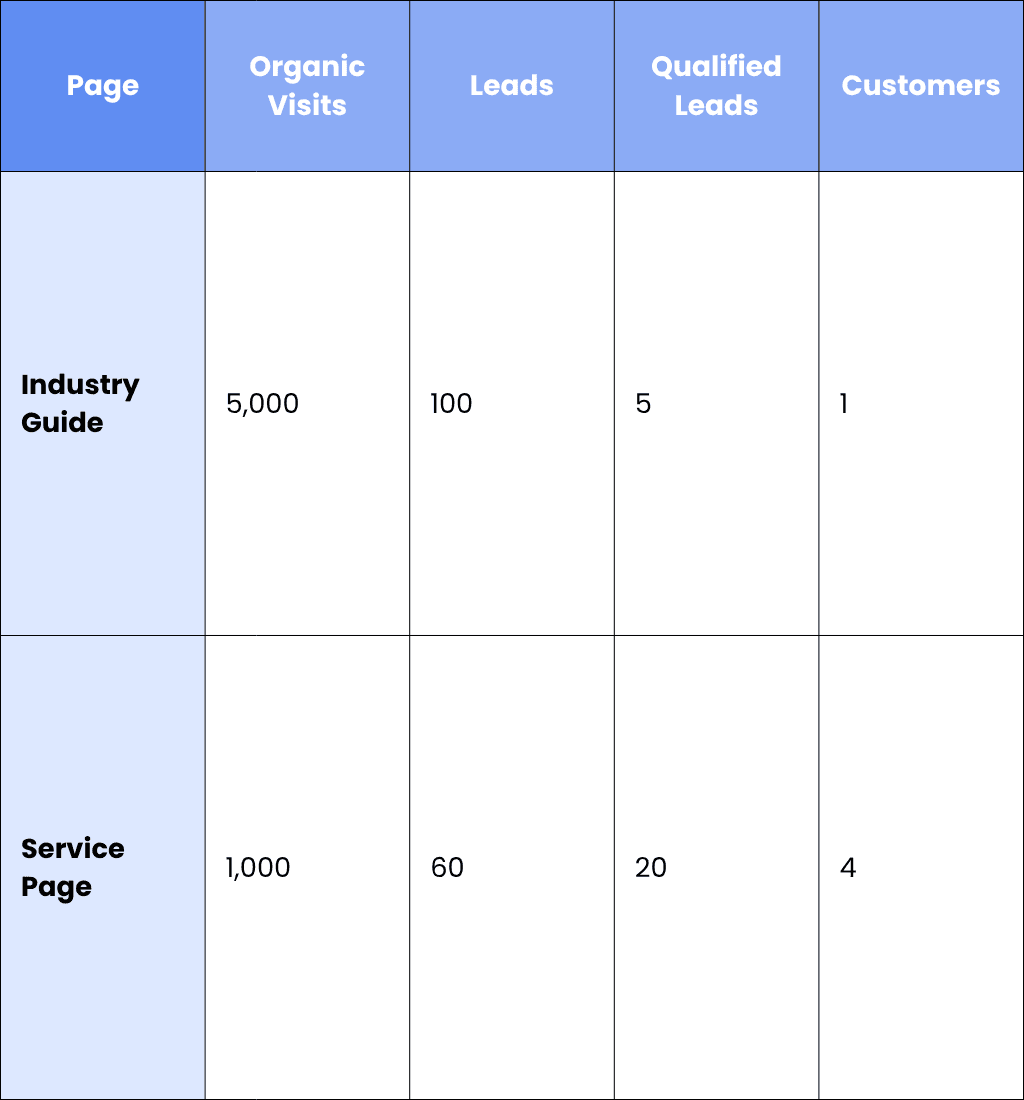
The industry guide generates five times more traffic, but the service page generates four times as many customers. If you measured only traffic, you might incorrectly invest more resources into the guide.
Instead, use CRM data to identify the pages, topics and keywords that attract commercially valuable visitors.
Over time, this also helps SEO teams work more closely with sales. If sales repeatedly reports that leads from a particular industry or service are more likely to close, SEO can prioritise relevant keywords and content.
Ultimately, the most useful B2B SEO question is not:
"How much traffic did SEO generate?"
It is:
"How much qualified business did organic search help us create?"
That shift turns SEO from a visibility project into a measurable growth channel.
How Long Does B2B SEO Take?
B2B SEO typically takes 3–12 months to produce meaningful results, although the timeline varies significantly between businesses. Some improvements, such as fixing technical issues or improving poorly optimised pages, can produce results within a few weeks. However, building consistent rankings for competitive commercial keywords and generating a reliable flow of qualified leads usually takes several months.
Rather than promising a fixed timeframe, it is more useful to think about B2B SEO in stages.
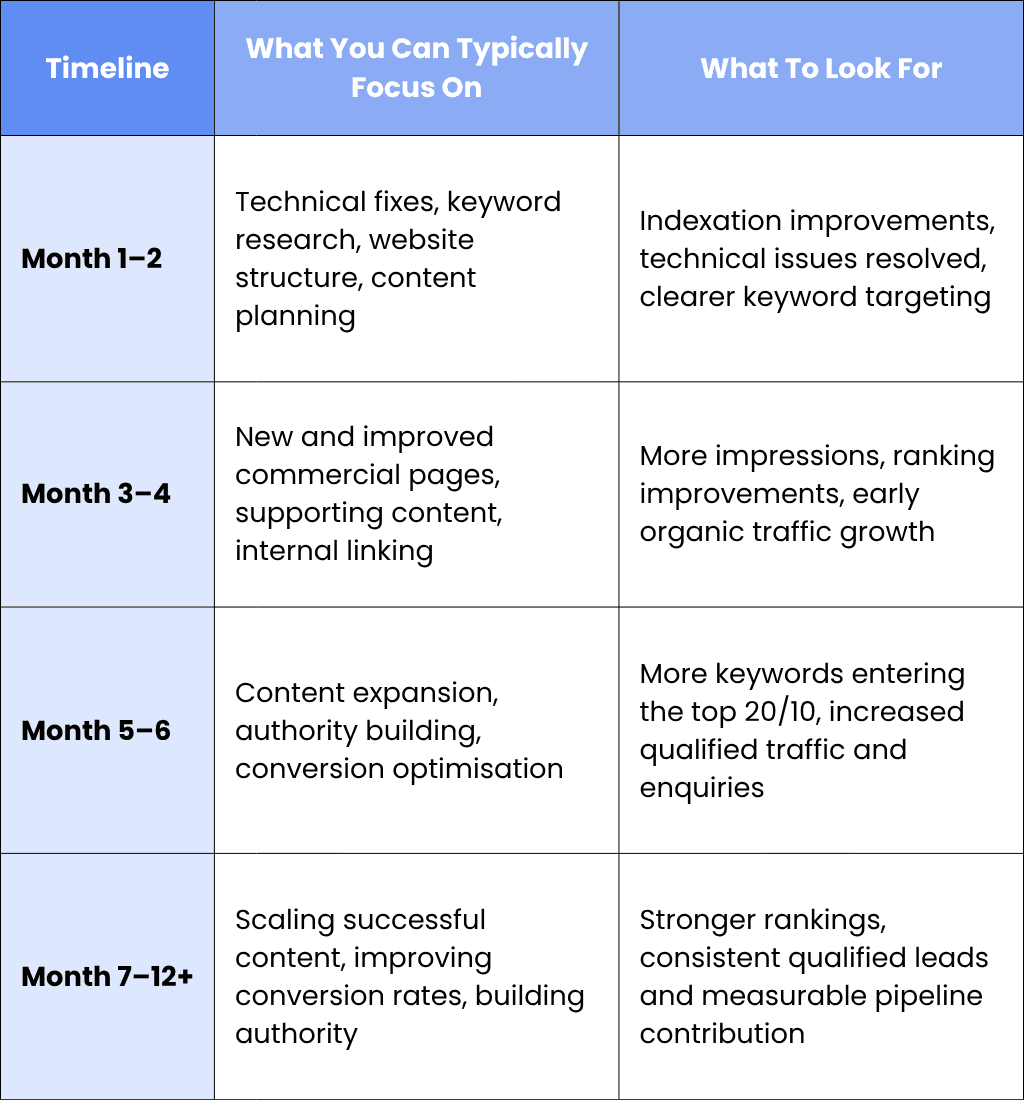
These are planning ranges rather than guarantees. A new website competing in a highly competitive B2B market may need considerably longer, while an established website with strong authority and existing rankings may see improvements sooner.
What A Realistic B2B SEO Timeline Looks Like
Months 1–2: Build The Foundation
The first stage should focus on understanding the business and removing obstacles. This normally includes a technical SEO audit, keyword research, search intent mapping, competitor analysis and website structure review.
At this stage, success is not necessarily measured by a sudden increase in leads. Instead, look for improvements such as:
- Important pages being properly indexed
- Technical errors being resolved
- Better keyword targeting
- Improved website architecture
- Clearer conversion paths
- A prioritised SEO roadmap
Months 3–4: Publish And Optimise
Once the foundations are in place, focus on your highest-value commercial pages and supporting content. Optimise existing pages where possible rather than assuming everything needs to be created from scratch.
You may start to see:
- Increased search impressions
- More keywords ranking
- Existing rankings moving upwards
- Growth in relevant organic traffic
- Early conversions from lower-competition searches
However, rankings can fluctuate during this period, so avoid judging the entire programme based on one month of data.
Months 5–6: Build Momentum
At this point, the focus should shift towards scaling what works. Analyse which pages are gaining visibility, which topics generate engagement and which organic visitors are becoming leads.
For example, if your data shows that industry-specific service pages generate more qualified enquiries than general blog articles, you may choose to invest more heavily in those pages.
This is also a good time to strengthen authority through digital PR, relevant backlinks, original research, partnerships and case studies.
Months 7–12+: Scale And Improve
For established B2B websites, this is where SEO can start becoming a more predictable acquisition channel. The objective is no longer simply to rank for more keywords. Instead, focus on improving the entire journey from search visibility to revenue.
That means:
More relevant rankings → More qualified visitors → More conversions → More sales opportunities → More revenue
Continue improving pages that perform well, expand into related search opportunities and remove content that provides little value.
Why Some B2B SEO Campaigns Take Longer
Several factors can significantly affect the timeline.
Competition: Ranking for "B2B SEO services" will generally be harder than ranking for a highly specific niche search.
Website Authority: Established websites with strong, relevant authority may have an advantage over new domains.
Content Quality: Publishing genuinely useful content takes time, particularly when research, expert input or original data is required.
Technical Condition: Serious crawl, indexation or performance issues can delay progress.
Market: Some industries have much more established competitors and greater search competition.
Implementation Speed: SEO recommendations only create results once they are implemented. Delays from development, content or approval teams can slow progress.
Budget And Resources: A business publishing two highly researched pieces of content per month will usually move at a different pace from one publishing and promoting ten strategically planned assets.
Measure Progress Beyond Rankings
SEO progress does not always appear first as a dramatic increase in traffic. Look for smaller indicators that show the strategy is moving in the right direction.
For example:
Month 1: 100 keywords ranking↓Month 3: 150 keywords ranking↓Month 6: 220 keywords ranking↓Month 9: More commercial keywords reaching the top 10↓Month 12: Increased qualified leads and sales opportunities
The most important shift is from visibility metrics to business metrics.
For example, suppose organic search generates 20 leads per month, but only 4 are qualified. After improving keyword targeting and landing pages, you might generate 25 leads, of which 10 are qualified.
That is a much more meaningful improvement than simply increasing total traffic.
So, When Should You Expect Results?
A practical expectation is:
- 0–3 months: Build the foundations and address technical and strategic issues.
- 3–6 months: Begin seeing stronger visibility, rankings and early lead-generation opportunities.
- 6–12 months: Build more consistent organic performance and qualified lead generation.
- 12+ months: Scale successful strategies, strengthen authority and increase SEO's contribution to pipeline and revenue.
The key is to treat these timeframes as benchmarks, not promises. SEO performance depends on your starting point, market, competition and how quickly your team can implement improvements.
For B2B businesses, the strongest results usually come from treating SEO as a long-term growth channel rather than a short-term campaign. The goal is not simply to achieve a ranking within a particular number of months. It is to build a search presence that continues attracting relevant prospects and qualified leads over time.
How Saigon Digital Can Help With B2B SEO
At Saigon Digital, we believe SEO should do more than increase rankings.
It should help businesses become more visible to the right audiences, attract qualified traffic and create measurable business growth.
Our SEO Services are designed around the needs of ambitious brands, with a focus on:
- Site Optimisation & Technical Performance
- Content & Authority Building
- Local & Global Search Strategy
This allows us to look at SEO as a complete system rather than a collection of isolated tactics.
For businesses operating across F&B, retail, education, hospitality, B2B, SaaS and other competitive sectors, that broader perspective can be particularly important. Your SEO strategy needs to reflect your customers, commercial priorities and market rather than follow a generic template.
Generative Engine Optimisation
Search is also expanding beyond traditional results.
Saigon Digital helps brands become easier to discover, understand, quote and trust across AI platforms through Generative Engine Optimisation (GEO) and related services.
Our capabilities include:
- AI Readability Optimisation
- Generative Engine Optimisation (GEO)
- Answer Engine Optimisation (AEO)
- Knowledge Graph & Schema Setup
- AI Content Audit & Reformatting
- AI Performance Dashboard
The objective is to prepare your digital presence for an environment in which potential customers increasingly use both search engines and AI platforms to research businesses, products and solutions.
AI Workflow Automation
SEO and digital growth can also generate significant amounts of repetitive work.
Saigon Digital's AI Workflow Automation Services help ambitious brands streamline operations and build AI-powered processes that can scale productivity.
Our capabilities include:
- AI-driven intelligence
- Pre-built automation templates
- Custom AI Agents
This creates an opportunity to connect SEO, AI and wider digital operations into a more efficient growth system.
Turn Search Into Sustainable B2B Growth
B2B SEO is not simply about ranking higher. It is about helping the right customers find your business, trust your expertise and take the next step.
At Saigon Digital, we combine SEO, AI and data-driven digital strategies to turn search visibility into measurable business growth.
Ready to turn search into qualified leads? Let Saigon Digital build an SEO strategy around your business goals.
B2B SEO FAQs
1. What Is B2B SEO?
B2B SEO is the process of improving a business website so it attracts relevant companies and decision-makers through organic search. Unlike SEO focused purely on traffic, B2B SEO prioritises relevant search intent, qualified leads and measurable business outcomes.
2. How Long Does B2B SEO Take To Work?
B2B SEO typically takes around 3–12 months to produce meaningful results, depending on factors such as competition, website authority, technical condition and implementation speed. Technical improvements may show results sooner, while competitive keywords and consistent lead generation usually require a longer-term strategy.
3. What Keywords Should A B2B Business Target?
B2B businesses should target a combination of commercial, informational, problem-based, comparison, industry-specific and location-based keywords. Prioritise keywords based on relevance, search intent and business value rather than search volume alone.
4. How Can B2B SEO Generate Qualified Leads?
B2B SEO generates qualified leads by connecting your website with people actively researching problems, solutions and suppliers relevant to your business. Creating useful content, optimising commercial pages and providing clear calls to action can help turn relevant organic visitors into enquiries, demos and sales opportunities.
5. How Can Businesses Measure The Success Of B2B SEO?
Look beyond rankings and organic traffic. A strong B2B SEO measurement framework should track qualified leads, conversion rates, sales opportunities, pipeline and revenue alongside visibility metrics. Connecting SEO data with your CRM can help identify which pages, topics and search opportunities contribute most to business growth.