



What Is Answer Engine Optimisation (AEO)?
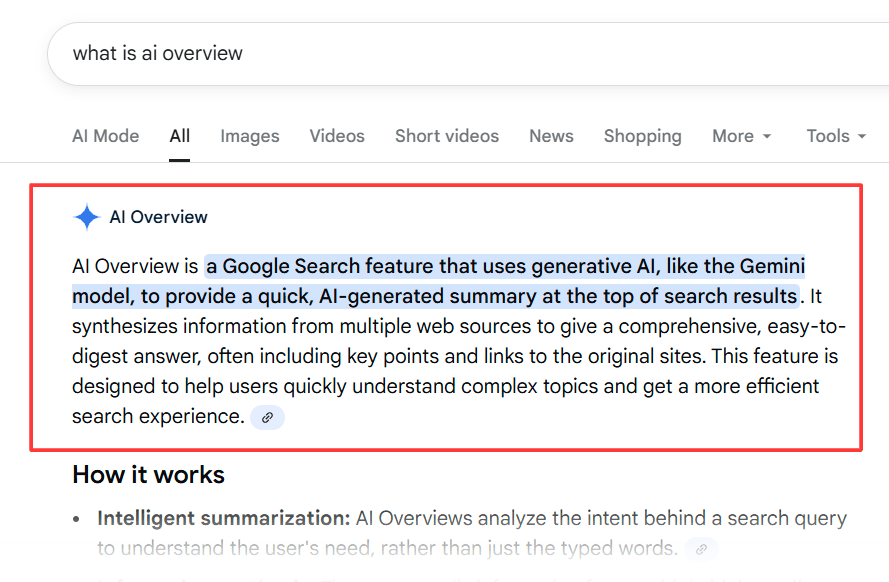
Before diving into strategy, let’s clarify the concept. In essence, answer engine optimisation is the practice of structuring and crafting web content so that AI-powered answer engines (such as ChatGPT with browsing, Bing Copilot, Perplexity, Google’s AI Overviews , voice assistants, etc.) can easily interpret, summarise, and cite it when generating direct responses to user queries. In contrast to traditional SEO, whose emphasis is ranking pages in a list of organic results, AEO is about being quoted or cited in AI-generated answers. It’s no longer just about clicks: it’s about visibility within the answer, which often precedes clicking. Put simply:- Traditional SEO: “How do I rank my page on Google?”
- AEO: “How do I make sure ChatGPT (or Bing Chat) cites my content when answering a question?”
10 AEO Strategies to Dominate AI-Powered SERPs
Below are 10 strategies to help you navigate the complex world of AI-powered search results.1. Identify and Prioritise High-Value Question Queries
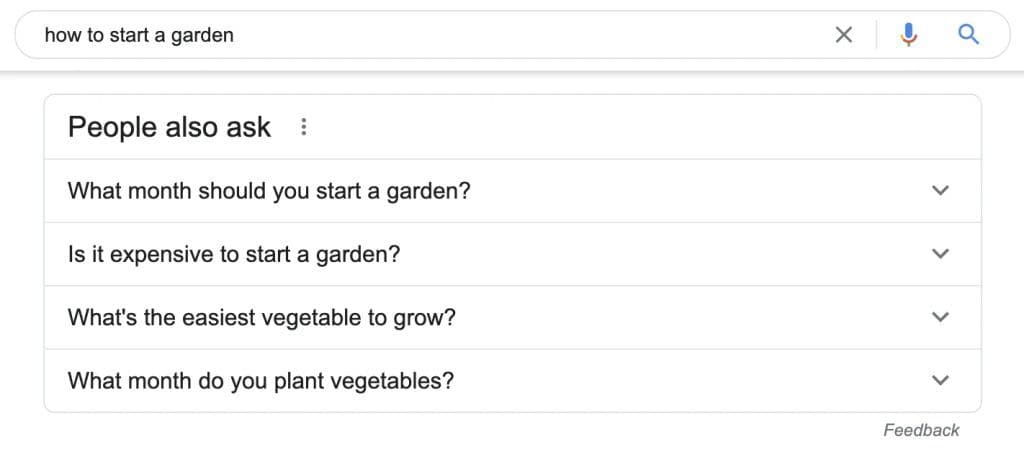
The first step in AEO is to discover which questions people genuinely ask, in conversational, natural language, within your niche or vertical.- Use SEO tools such as AnswerThePublic, Semrush’s “Questions” filter, Google’s “People Also Ask,” or ChatGPT itself to brainstorm real queries.
- Look at your existing content’s search queries in Google Search Console and spot question-style queries that are already driving impressions.
- Conduct user research: ask your sales/support teams or customers what questions they often pose.
- Relevance to business goals (e.g. lead generation, awareness)
- Existing competition
- Likelihood of being cited (i.e. specificity, clarity, uniqueness)
2. Use Question-Based Headings and Provide a Clear Direct Answer First
Because AI systems tend to extract the first few sentences under a heading when constructing answers, structure your content so that:- The subheading (H2 or H3) poses the user’s question (e.g. “What is answer engine optimisation?”)
- Immediately under that heading, provide a concise, direct answer (in 1–2 sentences) before any elaboration
As a practical target, aim for roughly 40 to 60 words in that opening answer, long enough to stand alone as a complete, quotable statement, short enough that an AI system can lift it cleanly.
This “question → answer → expansion” pattern helps AI models pick up exactly what to cite. After the direct answer, you can expand with details, examples, caveats, etc. But always lead with the crisp answer. This is akin to the principle behind featured snippet optimisation, but now with AI extraction in mind.3. Structure Content with Semantic HTML, Bullets and Tables
AI models and citation engines favour content that is well-structured and easy to parse. To facilitate that:- Use semantic HTML: <h2>, <h3>, <p>, <ul> / <ol>, <table> etc.
- Use bullet lists or numbered lists for enumerations
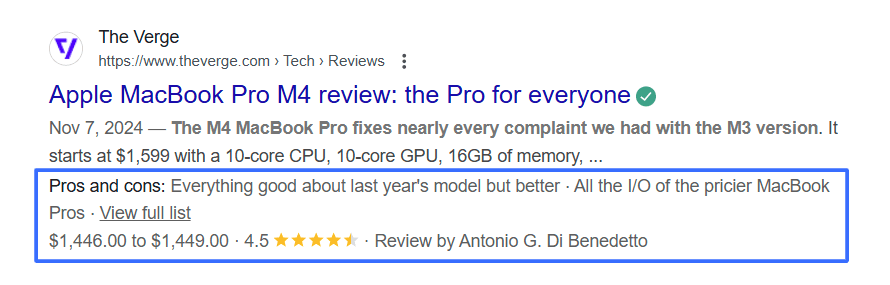
- Use tables for comparisons, data, pros/cons, features
- Keep paragraphs short (2-3 lines max), to avoid burdening extraction
4. Implement Appropriate Schema, Ensure AI Crawlers Can Reach Your Content, and Consider an llms.txt File
Structured data (using schema.org vocabulary) helps search engines and downstream systems, including AI tools, understand the context and meaning of your content. Useful schema types for AEO still include Article/BlogPosting, FAQPage, HowTo, and ClaimReview if you're quoting or evaluating claims, along with datePublished/dateModified to signal freshness.It's worth being precise about what schema does and doesn't do in 2026, since this has changed. Google fully retired the FAQ rich result (the visible Q&A dropdown in search results) in May 2026, and HowTo rich results were already deprecated on desktop back in 2023. Neither type produces a Google search feature any more. Google's own May 2026 guidance on AI Overviews and AI Mode also states plainly that structured data is not required for either feature. None of that makes schema pointless, marking up FAQPage or HowTo content is still a valid way to make your content's structure explicit to machines, and it doesn't cause any problems to leave it in place, but treat it as helpful technical hygiene rather than a guaranteed route to citation.Three more technical fundamentals matter as much as schema for AEO in 2026, and are worth checking alongside it:- AI crawler access: confirm your robots.txt allows the crawlers that feed answer engines, including OAI-SearchBot and GPTBot (OpenAI), PerplexityBot, ClaudeBot (Anthropic), and Google-Extended (Gemini). If your site sits behind Cloudflare, check this specifically: Cloudflare has changed its default configuration to block AI bots automatically on some plans, which can silently cut your AI visibility even if your content is otherwise well optimised.
- Rendering: most AI crawlers read the raw HTML your server returns rather than executing JavaScript the way a browser does. Content that only appears after client-side rendering, inside tabs, accordions, or content loaded dynamically, may be invisible to them even though it looks fine to a human visitor. This is worth a specific technical check if your site is built on a JavaScript-heavy framework.
- An llms.txt file: an emerging, simple markdown file at your site's root that summarises your site's structure, expertise, and most important pages for AI systems to reference. It's not a ranking guarantee and adoption across AI platforms is still uneven, but it's a low-effort addition worth having alongside your existing sitemap.
5. Demonstrate Expertise, Original Insight and Evidence
AI models tend to prefer sources that show authority, original insight, and evidence. To strengthen your content’s chances of being cited, it’s best that you:- Incorporate data, studies, or statistics (with proper citations)
- Add expert commentary or real-world examples (e.g. “In our work with 20 clients…” or case studies)
- Use strong internal and external citations (link out to trusted sources, include quotes)
- Keep author bio / credentials visible to reinforce expertise
6. Keep Content Fresh and Versioned
Recency matters. AI engines often prefer more recent content, or content with evidence of being maintained and updated. So you must make sure to:- Periodically refresh articles: update statistics, add new examples, adjust for new developments
- Reflect updates in the dateModified metadata
- Add a visible “Last updated” timestamp
- For evergreen topics, consider versioning or “2025 edition” updates
An independently published research preprint, the GEO-16 framework (Kumar & Palkhouski, 2025), analysed over 1,700 AI citations across Brave, Google AI Overviews and Perplexity and found metadata freshness, semantic HTML and structured data among the signals most strongly associated with citation. It's worth noting the study's scope: it's a preprint (not yet peer-reviewed) focused specifically on B2B SaaS content, so treat its exact figures as directional for other industries rather than universal. Directionally, though, it lines up with what most AEO practitioners are seeing: a stale article is less likely to be cited as current and reliable.
7. Build Off-site Signals, Brand Mentions, and Citations
Because AI tools often rely on the “web of knowledge”, i.e. interconnections, citations, authority signals across domains, your off-page presence still matters, but with a twist:- Earn brand mentions or quotes on reputable publications, niche blogs, forums, podcasts, etc.
- Get your content referenced in Wikipedia, industry reports, or authoritative lists
- Be consistent in your brand name, entity identity (avoid variations that confuse models)
- Participate in Q&A sites, expert roundups, interviews since they increase your chances of being included as a source
8. Prioritise Content That Maps to “Zero-Click” / Featured Snippet Zones
Although AEO extends beyond typical featured snippets, there’s still a strong overlap: content that appears in “position zero” or answer boxes is more likely to be pulled by AI systems. Therefore:- Audit your site for existing pages that already rank in featured snippets or answer boxes
- Optimise those pages further with AEO techniques (e.g. refine answer sentences, add schema, structure)
- Monitor “People Also Ask” (PAA) expansions for adjacent questions you can target
- Use your knowledge of snippet formats (paragraph snippet, list snippet, table snippet) to tailor your answer accordingly
9. Use “AI Audit” & Manual Testing to Validate Citation Potential
Because AI tools are not entirely transparent, you should treat them as black boxes you can test and audit.- Manually ask your target questions to ChatGPT, Perplexity, Bing Chat, Google AI mode, etc., and see if your content is cited
- Track mentions / citations over time
- Use AI SEO toolkits (some SEO platforms are introducing AI visibility modules)
- Use the GEO16 framework or similar scoring models to audit your pages' readiness (metadata, structure, freshness, etc.)
10. Combine AEO and Traditional SEO as a Unified Strategy
It’s vital to remember that AEO does not replace classical SEO, it complements it. To truly dominate AI-powered SERPs, you need to integrate both approaches.- Continue your keyword research, link building, page speed optimisation, mobile responsiveness, domain authority building (the usual SEO staples)
- For each target page, layer on AEO enhancements (question headings, schemas, clarity)
- Use internal linking to funnel authority toward your AEO-optimised pages
- Monitor both click metrics (via Analytics, Search Console) and citation / mention metrics (via AI tools and manual checks)
- Over time, your pages may earn both strong organic rank and AI citation presence
How to Measure the Success of Your Answer Engine Optimisation (AEO) Strategy
Implementing Answer Engine Optimisation (AEO) strategies is only part of the equation. To understand whether your efforts are delivering value, businesses need a clear framework for measuring performance.
Unlike traditional SEO, which often focuses heavily on rankings and organic traffic, AEO success is determined by how frequently your brand appears within AI-generated answers and whether those appearances translate into meaningful business outcomes.
Key AEO Metrics and KPIs to Track
1. AI Answer Visibility
AI answer visibility measures how often your brand appears within AI-generated responses across platforms such as Google AI Overviews, ChatGPT, Gemini, and Perplexity. In many cases, users may receive an answer without clicking through to a website, making visibility itself an increasingly valuable metric.To track this effectively, it's good to set up some AI visibility metrics. Begin by identifying a set of high-priority queries related to your products, services, and industry expertise. These should include both informational and commercial-intent searches. For example, an education provider might monitor phrases such as "best international schools in Vietnam" or "how to choose a bilingual school", while a hospitality brand may track "best boutique hotels in Ho Chi Minh City".Review these queries regularly and document whether your brand appears within AI-generated responses. Over time, compare the results to establish trends.Questions to ask when assessing AI visibility:- Does the AI-generated answer mention your brand directly?
- Is your content being used to support the response?
- Which topics generate the highest level of visibility?
- Are there important industry conversations where your competitors appear, but your brand does not?
For instance, if your brand appears in 12 out of 50 tracked AI responses, your AI visibility rate would be:
12 ÷ 50 × 100 = 24% AI visibility
Monitoring this metric consistently helps businesses identify content gaps and uncover opportunities to strengthen their presence within emerging search experiences.
2. Citation and Source Attribution Rate
Appearing in an AI-generated answer is valuable, but being cited as the source behind that answer carries even greater significance. Citation and source attribution rate measures how frequently answer engines reference your content when generating responses.
This metric provides insight into whether search engines and AI systems view your website as a trustworthy and authoritative source of information.
To improve and monitor citation rates:
- Track which pages receive AI citations most frequently.
- Identify the content formats that perform best, such as FAQs, comprehensive guides, comparison articles, or how-to resources.
- Review whether citations come from pages supported by structured data and clear content hierarchies.
- Compare citation frequency before and after implementing AEO improvements.
As an example, imagine that AI systems cited your content 18 times across 60 monitored responses:
If educational guides consistently receive more citations than product pages, this may indicate that expanding informational content could strengthen your overall AEO strategy.
Ultimately, a growing citation rate suggests that your content is becoming a recognised source of expertise within your industry.
3. Share of Voice Across AI Platforms
Share of voice extends beyond whether your brand appears in AI answers. Instead, it evaluates how visible your business is compared with competitors across the same set of queries.
This competitive perspective is particularly useful for businesses operating in crowded sectors such as retail, hospitality, education, or F&B, where multiple brands compete for attention.
Start by identifying three to five key competitors. Then, review a selected group of industry-relevant prompts and record which brands appear in the resulting AI responses.
For example, across 40 monitored queries:
- Your brand appears 14 times.
- Competitor A appears 18 times.
- Competitor B appears 10 times.
- Competitor C appears 8 times.
Your AI share of voice would be:
Tracking this metric over time helps answer important strategic questions:
- Are your competitors gaining authority in emerging topics?
- Which content themes drive the highest visibility?
- Are there areas where your business can establish stronger thought leadership?
A declining share of voice may signal the need to refresh existing content, strengthen topical authority, or invest in additional AEO initiatives.
4. Traffic from AI-Assisted Discovery
While answer engines often satisfy users directly within the interface, many people still seek further information before making decisions. As a result, AI-driven visibility can influence website traffic, branded searches, and customer engagement.
Although direct attribution from AI platforms continues to evolve, businesses can still monitor several useful indicators.
Pay close attention to:
- Referral traffic from AI platforms where reporting is available.
- Increases in branded search volume following major content initiatives.
- Growth in traffic to pages specifically optimised for AEO.
- Changes in engagement metrics, including time on page and pages per session.
For example, suppose an article optimised for answer engines generated:
- 2,000 monthly visits before optimisation.
- 2,500 monthly visits three months later.
The percentage increase would be:
While this increase cannot always be attributed exclusively to AEO, examining these trends alongside AI visibility and citation metrics can provide a more complete picture of performance.
Rather than viewing traffic in isolation, businesses should evaluate whether AI visibility contributes to stronger audience engagement and improved brand awareness.
5. Conversion Quality and Business Outcomes
Ultimately, AEO should support meaningful business objectives. Increased visibility has limited value if it does not contribute to enquiries, sales, bookings, or other commercial outcomes.
This is why organisations should move beyond vanity metrics and assess the quality of the visitors they attract.
Depending on your industry, relevant conversion metrics may include:F&B businesses- Reservation enquiries.
- Catering requests.
- Online orders.
- Prospectus downloads.
- Campus tour bookings.
- Enrolment enquiries.
- Direct booking enquiries.
- Newsletter subscriptions.
- Special offer redemptions.
- Product purchases.
- Add-to-cart actions.
- Loyalty programme sign-ups.
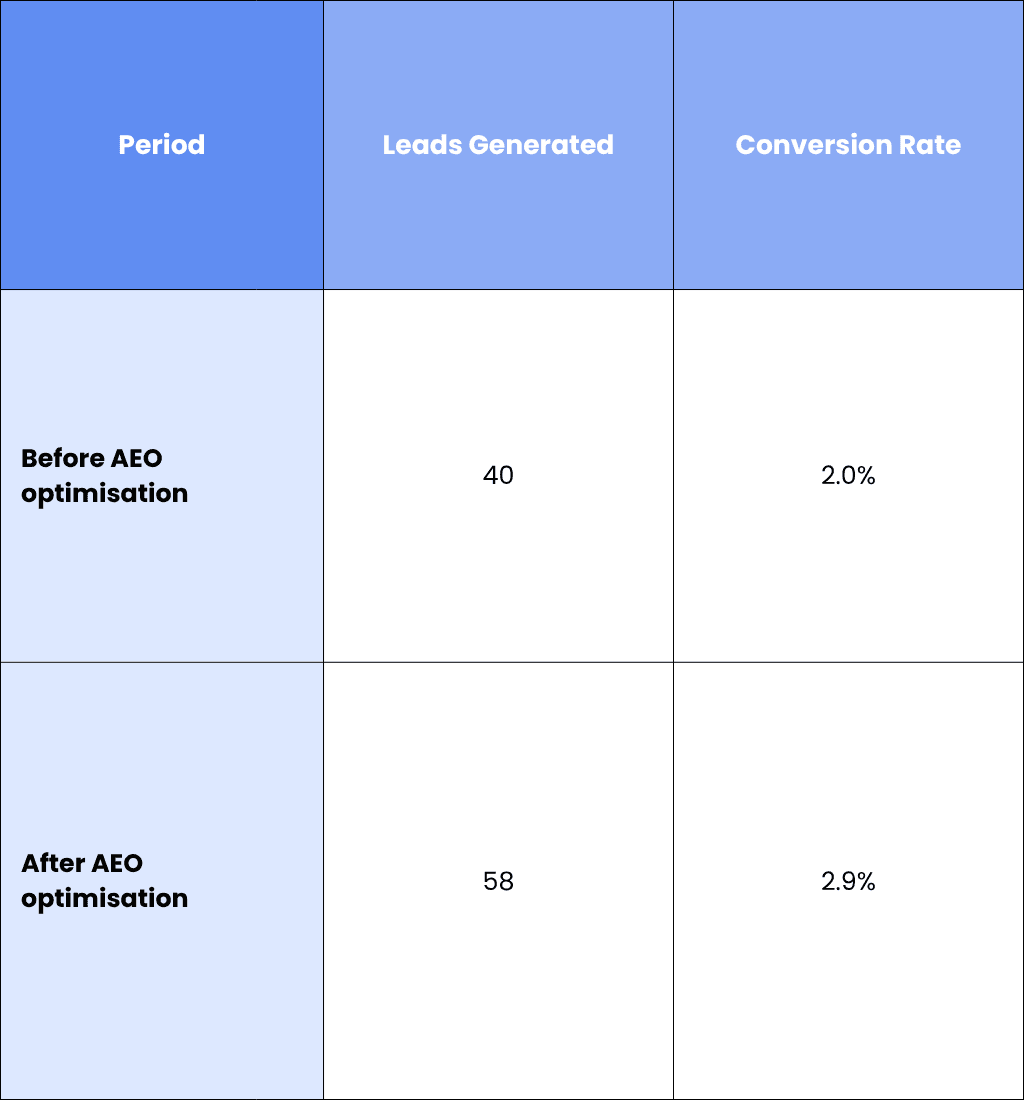
A practical approach involves comparing conversion performance before and after implementing AEO initiatives.
For example:
Future-Proof Your Search Strategy with Saigon Digital
As AI-powered search continues to evolve, businesses need strategies that extend beyond traditional SEO. Improving visibility across answer engines requires the right combination of technical expertise, content optimisation, structured data, and ongoing performance tracking.At Saigon Digital, we help ambitious brands strengthen their presence across both search engines and AI platforms through tailored solutions, including:- SEO Services – covering technical SEO, content optimisation, authority building, and local or global search strategies.
- Generative Engine Optimisation (GEO) – helping brands become more discoverable and trusted by platforms such as ChatGPT, Gemini, Perplexity, and Google AI Overviews.
- Answer Engine Optimisation (AEO) – improving your chances of appearing in AI-generated answers and source citations.
- Knowledge Graph and Schema Implementation – enhancing how search engines and AI systems understand your business and content.
- AI Workflow Automation – streamlining processes and improving efficiency through AI-powered solutions.
Take the Lead with Answer Engine Optimisation
The landscape of search is evolving fast. In 2025 and beyond, being merely “ranked on page one” is not enough. To remain competitive, your content must be citation-worthy to AI systems. By applying these 10 strategies, you can position your brand and content to dominate AI-powered SERPs. Ready to secure your visibility in AI-powered search? Get in touch with Saigon Digital today!Frequently Asked Questions
1. What is answer engine optimisation (AEO)?
Answer engine optimisation is the practice of structuring web content so AI-powered answer engines, such as ChatGPT, Perplexity, and Google AI Overviews, can easily extract, summarise, and cite it when generating direct answers to user queries. It sits alongside traditional SEO rather than replacing it.
2. How is AEO different from SEO?
Traditional SEO aims to rank a page as high as possible in a list of organic search results. AEO aims to get your content quoted or cited directly inside an AI-generated answer, which may appear above traditional results or be delivered without a click at all. In practice, a strong AEO strategy builds on top of solid SEO fundamentals rather than replacing them.
3. What are the most important AEO strategies?
The highest-impact strategies are identifying real question-based queries in your niche, leading with a direct, concise answer under question-based headings, structuring content with semantic HTML and lists, ensuring AI crawlers can actually access and render your content, and building genuine off-site mentions and citations rather than relying on any single technical fix.
4. Does schema markup still help with AEO?
Yes, but for a narrower reason than in the past. Google retired the FAQ rich result in May 2026 and had already deprecated HowTo rich results on desktop, so schema no longer guarantees extra visible space in Google Search. It can still help AI systems parse your content's structure, so it's worth keeping accurate schema in place as a supporting signal, not a growth lever on its own.
5. How long does it take to see AEO results?
There's no fixed timeline, since AI systems continuously reindex and re-evaluate sources. Most businesses start seeing measurable shifts in AI answer visibility and citation rate within a few months of consistent implementation, particularly for well-defined, question-based topics with limited competition.