Artificial intelligence has quietly woven itself into many areas of modern decision-making. Yet one of the most transformative, and often misunderstood, uses of AI is scoring.
In this article, we’ll unpack what AI scoring really is, how it works, and why it is becoming essential for operational efficiency. Additionally, we’ll explore practical examples and considerations so you can understand how to apply AI scoring within your business.
What Is AI Scoring?
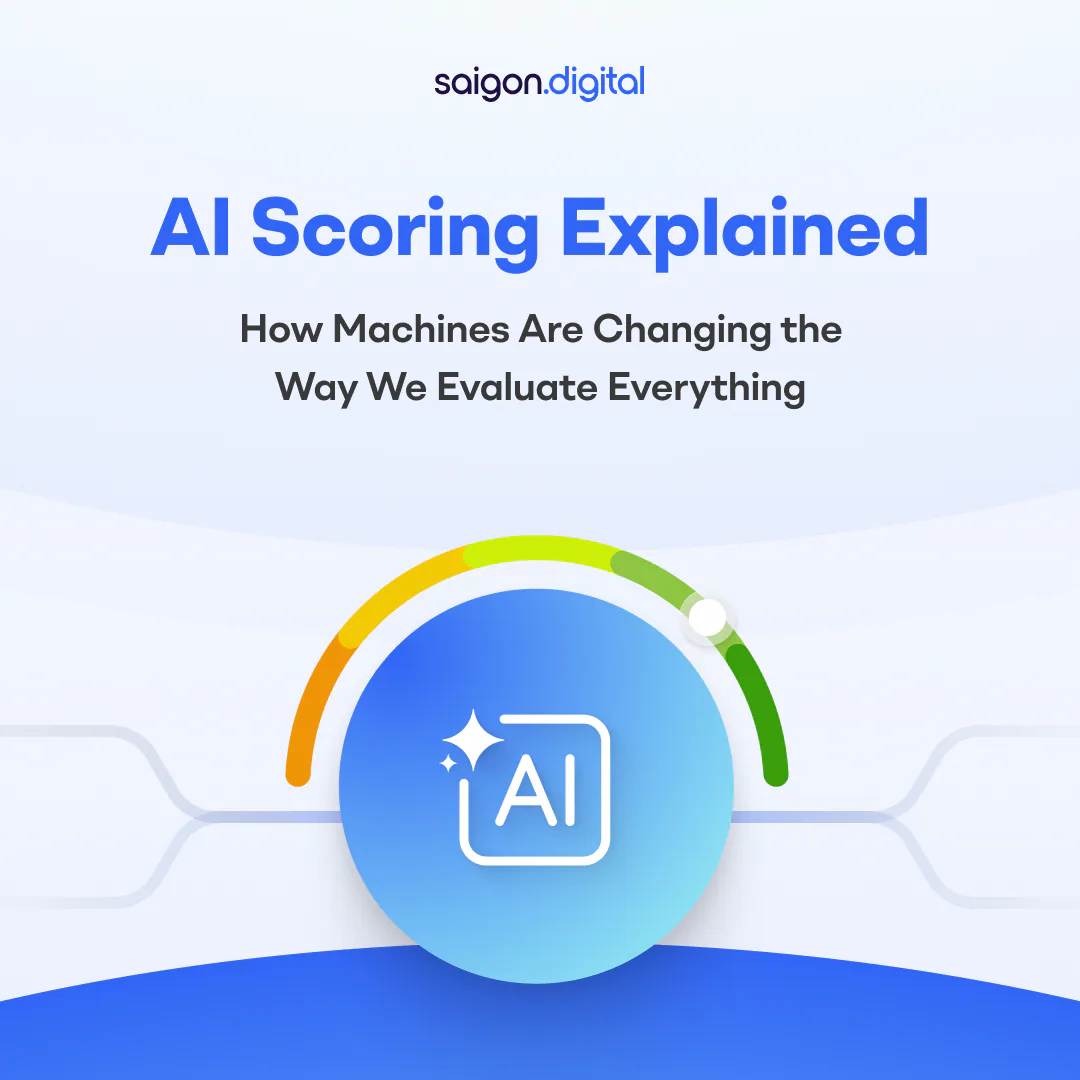
AI scoring refers to the use of machine learning models to assign a numerical or categorical score to something, such as a lead, message, customer, document, or action, based on defined criteria and learned patterns.
If that sounds abstract, consider a traditional manual scoring method:
- A team reviews a set of incoming enquiries.
- They check for completeness, urgency, and relevance.
- They label each as “high priority”, “medium priority”, or “low priority”.
Now imagine the same process, but automated, consistent, and instantaneous. That’s the essence of AI scoring.
It evaluates, classifies, and prioritises items using rules and learned data patterns. Because the model continuously adapts, the scoring usually improves over time, something human-only evaluation rarely achieves at scale.
How AI Scoring Works
Although implementations vary, most systems include three key components:
1. Data Inputs
This includes the text, numbers, metadata, or behaviours you want the AI to evaluate. For example, a lead-scoring model may use email content, contact details, engagement history, and demographic data.
2. A Trained Model
After having a large pool of data, the model then learn from examples, such as past enquiries marked “qualified” versus “not qualified”. Over time, it identifies patterns that humans may not see, such as tone, intent, or contextual relevance.
3. A Scoring Output
The system assigns a score or category for each point of data it comes across. For instance:
- 0 to 100 for lead quality
- “Complete” vs “Incomplete” for document checks
- “High”, “Medium”, “Low” for operational urgency
What makes AI scoring powerful is its speed, consistency, and adaptability. While human scoring fluctuates based on workload or interpretation, AI delivers the same level of judgement every time, while still learning from new examples.
Why AI Scoring Matters Today
With organisations facing increasing volumes of information, traditional evaluation methods often collapse under pressure. AI scoring resolves many of these challenges thanks to:
1. Speed
Speed has become one of the most compelling reasons organisations turn to AI scoring. As information volumes grow, teams simply cannot keep up with manual evaluation without sacrificing accuracy or response times. AI, however, can analyse and score thousands of items in seconds, ensuring no request sits untouched in a queue.
For example, a customer support team that once needed hours to review incoming emails can now instantly assess urgency and route cases using AI scoring. As a result, customers receive quicker responses, and staff can focus on resolving rather than sorting.
2. Accuracy and Consistency
Accuracy and consistency are equally important, especially in environments where minor errors can create significant downstream issues. While humans naturally vary in their judgement depending on workload, interpretation, or fatigue, AI scoring applies the same criteria every time. This consistency is particularly valuable in tasks such as document validation, where missing fields or mismatched information may otherwise go unnoticed.
For instance, an insurance company can use AI scoring to check claims for completeness and potential risk signals, reducing the likelihood of inaccurate approvals and improving customer trust.
3. Scalability
Scalability is another reason businesses increasingly rely on AI scoring. As organisations grow, the volume of data and enquiries grows along with them, often far faster than teams can expand headcount. AI scoring allows businesses to scale operations without compromising quality or increasing staffing costs.
For example, an eCommerce brand experiencing seasonal spikes can automatically score incoming orders, customer questions, or return requests and handle the increased volume smoothly. In this way, AI scoring becomes a foundational tool that supports business growth without operational strain.
4. Objectivity
Objectivity also plays a crucial role in improving decision-making. While AI is not completely immune to bias, it tends to make more consistent and data-driven assessments compared to subjective human interpretation. This is especially helpful in scenarios like recruitment screening, lead qualification, or internal request handling, where personal preferences may inadvertently influence outcomes.
For instance, a recruitment team can use AI scoring to pre-screen applicants based on predefined skills and experience, allowing humans to focus on deeper evaluation rather than first-pass filtering. Consequently, decisions become fairer and more aligned with the organisation’s goals.
5. Operational Efficiency
Operational efficiency increases naturally when AI scoring becomes part of a workflow, as the score can trigger automated actions that reduce repetitive work. Instead of requiring manual review for every item, businesses can rely on AI to sort, prioritise, or even respond automatically.
For example, a logistics company may use AI scoring to evaluate the validity of incoming shipping documents, automatically passing complete and correct forms into the processing system while sending incomplete ones back for clarification. This automated sorting not only reduces human workload but also shortens processing time, making daily operations significantly smoother.
Practical Examples of AI Scoring in Action
To make this even clearer, here are everyday scenarios where AI scoring is already making measurable impact.
1. Lead Scoring
Lead scoring is one of the most widely adopted uses of AI scoring because it directly influences sales performance and customer experience. Rather than relying on gut instinct or manual review, AI analyses behavioural signals, demographic information, past interactions, and even language cues to determine how likely a lead is to convert.
As a result, sales teams can focus their energy on the most promising opportunities instead of spreading their time thinly across every enquiry.
For example, a SaaS company might use AI scoring to evaluate whether a new lead’s job role, company size, and email content align with its ideal customer profile. Consequently, high-value leads reach sales quickly, while low-intent leads can be nurtured automatically.
2. Document Completeness Scoring
Document completeness scoring is particularly valuable in industries that depend on accurate paperwork, where even a small omission can cause delays. AI can quickly assess whether a form contains all required fields, whether attachments are present, and whether the information meets formatting rules.
This automated review helps organisations avoid bottlenecks created by incomplete submissions.
For instance, a logistics provider may use AI scoring to ensure customs documents include the correct product codes, shipping details, and declarations before they enter the processing queue. With AI flagging incomplete files early, teams reduce rework and accelerate turnaround times.
3. Email and Ticket Scoring
Email and ticket scoring has become essential as businesses receive more messages than ever before. AI evaluates factors such as urgency, sentiment, intent, and topic to decide how each message should be handled. This not only shortens response times but also ensures that messages requiring human expertise are prioritised.
For example, a customer support centre can automatically score and categorise incoming emails so that urgent complaints go directly to senior agents, while general questions receive automated or lower-priority responses. As a result, the overall support experience becomes more timely and efficient.

4. Risk Scoring
Risk scoring helps organisations identify threats early by analysing patterns that may indicate fraud, non-compliance, or operational risk. Because AI can spot subtle anomalies at scale, it often detects issues long before they would surface through manual checks.
For example, a financial service may use AI scoring to evaluate transaction history, location data, and behavioural patterns, flagging transactions that deviate from typical customer behaviour. With suspicious cases routed for human review, teams can intervene early and maintain compliance without slowing down legitimate activity.
5. Content Quality Scoring
Content quality scoring offers immediate value to teams that manage large volumes of user-generated content, marketing assets, or internal documentation. Rather than relying solely on manual review, AI can evaluate clarity, relevance, sentiment, and adherence to brand or compliance guidelines.
For example, a marketing team could use AI scoring to assess which product reviews are appropriate to feature on a website, ensuring offensive or irrelevant content never reaches the public. In doing so, teams maintain quality standards while reducing the time spent checking every submission manually.
What Makes a Good AI Scoring System?
If you’re considering implementing AI scoring, keep these principles in mind:
1. Clear Scoring Criteria
A reliable AI scoring system always begins with clearly defined criteria. Without a shared understanding of what “good”, “qualified”, or “complete” means, the AI has no solid foundation to learn from. Therefore, businesses should start by outlining the specific attributes or signals the model should look for.
For example, if you are scoring leads, you might define criteria such as industry relevance, budget range, purchase intent, and urgency. By establishing clear rules early, your AI model has a precise target, which reduces ambiguity and improves performance.
To define strong scoring criteria, consider:
- What differentiates a high-value item from a low-value one?
- Which behaviours or data points signal readiness or completeness?
- What outcome do you want the score to influence?
With this clarity, the scoring process becomes more transparent, consistent, and easier to optimise later.
2. Quality Training Data
Training data is the backbone of any AI scoring system, as the model learns entirely from the examples it is given. If the training data is incomplete, inconsistent, or biased, the scoring outcomes will mirror those flaws. That is why it is essential to prepare a well-structured dataset that accurately represents real-world conditions.
For instance, a document validation model should be trained on both complete and incomplete documents so it can learn the difference and avoid false positives.
When preparing training data, ensure you:
- Include a wide range of examples, not just ideal cases
- Label each example consistently (e.g., “complete”, “incomplete”, “high intent”, “low intent”)
- Review the dataset periodically as business conditions evolve
- Remove duplicated, outdated, or misleading samples
By investing time in quality data, you significantly improve your AI model’s accuracy and reliability.
3. Integration With Workflows
AI scoring delivers its greatest impact when it is deeply integrated into your workflow rather than used as a standalone tool. The score should trigger meaningful actions, such as routing tasks, escalating high-priority cases, or prompting automated responses. When the scoring output becomes part of a chain of automated steps, the entire process becomes faster, more consistent, and easier to manage.
For example:
- High-scoring leads automatically enter your CRM’s priority pipeline
- Incomplete documents initiate an automated email requesting clarification
- Urgent support tickets are instantly sent to senior agents
- Low-risk transactions are auto-approved to reduce manual workload
By connecting scoring to your systems, such as your CRM, helpdesk, or internal automation tools, you create a seamless, intelligent workflow that eliminates bottlenecks and reduces manual effort.
4. Ongoing Monitoring
Even the most sophisticated AI scoring system requires continuous monitoring to maintain accuracy over time. As user behaviour, market conditions, and internal priorities change, the scoring model must adapt accordingly.
Regular evaluation helps identify when the model begins to drift, meaning its outputs no longer reflect current expectations.
Good monitoring practices include:
- Reviewing sample outputs weekly or monthly
- Comparing AI scores against human judgments to spot discrepancies
- Adjusting scoring weights based on new patterns
- Retraining the model with updated data when needed
For example, if customer enquiries gradually shift in tone due to seasonal changes or new product launches, the model should learn from those updated examples. With proper monitoring, your scoring system stays aligned with real-world conditions and continues delivering meaningful results.
5. Human Oversight
Finally, although AI scoring can automate large portions of your decision-making, it should not replace human judgment entirely. Human oversight ensures the system remains fair, accurate, and aligned with company values.
Humans are especially important for reviewing edge cases, the rare or unusual items the model may misinterpret.
Human oversight may include:
- Validating a portion of the AI’s outputs each week
- Overriding scores when contextual factors matter
- Providing corrected examples to improve future model performance
- Identifying new scoring criteria that the AI should learn
For example, a loan application may receive a high-risk score due to a flagged keyword, but a human reviewer might notice relevant context the model overlooked. By combining AI precision with human intuition, the scoring system becomes both efficient and trustworthy.
AI Scoring Within Automation Workflows
Although AI scoring can exist as a standalone function, it reaches its full potential when woven into automated systems. A simple example might be:
- AI receives an enquiry.
- It extracts key details.
- It scores the message based on completeness and intent.
- High-value messages go to your sales team.
- Low-value or incomplete messages receive automated replies or requests for more information.
This kind of framework reduces workload, improves response times, and increases accuracy, all without adding operational complexity.
A Real-World Example: Scoring to Power Intelligent Email Handling
At Saigon Digital, we’ve applied scoring methods in our AI Enquiry Checker, where the system reads incoming emails, extracts critical data, identifies missing information, and scores how complete and valid the enquiry is. Only complete, verified requests reach a human team member.
This scoring-driven workflow results in:
- Faster response times
- Near-zero data errors
- Better prioritisation
- Seamless scalability
Although discreet, scoring is the engine behind the efficiency.

How AI Scoring Supports Workflow Automation
As businesses adopt more AI-powered processes, AI scoring acts as the decision layer, helping determine what should happen next.
For example, scoring can:
- Determine which tasks should be automated versus human-handled
- Trigger CRM updates or pipeline movements
- Validate incoming information before further processing
- Route enquiries to the correct department
- Prioritise support tickets automatically
In other words, AI scoring ensures workflows stay intelligent, dynamic, and aligned with your operational priorities.
Bringing AI Scoring Into Your Organisation
If you’re exploring AI scoring, start with areas where evaluation is repetitive and rules are relatively predictable. Common entry points include:
- Lead qualification
- Email triage
- Document intake
- Customer support ticketing
- Internal reporting and data verification
Even small AI scoring improvements can create significant time savings when integrated into automation workflows.
At Saigon Digital, we design AI workflow automation systems around real operational needs, not generic templates. While we often incorporate AI scoring into processes, we do so with a strong focus on accuracy, scalability, and long-term maintainability.
If your team is ready to reduce manual work, improve accuracy, and build intelligent workflows that scale, our AI Workflow Automation services can help you take the next step confidently.
Contact us today to see how we can help you!
Want to be the brand AI engines recommend?
We make businesses visible on Google and inside AI answers, measured in leads, not vanity metrics.